
How to Identify the Italian 10 Lire (Silver)
A silver crown-sized coin of the Kingdom of Italy known for its galloping chariot reverse, easily identified by its portrait of Vittorio Emanuele III and 'Biga' design.
Read the full Italian 10 Lire (Silver) encyclopedia entry →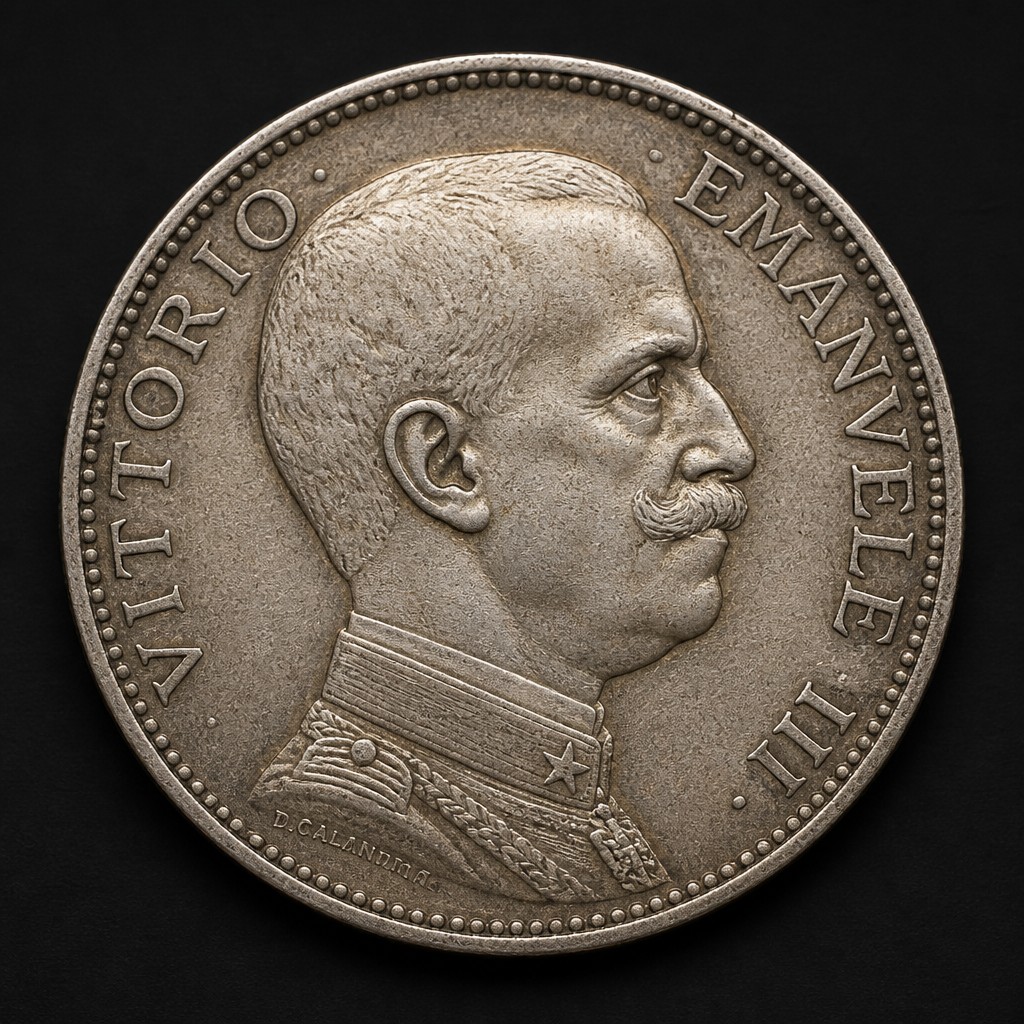
What Is the Italian 10 Lire (Silver)?
The silver 10 Lire is one of the most recognizable coins from the Kingdom of Italy, issued under King Vittorio Emanuele III in the years between the two world wars. Collectors often nickname it the "Biga" type after its distinctive reverse image of a two-horse chariot. It was struck for general circulation and is commonly found in worn to moderately worn condition today.
Obverse Design
The obverse carries a bare-headed left-facing portrait of Vittorio Emanuele III. The legend around the rim reads "VITTORIO EMANUELE III RE D'ITALIA" (Victor Emmanuel III, King of Italy). The king's profile is sharply engraved, with fine detail in the hair and moustache on well-preserved examples, which is one of the first areas to soften with wear.
Reverse Design
The reverse shows a biga — a chariot pulled by two rearing horses and driven by a nude charioteer, symbolizing the strength and forward motion of the nation. The denomination "L. 10" appears in the exergue along with the date, and "REGNO D'ITALIA" (Kingdom of Italy) curves around the top. The horses' legs and the charioteer's figure are good spots to check for strike quality.
Size, Weight & Metal
The coin is struck in .835 fine silver, weighs approximately 10 grams, and measures about 27 millimeters in diameter — comparable in hand-feel to a large modern dollar-sized coin. The edge is reeded.
Mint Marks
Nearly all examples were struck at the Rome mint, so a separate mint mark is not typically a distinguishing feature the way it is for coins produced at multiple facilities. Instead, focus on the engraver's initials, which appear in small letters near the truncation of the king's neck or along the rim, as a check against modern reproductions.
Telling It Apart from Similar Coins
The silver 10 Lire is easy to confuse with other interwar Italian silver coins, especially the 5 Lire and 20 Lire pieces from the same king, which share a similar portrait style. Compare the diameter and the reverse motif: the 5 Lire is smaller and often shows a different allegorical scene, while the 20 Lire "Aquila" type displays an eagle rather than a chariot. Always check the denomination text in the exergue to confirm you have the 10 Lire.
Judging Condition at a Glance
On a lightly circulated coin, the king's hair curls and the horses' manes remain crisp and separated. On a well-worn coin, the highest points — the king's cheek and the charioteer's torso — flatten out, and the rim beading becomes shallow or partially merges with the field. Look for even, honest wear rather than sharp, artificial shine, which can indicate cleaning.
Authenticity Red Flags
Because silver coins from this era are sometimes targeted for counterfeiting or "improvement," check for a soft or mushy overall strike, incorrect edge reeding count, and a weight that falls noticeably outside the expected range on a home scale. Cast fakes often show a faint seam line around the edge and lack the sharp square-cornered lettering typical of genuine Italian mint production.
Frequently asked questions
What metal is the Italian 10 Lire silver coin made of?
It is struck in .835 fine silver, with the balance being copper, giving it a slightly warmer tone than higher-purity silver coins.
Who is pictured on the obverse?
King Vittorio Emanuele III of Italy, shown in left-facing profile with a bare head.
What does the reverse image represent?
A biga, or two-horse chariot, driven by a nude charioteer — a classical Roman motif chosen to symbolize national strength.
How can I tell it apart from the 5 Lire or 20 Lire of the same era?
Compare diameter and the reverse scene: the 10 Lire's chariot design and its exergue lettering ('L. 10') are unique to this denomination.
Does the mint mark matter for this coin?
Most were produced at the Rome mint, so mint marks are less important here than checking overall strike sharpness and edge reeding for signs of counterfeiting.