
How to Identify the Islamic Silver Dirham (Abbasid)
The Abbasid silver dirham is a broad, thin, all-text coin covered in Arabic Kufic inscriptions naming the caliph, mint, and Islamic year, with no images at all.
Read the full Islamic Silver Dirham (Abbasid) encyclopedia entry →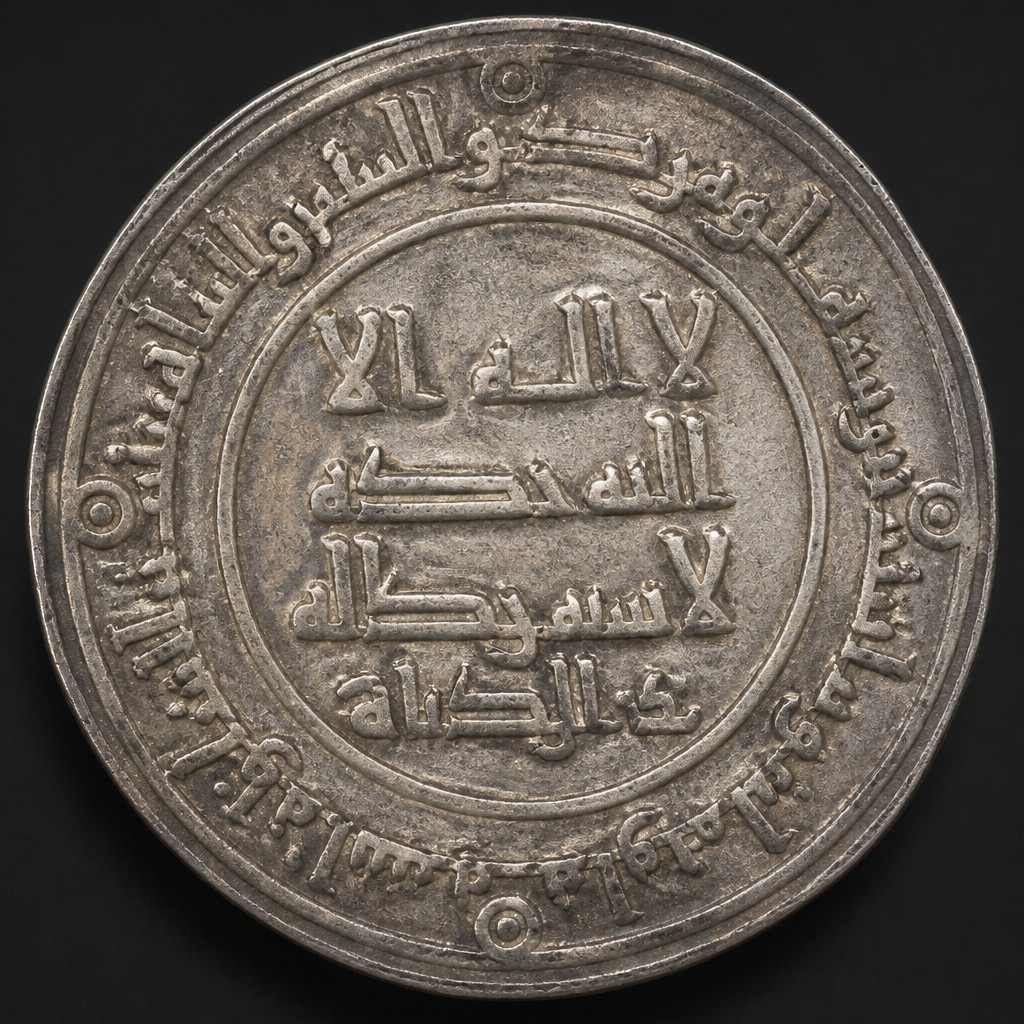
What It Is
The Abbasid silver dirham was struck across the vast Abbasid Caliphate (750-1258 AD) following the same aniconic, text-only design philosophy established by the earlier Umayyad reform. Because Abbasid mints operated across a huge territory from North Africa to Central Asia, dirhams survive today in large quantities and with great mint and date variety.
Obverse Design
Like its gold dinar counterpart, the dirham's obverse center carries a religious inscription, most often the Shahada, framed in one or more concentric circles of small Kufic script. Later Abbasid issues frequently add the name of the reigning caliph or an appointed heir in the outer margin or in an added line of text within the field.
Reverse Design
The reverse typically continues with a statement referencing the Prophet Muhammad and his prophetic mission, along with the essential identifying details for collectors: the mint city and the Hijri year of striking, spelled out in the margin. Many Abbasid dirhams also name a provincial governor or high official, useful for narrowing down attribution.
Size, Weight, and Metal
Dirhams are struck in silver on a broad, thin flan, typically 24-28mm across but weighing only about 2.9-3.0 grams, giving them a light, delicate feel relative to their visual size. The edge is plain and irregular, consistent with hand striking.
Mint Marks and Dates
The mint city name and Hijri date are typically the most valuable identifying features and usually sit in the reverse margin. Because the Abbasid Caliphate operated dozens of regional mints (Baghdad, Basra, Samarqand, al-Andalus under earlier Umayyad rule, and many others), cross-referencing the named city and year is the standard way specialists pin down exactly when and where a given dirham was struck.
Telling It Apart From Similar Coins
Abbasid dirhams can be distinguished from Umayyad-era dirhams mainly by caliph or governor names and by mint cities that only came into use after 750 AD, as well as by certain added phrases (such as references to specific viziers) unique to the Abbasid administration. Compared to later Islamic dynastic coinages (Samanid, Buyid, Fatimid, etc.), Abbasid dirhams generally retain the simpler, purely epigraphic layout without added dynastic symbols or tughras that appear on some later regional issues.
Judging Condition at a Glance
Since there is no portrait to judge wear against, condition is assessed by how legible and complete the Kufic script remains, especially the mint and date line, which is often the first area to weaken from wear or an off-center strike. A dirham with clear, fully readable margins is considered notably better for identification purposes than one with worn or partially struck edges.
Authenticity Red Flags
Be alert to dirhams with an implausible mint-and-date combination (a city named that did not operate under Abbasid control in the stated year), inconsistent or anachronistic script style, an unusually light or heavy weight compared to the roughly 2.9-3.0 gram standard, or overly clean, mechanically uniform lettering suggesting a modern-made replica rather than a hand-cut ancient die.
Frequently asked questions
What information is usually in the margin of an Abbasid dirham?
The mint city name and the Hijri year of striking, sometimes along with the name of a governor or high official, all in Arabic Kufic script.
How do Abbasid dirhams differ from Umayyad dirhams?
Both share the same text-only, aniconic layout, but Abbasid dirhams typically name the Abbasid caliph or officials and were struck at mints and in years associated with Abbasid rule after 750 AD.
Why are these coins so thin and light for their size?
Abbasid mints used a broad, thin flan standard for silver dirhams, producing a coin with a relatively large diameter but modest weight around 2.9-3.0 grams.
Is there any imagery at all on Abbasid dirhams?
No. Mainstream Abbasid silver coinage is entirely epigraphic, made up of Arabic religious and administrative inscriptions with no human figures, animals, or symbols.
What is the fastest way to identify where a dirham was struck?
Locate and read the mint name in the reverse margin; it is the most direct identifying detail, though it requires familiarity with Kufic script and historical Abbasid mint city names.