
How to Identify the Iranian Pahlavi Gold Coin
A 20th-century Iranian gold coin from the Pahlavi dynasty era, featuring the shah's portrait and still used as a reference gold-weight unit in Iran today.
Read the full Iranian Pahlavi Gold Coin encyclopedia entry →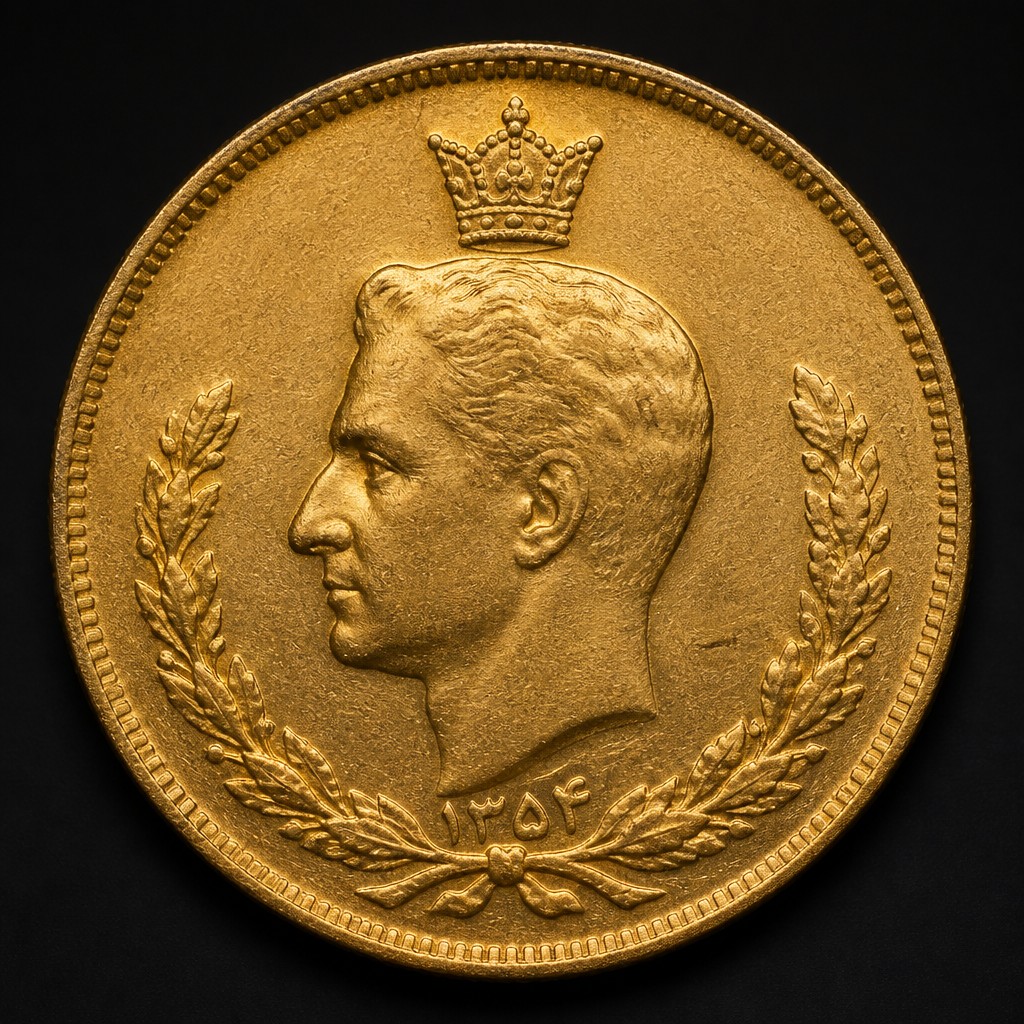
What Is the Pahlavi Gold Coin?
Issued during the reign of the Pahlavi dynasty (Reza Shah and Mohammad Reza Shah, 1925-1979), the gold Pahlavi coin served both as circulating high-value currency and as a widely trusted store of gold value, and its weight standard remains a common reference unit in Iranian gold markets even decades after the dynasty ended. The coin's enduring reputation for reliable weight and purity is part of why the "Pahlavi" name is still used informally today to describe gold pieces struck to the same standard.
Obverse Design
The obverse features a portrait of the reigning shah. The specific likeness — Reza Shah in earlier issues, Mohammad Reza Shah in later ones — helps place the coin within a particular period of the dynasty's rule, along with Persian-language inscriptions naming the ruler.
Reverse Design
The reverse typically carries Iran's national emblem of the period, along with the denomination and the date in the Solar Hijri (Iranian) calendar, which counts years differently from both the Gregorian and Islamic Hijri calendars.
Size, Weight, and Metal
The gold Pahlavi is struck at a high gold fineness (commonly around .900), with a weight in the neighborhood of 8 grams and a diameter around 22mm, making it broadly comparable in scale to other historic gold sovereign-class coins.
Mint Marks
Iranian coinage of this era does not generally carry a separate mint-mark letter system; the shah's portrait style and the Solar Hijri date are the primary tools for placing a coin within a specific period of the dynasty.
Telling It Apart from Similar Coins
After the 1979 revolution, Iran's Islamic Republic introduced its own gold bullion coin, often called the "Azadi" gold coin, at a similar weight standard but with entirely different imagery, no shah's portrait, and instead national and revolutionary symbols. Checking for a portrait versus its absence quickly separates a Pahlavi-era coin from a post-revolutionary Azadi issue.
Condition and Grading at a Glance
Examine the shah's portrait for wear on the cheek, hair, and any collar or medal detail, and check the emblem and inscriptions on the reverse for sharpness. Because this coin was often saved as a store of value rather than heavily circulated, well-preserved examples are relatively common, though handling marks and light surface scratches from storage are still frequently seen even on coins that were never used in everyday transactions.
Authenticity Red Flags
Given its gold content and popularity as a savings vehicle, the Pahlavi is a frequent counterfeiting target. Verify weight and diameter precisely against genuine specifications, check the edge reeding for consistency, and examine the portrait and inscriptions for correct detail, since poorly made fakes often show soft, indistinct features compared to genuine strikes.
Frequently asked questions
Whose portrait appears on the coin?
Either Reza Shah or his son Mohammad Reza Shah, depending on when during the Pahlavi dynasty (1925-1979) the coin was struck.
How is this different from the modern Azadi gold coin?
The Azadi coin, issued after Iran's 1979 revolution, uses national and revolutionary imagery instead of a shah's portrait, though it follows a similar weight standard.
What is the gold fineness of a Pahlavi coin?
Commonly around .900 fine gold.
What calendar is the date given in?
The Solar Hijri (Iranian) calendar, which differs from both the Gregorian and Islamic Hijri calendars.