
How to Identify the Indonesia 200 Rupiah
A collector's guide to the aluminium 200-rupiah: the Garuda emblem, the Bali Starling and 200 RUPIAH value, its light metal, size and look-alikes.
Read the full Indonesia 200 Rupiah encyclopedia entry →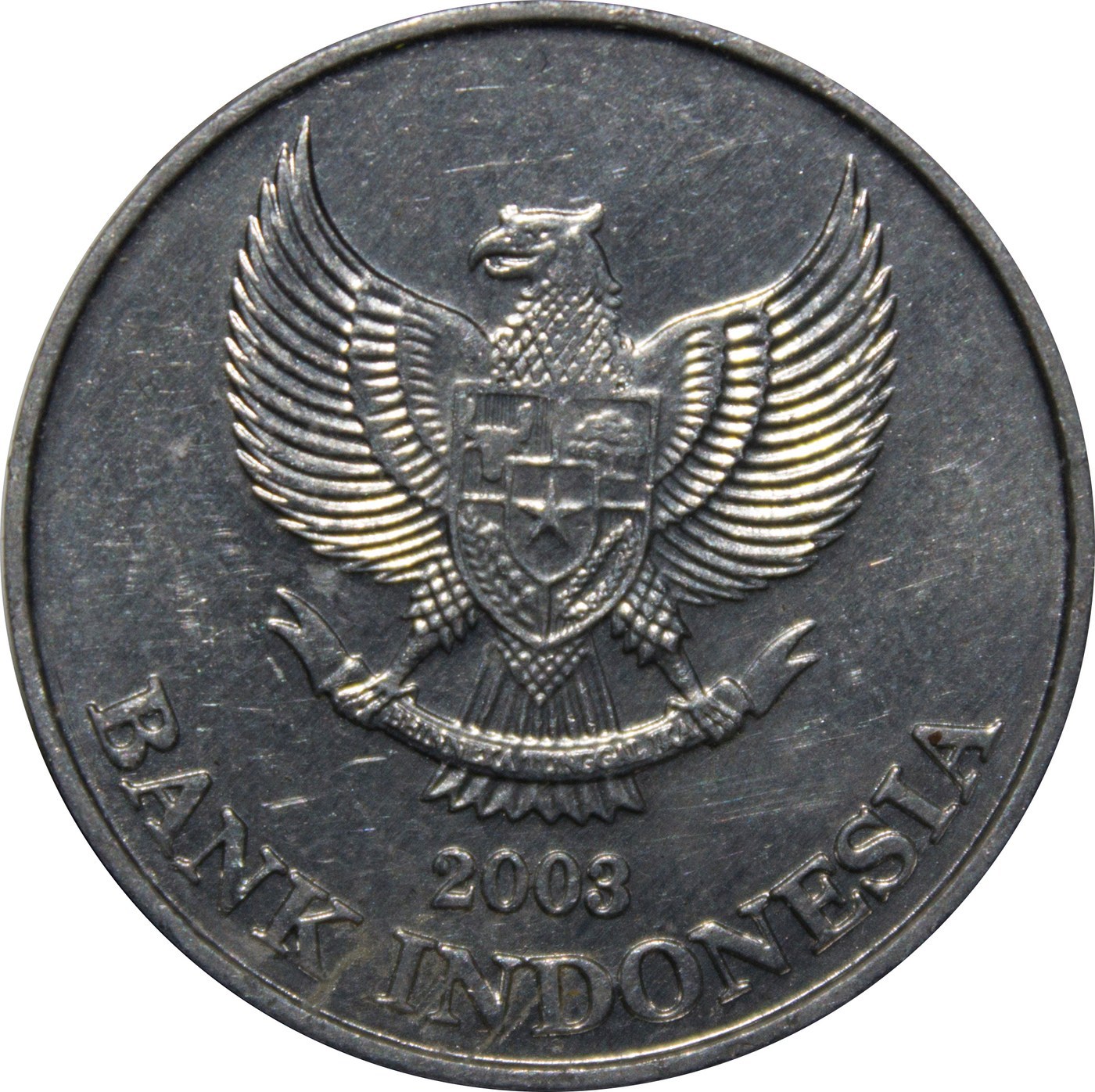
Start with weight and metal, because they are the quickest tell. The 200 rupiah is struck in aluminium, so it is remarkably light and thin for a coin of its diameter, pale silvery-grey, and soft enough to nick or bend. If a coin this size feels almost weightless and has a matte, un-shiny surface, you are likely holding an Indonesian aluminium piece rather than a heavier copper-nickel world coin.
Read the value side next. The 200 rupiah shows a slim, long-tailed bird perched on a branch, captioned "JALAK BALI" (the Bali Starling), with a large numeral "200" beneath it above the word "RUPIAH." That numeral plus the caption is the decisive identifier: it separates this coin from its siblings in the same series, which carry different birds and different values.
Check the national side to confirm the issuer and date. It bears the Garuda Pancasila — Indonesia's eagle emblem with a chest shield and a banner gripped in its talons — ringed by "BANK INDONESIA" and a four-digit year (2003 on the coins pictured here). Genuine coins have a plain, smooth edge and a round, evenly struck flan; the year lets you place the piece within the run of the type.
Guard against look-alikes within Indonesia's own coinage. Several Bank Indonesia aluminium coins use the same Garuda-plus-native-bird layout, so never identify by the eagle alone — always confirm the denomination numeral and the bird's name. A coin with a different bird caption or a value other than "200 RUPIAH" is a different denomination, not this one.
Finally, apply basic authentication sense. These are inexpensive circulation coins that are rarely counterfeited, so the main concerns are condition and damage rather than fakery: watch for corrosion spots, dark toning, bends, and edge dings, all of which aluminium picks up easily. Compare diameter and the crispness of the Garuda and bird details against a reference image if a piece looks unusually thick, heavy, or discoloured.
Frequently asked questions
How do I tell the 200 rupiah from other Indonesian bird coins?
Read the numeral and the bird's caption. The 200 rupiah shows the Bali Starling labeled "JALAK BALI" with a large "200" over "RUPIAH." Other denominations in the series use different birds and different value numbers, even though they share the Garuda emblem.
Where is the date on this coin?
The four-digit year appears on the national (Garuda) side, within the "BANK INDONESIA" legend around the emblem. The examples shown are dated 2003.
The coin looks silvery — could it contain silver?
No. The pale color comes from aluminium, a light base metal. The coin is worth only its face value in metal terms and contains no silver despite the whitish tone.
My coin is dark and spotted — is it fake or damaged?
Almost certainly just damaged. Aluminium corrodes and tones easily, developing grey or dark spots and edge nicks with handling. That affects condition and collector value but does not make the coin counterfeit.