
How to Identify the Indian Gold Mohur
A guide to the gold mohur denomination used across Mughal and British India, covering calligraphic Mughal types, portrait-based colonial types, and specifications.
Read the full Indian Gold Mohur encyclopedia entry →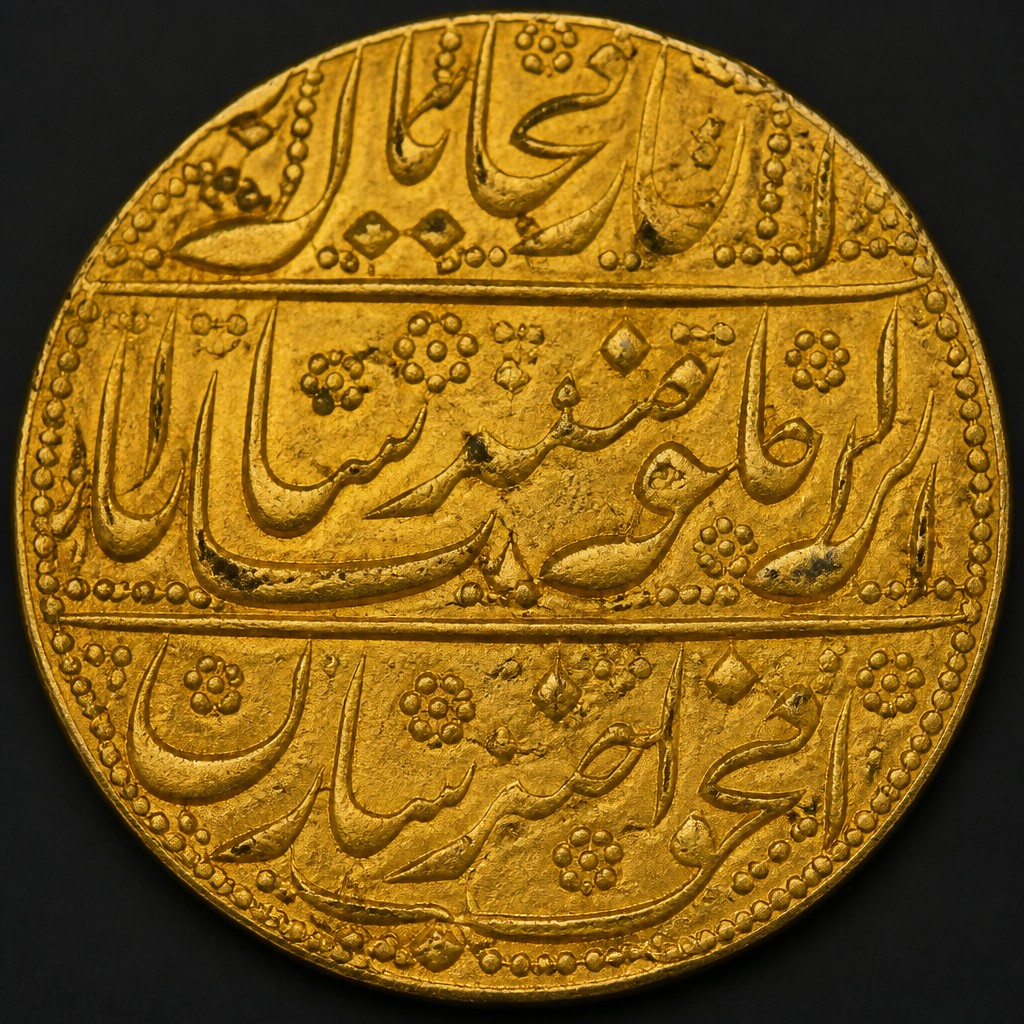
What Is the Coin
The gold mohur was a major gold coin denomination used across the Indian subcontinent for centuries, issued by the Mughal Empire, various regional Indian states, and later the British East India Company and British India through the early 20th century. Because it spans so many issuing authorities, its design varies considerably depending on period and ruler.
Obverse Design
Mughal-period mohurs typically avoid figural imagery in keeping with Islamic artistic tradition, instead featuring elaborate Persian or Arabic calligraphy naming the ruling emperor and his titles, often within an ornamental border. Regional Indian states that issued their own mohurs followed similar calligraphic conventions, sometimes adding local symbols or dates in the Hijri or regional calendar. British East India Company and British India mohurs, mainly from the 19th century, instead show a portrait of the reigning British monarch (most commonly Queen Victoria) with an English legend giving her name and title, following the same conventions used on British Indian silver rupees of the period.
Reverse Design
Mughal reverses typically continue calligraphic inscriptions giving the mint city and regnal year. British colonial mohurs commonly show either a wreath enclosing the denomination and date, or the well-known "lion and palm tree" design used on the Company's rupee-family coinage, adapted here to the mohur.
Size, Weight, Metal & Edge
The standard British India gold mohur weighs approximately 11.66 g in .916 fine gold (22 carat), with a diameter of roughly 25-26 mm and a milled or reeded edge on colonial issues. Mughal and regional mohurs vary somewhat in weight and fineness depending on the issuing authority and period, generally falling in a similar range.
Mint Marks and Where to Find Them
Mughal mohurs name the mint city directly within the calligraphic legend rather than using a separate symbol. British colonial mohurs may carry a small mint mark or assay mark near the date or in the exergue, consistent with the mint-marking conventions used on British Indian coinage of the same era.
Telling It Apart From Similar Coins
Because "mohur" covers such a wide range of issuers, the clearest identification method is checking whether the coin uses calligraphic-only design (pointing to a Mughal or regional Islamic-tradition issue) or a monarch's portrait (pointing to a British colonial issue), then reading the legend for the specific ruler's name, mint city, and date to narrow down the exact type.
Grading and Condition at a Glance
For calligraphic types, look for sharp, fully legible lettering without excessive wear flattening the fine strokes; for portrait types, check the monarch's facial detail and hair for wear, as these are the highest-relief points. Full, even luster in the field areas is a good sign of a lightly circulated or uncirculated example.
Authenticity Red Flags
Because gold mohurs are valuable and have long been targets for both period counterfeiting and modern reproduction, incorrect weight for the claimed type, blurred or garbled calligraphy that does not form legible words, or a portrait style that does not match documented British Indian coinage are all signs of concern. Given the wide variety of legitimate mohur types, comparing the specific legend and design to well-documented references for the claimed ruler and period is the most reliable way to confirm identification.
Frequently asked questions
Why do some mohurs have no portrait?
Mughal and other Islamic-tradition Indian issuers avoided figural imagery, using elaborate calligraphy naming the ruler instead of a portrait.
Who is typically shown on British colonial mohurs?
Most commonly Queen Victoria, reflecting the same portrait conventions used on British Indian silver rupees of the period.
What is the typical weight and purity?
British India gold mohurs weigh about 11.66 g at .916 fine (22 carat) gold; Mughal and regional issues vary somewhat but fall in a similar range.
How can I tell which ruler or mint issued a Mughal mohur?
The mint city and ruler's name and titles are given directly within the calligraphic inscription rather than through a separate mint mark symbol.