
How to Identify the India Gold Pagoda (Madras Presidency)
A tiny, dish-shaped high-purity gold coin from South India, identified by its crude deity design and granular dot pattern rather than any inscribed legend.
Read the full India Gold Pagoda (Madras Presidency) encyclopedia entry →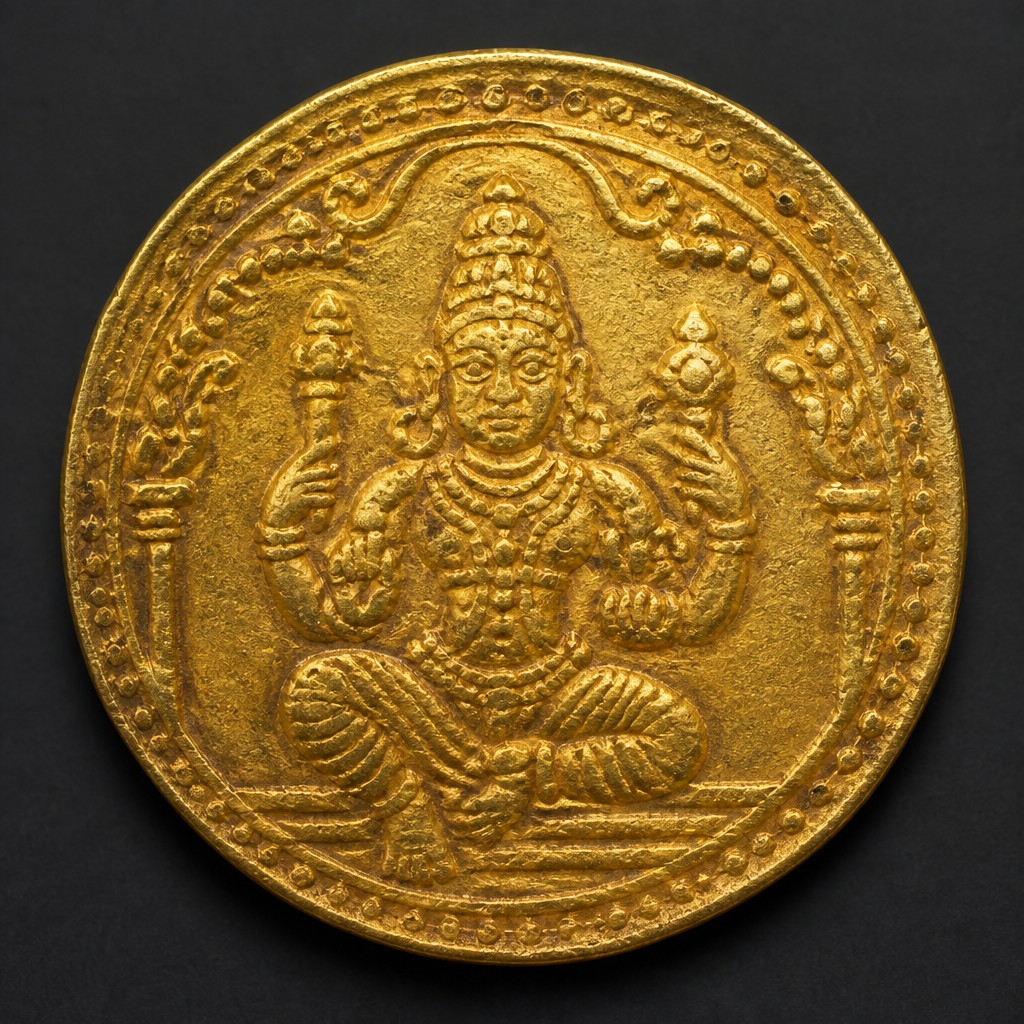
What It Is
The gold pagoda was a small, thick, dish-shaped coin issued by the East India Company's Madras Presidency, continuing a much older South Indian coinage tradition (rooted in earlier Vijayanagar and regional pagoda issues) into the 18th and 19th centuries as a standard trade gold piece. Rather than introduce an unfamiliar new coin design that local merchants might distrust, the Company deliberately kept the traditional pagoda appearance so its coinage would be readily accepted alongside older regional issues already circulating in South India.
Obverse Design & Inscriptions
The convex face typically shows a stylized depiction of temple deities, often three standing figures rendered in a crude, dot-and-line style inherited from centuries-old dies. There is no written legend.
Reverse Design & Inscriptions
The concave face is covered with a pattern of raised granular dots or pellets arranged in a geometric design, sometimes including a small five-pointed star (giving rise to the collector nickname "Star Pagoda"). Like the obverse, no lettering is present.
Size, Weight, Metal & Edge
It is a tiny coin, roughly 10-12mm in diameter, with a distinctive thick, doubly convex/concave dished shape rather than a flat form. Weight is around 3.4 grams, struck in high-purity gold — often near or above .980 fine on "old" pagoda varieties, and somewhat lower on "new" pagoda issues. There is no formal edge design due to the small dished shape.
Mint Marks & Where to Find Them
No mint name or letter is inscribed on the coin. Different pagoda varieties are instead distinguished by subtle differences in the deity design and granular dot pattern, which specialists use to attribute a piece to Madras Presidency versus earlier regional dynastic issues. Because the differences between varieties can be quite subtle, careful side-by-side comparison with well-documented reference examples is generally more reliable than judging a single pagoda in isolation.
Telling It Apart from Similar Coins
Because the general shape and blank design of pagoda coinage remained similar across centuries and different issuing authorities, distinguishing a Madras Presidency pagoda from earlier Vijayanagar or Mysore pagodas relies mainly on subtle die-style attribution alongside consistent weight and gold purity.
Judging Condition at a Glance
Since the striking method inherently produces a somewhat crude design, grading focuses on how much of the granular dot pattern and deity outline remains legible, and whether the coin retains its full dished shape without excessive bending or damage. Surface scuffing from long circulation in coin purses and pouches is common, so a piece with clean, undamaged edges and clearly raised granulation is considered notably well preserved for the type.
Authenticity Red Flags
Given the high gold content and lack of any legend, gold-plated or lower-purity cast fakes exist. Check the specific weight and gold color/luster carefully, and be cautious of pieces that appear unusually flat or lack the characteristic doubly convex/concave dished form typical of genuine pagodas.
Frequently asked questions
Why does this coin have no writing on it?
Gold pagodas followed a much older South Indian coinage tradition based on temple deity imagery and dot patterns rather than inscribed legends, and the Madras Presidency continued that visual style.
Why is it called a "Star Pagoda"?
Some varieties include a small five-pointed star among the granular dot pattern on the reverse, which collectors use as a nickname for that specific type.
How pure is the gold in a pagoda?
Purity is generally very high, often near or above .980 fine on older pagoda issues, though "new" pagoda varieties can be somewhat lower.
How is it different from other Indian gold coins like the mohur?
The pagoda is much smaller, thicker, and dish-shaped with no legend, while the mohur is a larger, flatter coin that typically carries an inscription or portrait.
What is the main authenticity concern?
Because there is no legend to inspect, checking weight, gold color, and the coin's distinctive dished shape are the most reliable ways to spot a plated or cast fake.