
How to Identify the India Four Anna
A collector's guide to recognizing India's 1950 quarter rupee (four annas): emblem, legends, size, copper-nickel metal, mint marks and look-alikes.
Read the full India Four Anna encyclopedia entry →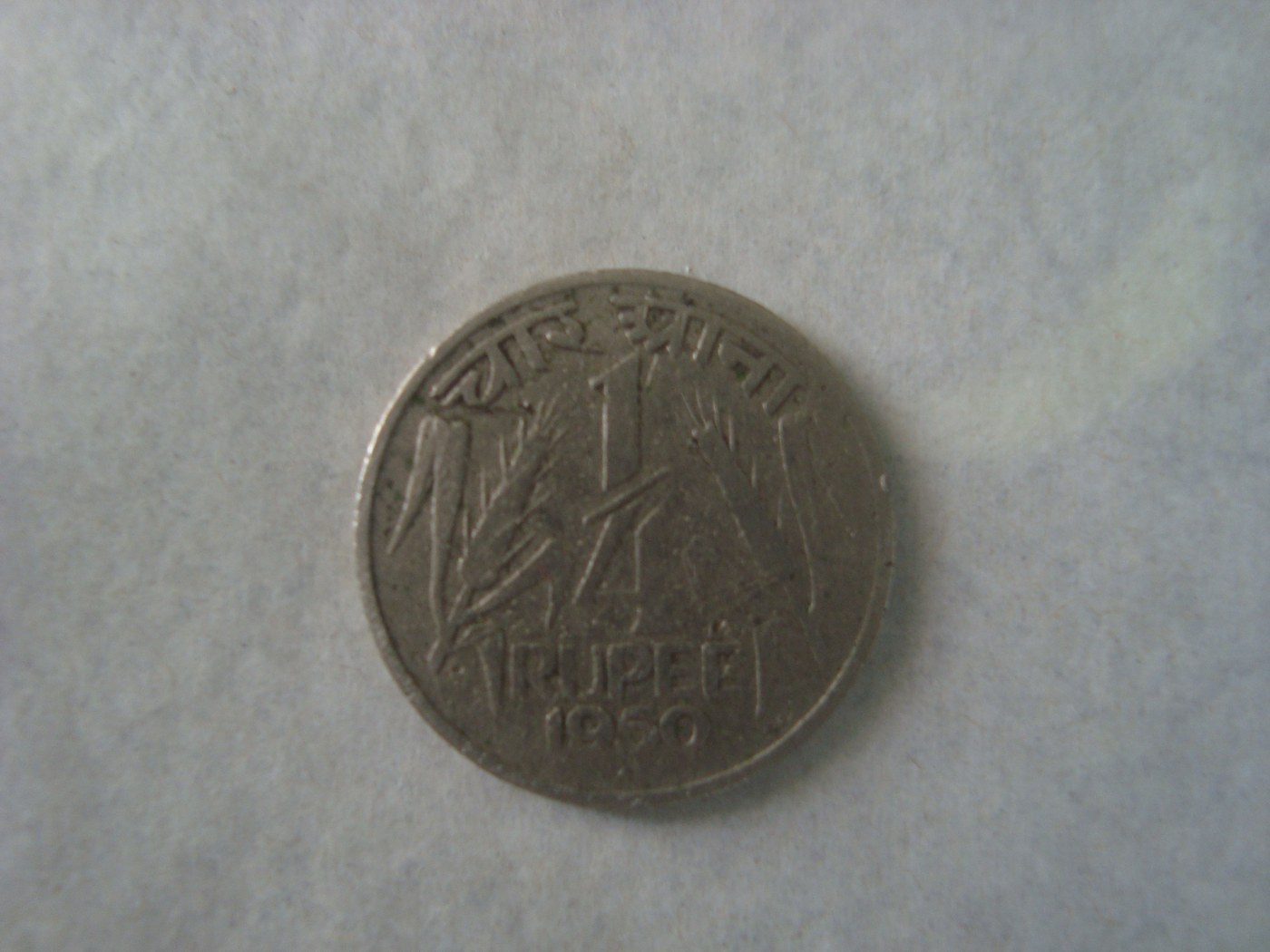
Begin with the physical coin. The India Four Anna is a small, round, machine-struck piece of copper-nickel — pale silvery-grey but non-precious — measuring around 19 mm across and only a few grams. It should be sharply and evenly struck with a well-centered design, which immediately separates it from the irregular, off-center hand-struck coins of India's earlier eras. Weigh and measure any candidate rather than relying on memory, since small denominations are easy to confuse by eye.
Read the devices and legends to confirm the type. One face shows the Lion Capital of Ashoka — the State Emblem of India — here surrounded by radiating rays. The other face carries the lion emblem together with the country name INDIA in raised letters, the denomination expressed as the quarter rupee or four annas, and usually the country name in Devanagari script. The date 1950 fixes it to the first Republic series.
Check the denomination language carefully. This coin belongs to the pre-decimal anna system, where sixteen annas made a rupee, so a four anna is a quarter rupee. Do not confuse it with the later decimal coinage introduced in 1957, which is denominated in paise; a coin marked in "naye paise" or "paise" is a different, later type, not a four anna.
Look beneath the date for a mint mark to attribute the striking mint — for instance a small dot for Bombay versus no mark for Calcutta. These marks, along with condition and any die varieties, are what distinguish individual examples and affect value within the series. Watch for look-alikes among the other Republic anna denominations, which share the same emblem and style but differ in size and stated value, so always read the denomination rather than judging by design alone.
Finally, weigh authentication concerns realistically. Because this is a modest base-metal coin, high-value counterfeits are uncommon, but polished, cleaned, or artificially toned pieces do circulate. Prefer coins with natural surfaces and honest wear, verify the diameter and weight, and when a specific mint or variety matters, compare against a standard catalog of modern Indian coins.
Frequently asked questions
How do I know it's a four anna and not another Republic coin?
Read the denomination: a four anna is the quarter rupee in the sixteen-anna system. Other early Republic coins share the Ashoka emblem but state different values and differ in size, so the marked denomination is the deciding factor.
Where is the mint mark on the coin?
Look just below the date. A small mark such as a dot indicates Bombay, while Calcutta strikings typically carry no mark. The mint mark helps attribute a specific example.
How can I tell it apart from a decimal paise coin?
The four anna is a pre-decimal coin dated 1950 and denominated in annas. India's decimal coins, introduced in 1957, are marked in paise or naye paise, so the denomination wording tells the two systems apart.
Is a shiny Four Anna more valuable?
Original luster from an uncleaned coin adds value, but artificially polished or cleaned surfaces reduce it. Favor natural surfaces and confirm the coin's size and weight when assessing an example.