
How to Identify the Immune Columbia Copper
A rare 1785-dated Confederation-era copper pattern bearing the Latin motto 'IMMUNIS COLUMBIA,' closely related in design to the Continental Dollar and Confederatio coppers.
Read the full Immune Columbia Copper encyclopedia entry →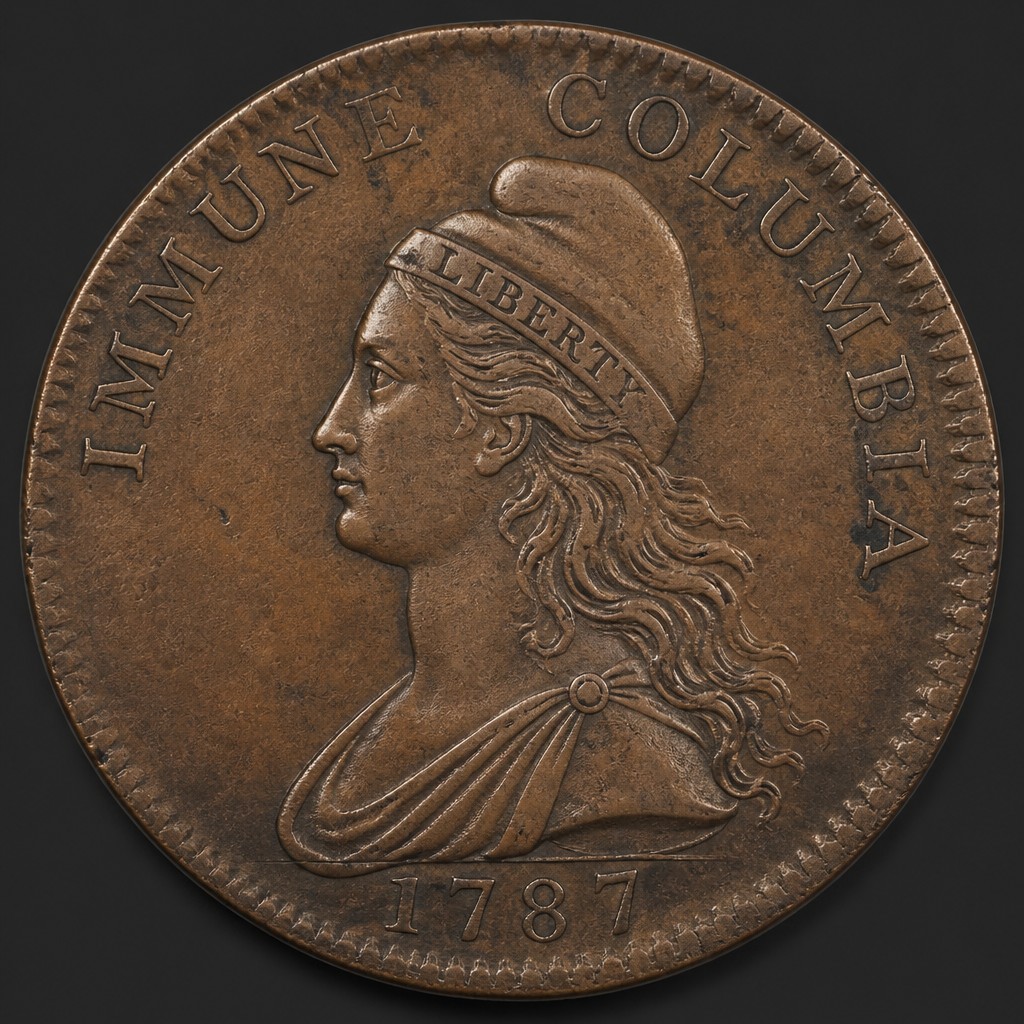
What It Is
The Immune Columbia Copper is a scarce pattern-style coin dated 1785, produced during the Confederation period when the United States had no unified national coinage. Its name comes from the Latin legend IMMUNIS COLUMBIA, generally interpreted as expressing that America (personified as Columbia) is "free" or "exempt," a sentiment fitting for the newly independent nation. It is closely related in design lineage to the earlier Continental Dollar and to the small group of coins known as Confederatio coppers.
Obverse Design & Inscriptions
Several obverse types are known for this issue. Some examples pair the design with a George III-style bust (repurposed from other dies of the era), while others show an eye-and-stars "Confederatio" style device or a version of the sundial motif associated with the Continental Dollar. The date 1785 appears on most varieties.
Reverse Design & Inscriptions
The reverse typically carries the legend IMMUNIS COLUMBIA around a central design, which on different varieties may be a shield, an eagle-like device, or stars, reflecting the experimental, mix-and-match die practices common among private die-sinkers of the mid-1780s.
Size, Weight, and Metal
These are copper coins close in size to a large cent of the period, generally in the 27-29 mm range, with weight varying by individual striking since these were low-volume, hand-struck pieces rather than a standardized mass-produced issue.
Mint Marks
No mint marks appear on Immune Columbia Coppers; they were not produced by any official government mint, and their creation is generally attributed to private engravers experimenting with patriotic and classical imagery during a period when the future of American coinage was still unsettled.
Telling It Apart From Similar Coins
Because dies were sometimes shared or mixed among different Confederation-era coppers, an Immune Columbia obverse can appear paired with reverses also seen on Confederatio coppers or other 1785-dated patterns. The key identifying feature is the IMMUNIS COLUMBIA legend itself, which is unique to this design family even when paired with a borrowed device on the other side.
Judging Condition at a Glance
Examine the central device and the legend lettering for sharpness; as low-mintage, hand-struck pieces, these coins often show die deterioration, doubling, or off-center striking even in high grade. A coin with even, moderate wear across the whole design, rather than an oddly flat area from a striking issue, is the better indicator of actual circulation.
Authenticity Red Flags
Immune Columbia Coppers are extremely rare and highly sought after, making them a target for skilled counterfeiters. Warning signs include suspiciously sharp, "too perfect" lettering inconsistent with the crude die work typical of the era, incorrect weight or diameter, and surface texture suggesting a cast copy rather than a struck coin. Given the rarity and complexity of this series, any candidate example should be examined by a specialist in early American and Confederation-era coppers before being treated as genuine.
Frequently asked questions
What does the legend IMMUNIS COLUMBIA mean?
It is Latin generally interpreted as expressing that America (personified as Columbia) is free or exempt, a patriotic sentiment fitting the newly independent nation.
Is the Immune Columbia Copper related to the Continental Dollar?
Yes, the two share design lineage and both belong to the broader family of experimental Confederation-era coppers and patterns from the mid-1780s.
Why do different Immune Columbia examples look so different?
Private die-sinkers of the era mixed and matched dies, so various obverse devices, including borrowed bust or eye-and-star designs, appear paired with the IMMUNIS COLUMBIA reverse.
Does this coin have a mint mark?
No, it has no mint mark since no official mint produced it; it was made privately during a period without unified national coinage.
Why is authentication especially important for this coin?
Its extreme rarity and high demand among collectors make it a frequent target for counterfeiters, so specialist verification is strongly recommended.