
How to Identify the Hryvnia
A collector's guide to recognizing the medieval Kievan Rus silver hryvnia by its cast ingot form, silver weight, corroded surfaces, and lack of struck coin design.
Read the full Hryvnia encyclopedia entry →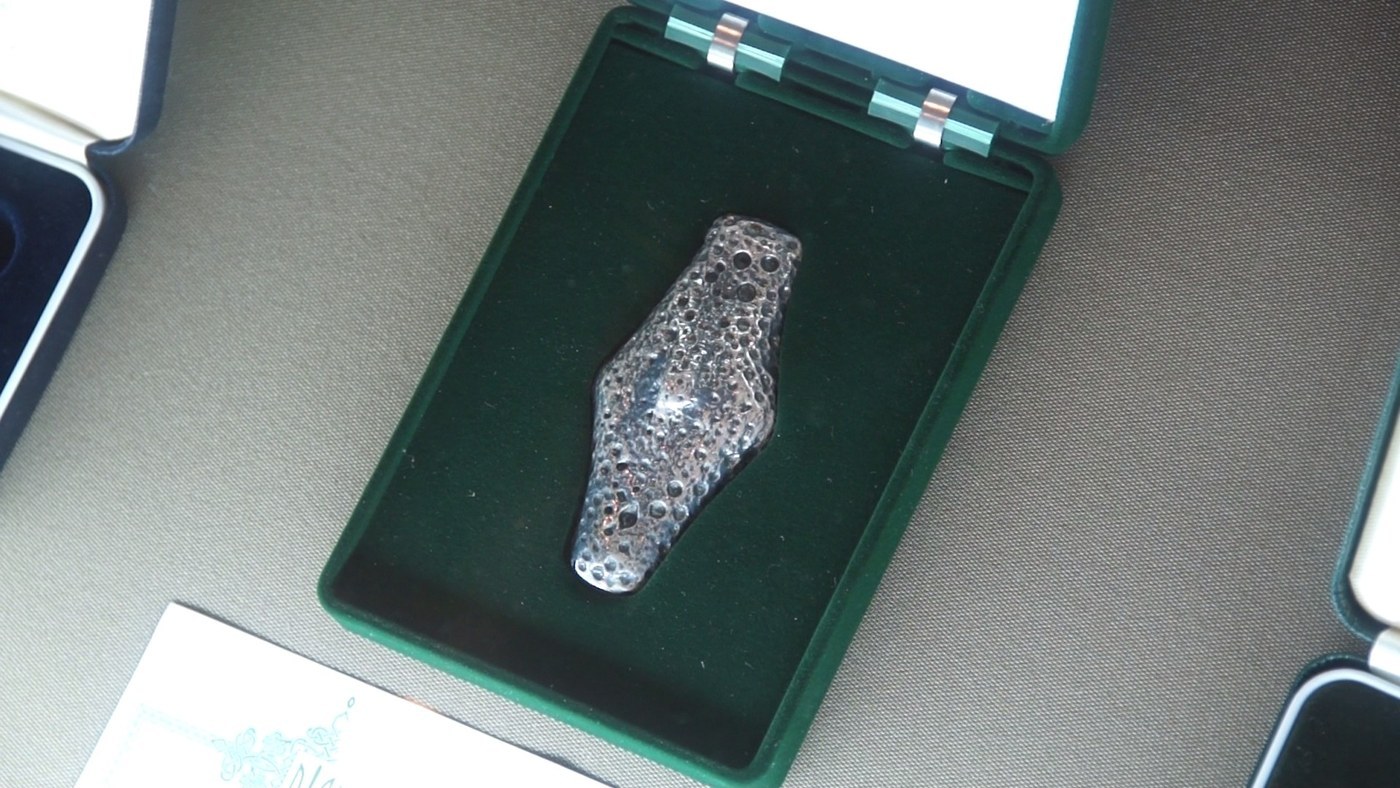
Expect Weight-Money, Not a Struck Coin
The first step is to reset expectations. A medieval Rus hryvnia is a unit of silver weight-money, so it is usually a cast piece: an ingot, bar, or irregular lump of silver rather than a thin round coin with a portrait and legend. If you are holding a neatly struck, dated coin with a clear ruler's bust, you are almost certainly not looking at a genuine medieval hryvnia.
Read the Fabric and Surfaces
Genuine examples typically show pitted, uneven, and heavily patinated silver, exactly the kind of corroded surface seen on the piece here, where faint heraldic traces appear on one face and a shield-like emblem is barely visible on the other. Treat any devices as worn, ambiguous traces rather than crisp heraldry. Cast texture, casting seams or flow marks, and old stable toning are consistent with age; suspiciously smooth, bright, or sharply detailed surfaces warrant caution.
Weigh and Measure It
Because the hryvnia is weight-money, its mass and metal are core diagnostics. Confirm the piece is genuine silver, dense and heavy for its size, and record its exact weight, since medieval silver units were defined by standardized masses that differed by region. A precise weight and dimensions, compared against documented Rus ingot types, do far more to attribute the piece than searching for a legend or date that was never there.
Rule Out Look-Alikes
Several things can masquerade as a hryvnia: modern Ukrainian hryvnia coins and notes that merely share the name, unrelated silver ingots or scrap, later medieval struck coins, and outright fakes cast to imitate the ingot form. The modern national currency is the most common confusion; it is contemporary money, not a medieval object. Anything with clear modern lettering, machine-milled edges, or a stated numeric face value is not the medieval unit.
Authenticate With Care
Medieval Rus silver is scarce and frequently misidentified or faked, so independent expertise matters. Verify weight and metal, examine surfaces under magnification for cast-fake seams or artificial patina, and compare against published finds. Just as important, confirm the legality of ownership and export, since undocumented medieval finds are restricted in some countries. For anything of real value, seek assessment from a specialist in early Rus numismatics rather than relying on surface appearance alone.
Frequently asked questions
What shape should a genuine hryvnia be?
Usually a cast silver ingot, bar, or irregular lump rather than a thin round coin. Forms vary by region, so weight and fabric matter more than a single expected outline.
How do I tell it from a modern Ukrainian hryvnia?
Modern hryvnia are contemporary coins and banknotes with clear lettering, dates, and numeric face values. The medieval unit is a corroded, cast silver weight-money piece with no such modern markings.
Should I clean the corrosion off?
No. Cleaning medieval silver can destroy surface evidence used for authentication and sharply reduce value. Leave surfaces as found and let a specialist assess them in hand.
Is it worth having authenticated?
Yes, for anything you believe is genuine. Rus silver is scarce and often faked, and legal provenance can affect both value and the right to sell, so expert verification is strongly advised.