
How to Identify the Hong Kong Silver Dollar (1866–1868, Victoria)
A short-lived colonial dollar struck at the Hong Kong Mint bearing a youthful Queen Victoria portrait, notable for its brief production run and historic link to Japan's early coinage.
Read the full Hong Kong Silver Dollar (1866–1868, Victoria) encyclopedia entry →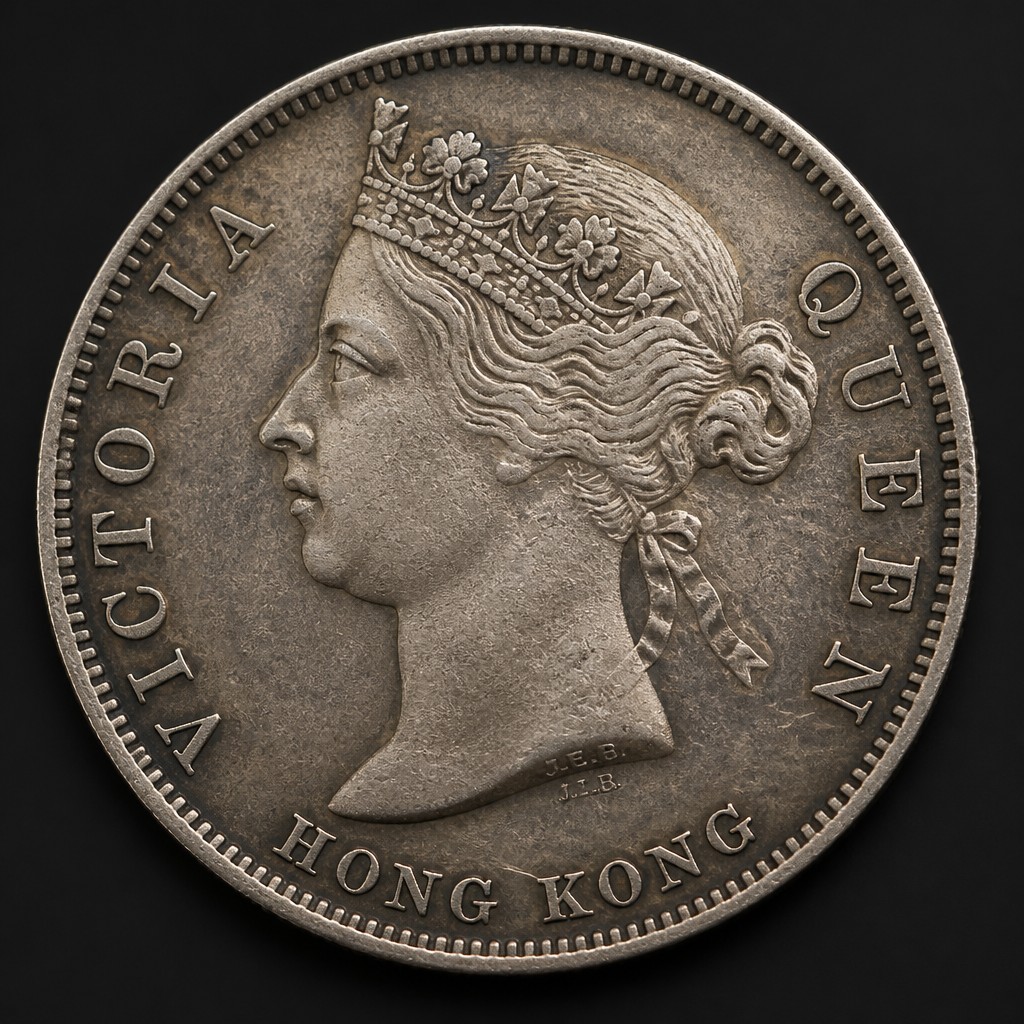
What It Is
This dollar was struck at the Hong Kong Mint, which operated for only a few years before closing due to limited local acceptance of the new coin against the traditional Chinese silver tael. Its machinery was later sold and became foundational to Japan's early modern coinage, giving the piece extra historical significance.
Obverse Design
The obverse carries a diademed young portrait of Queen Victoria facing left, with a surrounding legend identifying her as Queen, and the date placed below the bust.
Reverse Design
The reverse is dominated by Chinese characters at the center identifying the coin as a Hong Kong dollar, arranged within a wreath. Additional Chinese text notes the coin's intended equivalence to a standard weight of silver (a tael-based reference), reflecting the coin's original purpose of matching local silver currency. English wording around the border states the denomination and issuing authority.
Size, Weight, and Metal
The coin is struck in .900 fine silver, weighs close to 26.96 grams, and has a diameter around 38–39 millimeters, with a reeded edge, matching the general trade-dollar weight standard of the era.
Mint Marks
There is no separate mint-mark letter since the Hong Kong Mint produced this coin exclusively during its short operation; the date alone (1866, 1867, or 1868) identifies the year, with 1868 being especially scarce.
Telling It Apart from Similar Coins
Because it shares a similar size and Victoria portrait style with other British colonial dollars and trade dollars, look specifically for the Chinese wreath-and-inscription reverse rather than a Britannia figure — the presence of prominent Chinese characters as the central reverse device, rather than a decorative floral design, is unique to this short series.
Judging Condition
Genuine survivors often show noticeable wear from circulation and frequently carry Asian merchant chop marks, since the coin moved through the same commercial channels as other trade silver. High points to inspect are Victoria's hair details and the raised Chinese characters on the reverse.
Authenticity Red Flags
Given the coin's rarity and value to collectors, be wary of pieces with soft, indistinct lettering, incorrect weight, or a reverse design that does not match known layouts. Because so few were struck, any example should be evaluated carefully against known reference photos for portrait style and lettering spacing before assuming authenticity. The historical rarity of this short series also means that any example turning up outside a known collection or auction history deserves extra scrutiny, since the incentive to produce convincing fakes rises along with a coin's recognized value.
Historical Background
The coin's brief production window makes it more than just a curiosity piece: it marks a genuine turning point in East Asian monetary history. The failure of the Hong Kong Mint to win over merchants accustomed to weighing silver by the tael illustrates how deeply entrenched traditional currency practices were in the region, even against a well-made, officially backed coin.
Frequently asked questions
Why was the Hong Kong Mint's dollar production so short?
Local merchants largely preferred the traditional silver tael and were reluctant to adopt the new coin, so the mint proved commercially unviable and closed after only a few years.
What happened to the Hong Kong Mint's equipment?
The coining machinery was sold and shipped to Japan, where it contributed to the early infrastructure of Japan's modern coinage system.
How do I know which year my coin is?
The date appears directly below Queen Victoria's portrait on the obverse; 1868 is considerably scarcer than 1866 or 1867.
Are chop marks a problem on this coin?
Chop marks are common on circulated Asian trade silver from this era and reflect authentic period use rather than being a defect.