
How to Identify the Hong Kong Dollar (1866–1868 Silver Dollar)
A short-lived British colonial silver dollar struck at the Hong Kong Mint, identified by Queen Victoria's portrait, a Chinese dragon reverse, and bilingual English-Chinese lettering.
Read the full Hong Kong Dollar (1866–1868 Silver Dollar) encyclopedia entry →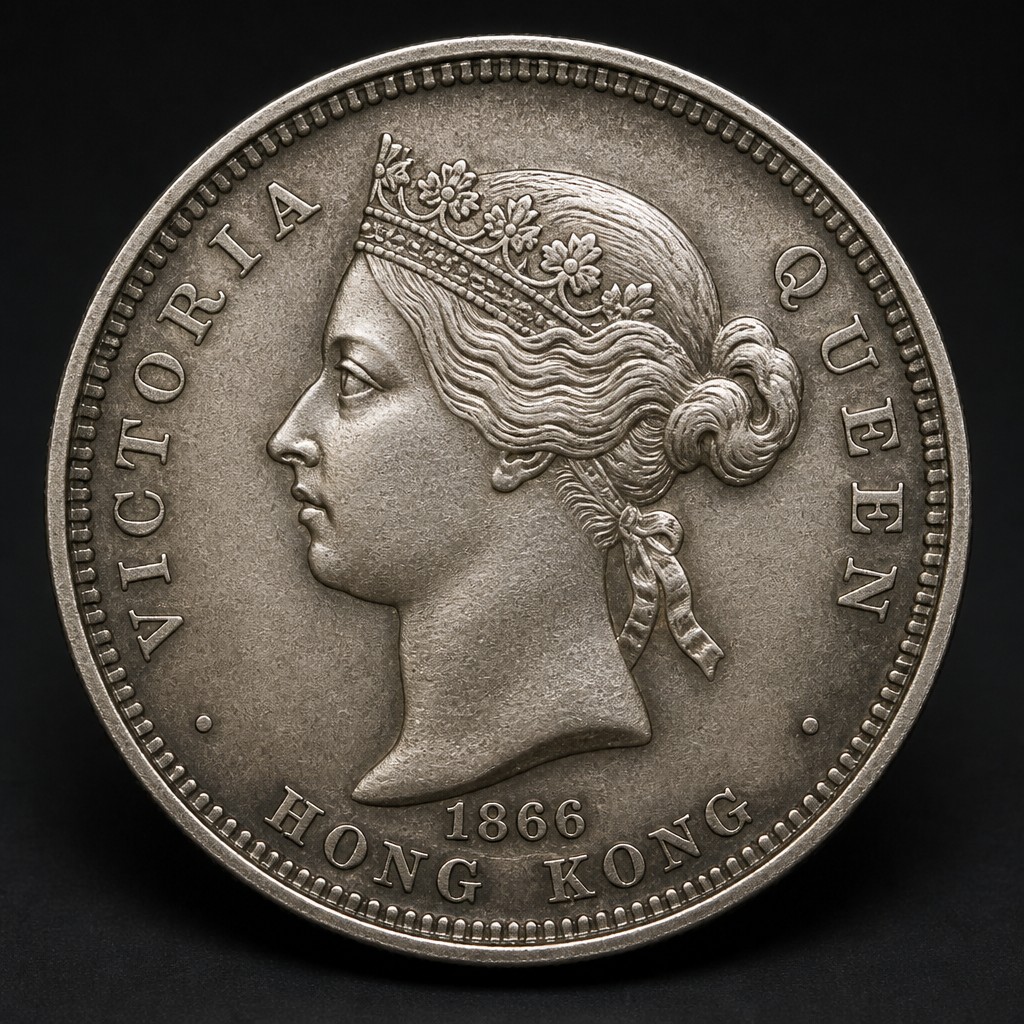
What It Is
The Hong Kong Dollar of 1866-1868 was struck by the short-lived Hong Kong Mint, a British colonial minting operation established to produce silver dollars for circulation in Hong Kong and to compete with Spanish and Mexican trade dollars already popular in Chinese commerce. The mint closed after only a few years due to limited local demand for the coins, making this a relatively brief and historically notable colonial issue. Its narrow production window and eventual export back into general Asian trade circulation mean surviving examples often show more wear than coins from longer-running series, since they continued to change hands actively for years after the mint itself had already closed.
Obverse Design and Inscriptions
The obverse shows a young portrait bust of Queen Victoria facing left, with the legend "VICTORIA QUEEN" and the date below, alongside the denomination and mint identification in English, reflecting standard British colonial coin conventions of the period.
Reverse Design and Inscriptions
The reverse features a Chinese dragon design along with the denomination expressed in Chinese characters, reflecting the coin's intended use in Chinese and regional trade. The combination of a Western royal portrait obverse and a Chinese-script, dragon-themed reverse is characteristic of Hong Kong Mint issues of this narrow period.
Size, Weight, Metal, and Edge
The coin is dollar-sized, approximately 38-39 mm in diameter, struck in .900 fine silver and weighing close to 26.96 grams, matching the trade dollar weight standard used to make it competitive with Mexican and Spanish silver dollars circulating in the region at the time. The edge is reeded.
Mint Marks and Where to Find Them
As a product of the dedicated Hong Kong Mint, these coins do not carry a separate branch mint letter; the mint's identity is confirmed by the overall design and the specific 1866-1868 date range rather than a discrete mint mark symbol.
Telling It Apart from Similar Coins
This coin is often confused with the later British Trade Dollar (featuring a standing Britannia figure) or with Mexican and Spanish colonial dollars that also circulated heavily in Asia during the same period. The Queen Victoria portrait combined with the Chinese dragon reverse and the narrow 1866-1868 date range are the clearest identifiers of a genuine Hong Kong Mint dollar.
Judging Condition at a Glance
Examine the fine detail in Queen Victoria's hair and the scales and claws of the dragon on the reverse. A well-preserved coin shows crisp, individually defined dragon scales and sharp portrait relief, while heavy circulation smooths these details into an indistinct blur.
Authenticity Red Flags
Because genuine examples from this short mint run are relatively scarce and were often melted down for their silver content shortly after minting, be especially cautious of coins with a weight or diameter inconsistent with the standard trade dollar specification, garbled or incorrectly formed Chinese characters, or a portrait style that does not match Queen Victoria's documented young-head coinage of the 1860s. A grainy surface texture or an edge seam suggests a cast counterfeit.
Frequently asked questions
Why was the Hong Kong Mint short-lived?
The mint operated only briefly in the 1860s because local demand for the coins was lower than expected compared to established Mexican and Spanish trade dollars already circulating in the region.
What are the key design features to look for?
A young Queen Victoria portrait on the obverse and a Chinese dragon design with Chinese-character denomination on the reverse.
How is this different from the later British Trade Dollar?
The British Trade Dollar shows a standing Britannia figure instead of Queen Victoria's portrait and was issued later, after the Hong Kong Mint had closed.
What weight and silver content should genuine coins have?
About 26.96 grams at .900 fine silver, matching the trade dollar standard used to compete with Mexican and Spanish silver dollars.