
How to Identify the Himera Nymph Tetradrachm
A Sicilian silver tetradrachm from Himera featuring a Nike-crowned quadriga on the obverse and the local nymph Himera sacrificing at a fountain, often with a bathing satyr, on the reverse.
Read the full Himera Nymph Tetradrachm encyclopedia entry →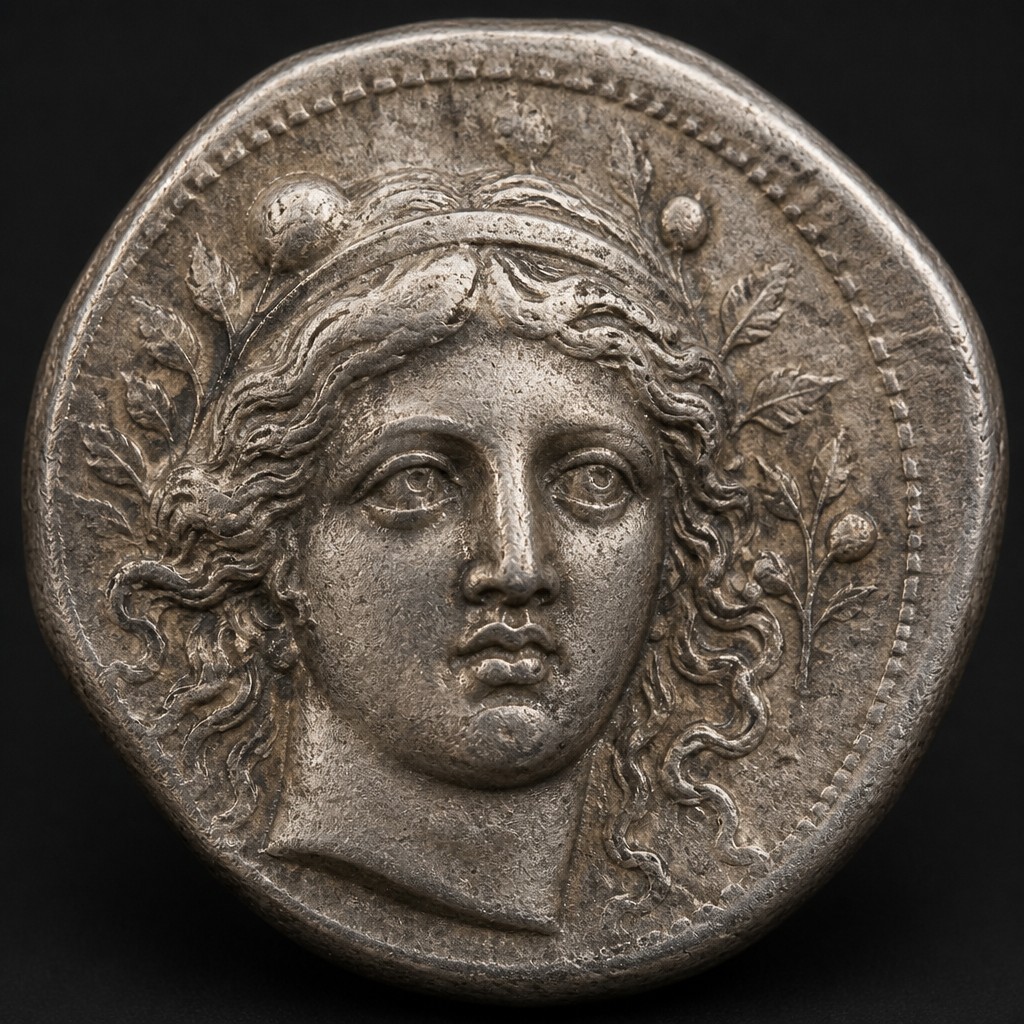
What This Coin Is
This is a silver tetradrachm struck by the Greek city of Himera on the northern coast of Sicily, primarily during the fifth century BC before the city's destruction in 409 BC. Himera's later coinage is especially notable for an unusually charming and detailed reverse scene tied to the city's famous hot springs.
Obverse Design
The obverse shows a quadriga (four-horse chariot) driven by a charioteer, with Nike flying above to crown the horses with a wreath, a standard heroic racing composition shared with several other Sicilian mints of the period. In the exergue below the chariot, a small fish is sometimes shown swimming, referencing the city's coastal location.
Reverse Design
The most distinctive reverse type shows the nymph Himera performing a sacrifice, pouring a libation over a small altar, while in front of her a satyr bathes or reclines beneath a fountain spout shaped like a lion's head or similar spout, referencing Himera's famous thermal springs. This lively, small-scale genre scene is unusual among Sicilian coin reverses for its narrative detail. The ethnic ΗΙΜΕΡΑΙΩΝ (of the Himeraeans) appears in the field.
Size, Weight, and Metal
Struck in silver on the Attic-Sicilian weight standard, these tetradrachms typically weigh close to 17 grams and measure roughly 24 to 27 millimeters across, with the standard plain, hand-struck edge.
Mint Marks and Where to Find Them
Look for the ethnic ΗΙΜΕΡΑΙΩΝ in the reverse field, along with the small fish sometimes present in the obverse exergue. The bathing satyr and fountain spout are themselves a strong identifying feature unique to this city's coinage and are unlikely to be confused with any other mint's reverse type.
Telling It Apart From Similar Coins
While the Nike-crowned quadriga obverse is shared with a number of other Sicilian cities, the reverse sacrificial nymph and bathing satyr scene is unique to Himera and immediately distinguishes it from similar-looking chariot tetradrachms of Syracuse, Katane, or Gela, none of which use this fountain motif. This makes the reverse, rather than the obverse, the most reliable identifying side for this particular type.
Judging Condition at a Glance
On the obverse, check the horses' legs, Nike's wings, and the charioteer for wear, as these fine, high-relief elements flatten first. On the reverse, the nymph's figure, the altar, and especially the small bathing satyr are delicate details that can wear down or strike weakly; a coin where the satyr and fountain spout remain clearly visible is in notably better condition than one where this small scene has become indistinct.
Authenticity Red Flags
Because the bathing-satyr reverse is a complex, small-scale scene, cast copies often render it as a blurred or simplified blob rather than distinct figures, which is a useful tell. Additional warning signs include a grainy or pitted surface, a visible seam around the edge, an implausible weight, or garbled lettering in the ethnic. Given the artistic complexity of the genuine design, a reverse that looks unusually crude or simplified compared to well-documented examples deserves closer scrutiny.
Frequently asked questions
What is the unusual scene on the reverse of this coin?
It shows the local nymph Himera sacrificing at an altar while a satyr bathes beneath a fountain spout, a reference to the city's well-known hot springs and one of the more detailed narrative reverse scenes in Sicilian coinage.
How can I tell this apart from other Sicilian quadriga tetradrachms?
The obverse chariot scene resembles those of several other Sicilian cities, but the reverse bathing-satyr and fountain scene combined with the ethnic ΗΙΜΕΡΑΙΩΝ is unique to Himera and confirms the attribution.
Why is a fish sometimes shown in the exergue on the obverse?
It likely references Himera's coastal setting on Sicily's northern shore, a common type of small decorative or symbolic device used to fill exergue space on Greek coins.
What weight should a genuine tetradrachm of this type have?
Genuine examples typically weigh close to 17 grams, consistent with the Attic-Sicilian tetradrachm standard used broadly in classical Sicily.