
How to Identify the Herakleia Herakles Nomos
A Lucanian silver nomos from Herakleia pairing a helmeted Athena obverse with a reverse showing Herakles battling the Nemean lion or resting after his labors.
Read the full Herakleia Herakles Nomos encyclopedia entry →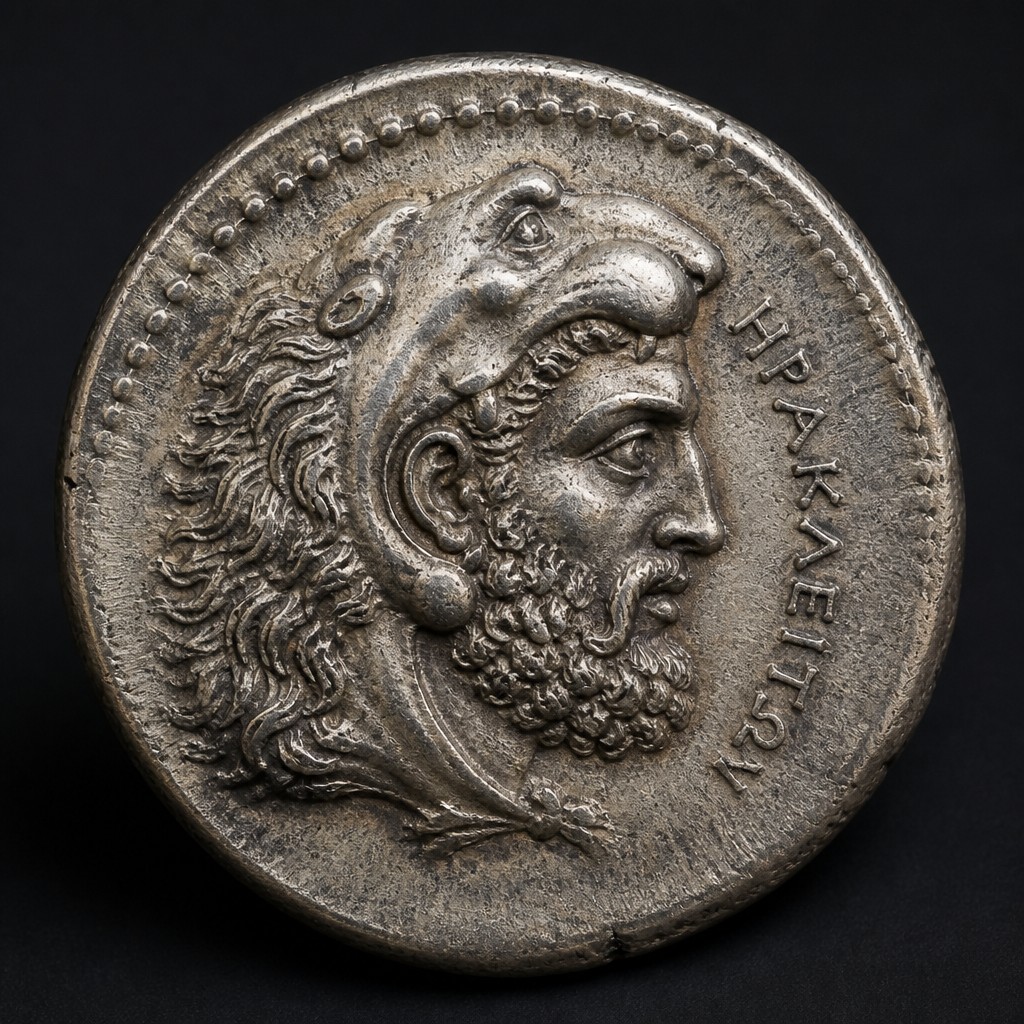
What the Coin Is
Herakleia was founded in Lucania in the early fourth century BC by settlers from Taras (Tarentum) and quickly became an important mint. Its coinage naturally drew on the city's namesake, Herakles, for its central reverse imagery, and the nomos (didrachm) is one of the more commonly encountered South Italian silver types today.
Obverse Design
The obverse shows the head of Athena facing right, wearing a crested Corinthian helmet. The helmet bowl is frequently decorated with a small relief scene, most notably Scylla, the sea monster, shown hurling a stone or rock, though other decorative motifs appear on different issues. Small control letters or symbols usually sit in the field near the neck truncation or helmet crest.
Reverse Design
The reverse centers on Herakles, shown in one of two common compositions: standing and wrestling the Nemean lion with his bare hands, or seated on a rock draped with a lion skin, holding his club in one hand and sometimes a drinking cup in the other. The ethnic HERAKLEION (or an abbreviated form) runs around the design, and small symbols or monograms mark individual issues.
Size, Weight, and Metal
This is a silver nomos weighing approximately 7.8 to 7.9 grams, consistent with the broader Italiote (South Italian) weight standard. The flan is generally broad and reasonably thin, allowing good detail in both the helmet ornamentation and the Herakles composition.
Mint Marks and Where to Find Them
Herakleia's mint used small control letters, monograms, and symbols placed near the figures on both sides rather than a fixed mint mark. These details, along with the choice between the wrestling or seated Herakles composition, help specialists group the coinage into a rough chronological sequence spanning the fourth and third centuries BC.
Telling It Apart from Similar Coins
The helmeted Athena obverse is broadly similar to types used at Taras and other Lucanian mints, so the reverse Herakles scene is the clearest identifier, since the specific combination of a wrestling or seated Herakles with the HERAKLEION legend is unique to this city. Coins of Herakleia in Trachis (Greece) show different, unrelated types, so geography and style both help confirm attribution to the Lucanian city.
Judging Condition at a Glance
Wear typically shows first on Athena's helmet crest and cheek, and on Herakles's raised arm, shoulders, and the lion's mane in the wrestling scene. A well-struck coin will show clear separation between Herakles's limbs and the lion, along with a readable legend; heavily worn examples often reduce the wrestling scene to a blurred mass.
Authenticity Red Flags
Watch for reverse scenes where the anatomy of Herakles or the lion looks stiff, flat, or anatomically inconsistent compared to genuine die-struck examples, which is common on cast copies. A telltale seam line around the edge, unusually light weight for the apparent size, or a grainy, sandy surface texture under magnification are all signs of a modern reproduction rather than an ancient strike.
Frequently asked questions
What two main reverse compositions should I look for?
The reverse shows either Herakles wrestling the Nemean lion or Herakles seated on a rock with a lion skin and club; both are genuine variants used across the city's coinage.
What is depicted on Athena's helmet?
Many examples show a small relief of Scylla hurling a rock on the helmet bowl, though other decorative motifs also occur on different issues.
How much should this coin weigh?
A full-weight silver nomos from Herakleia weighs approximately 7.8 to 7.9 grams.
Is this the same city as Herakleia in Greece?
No, this coinage comes from Herakleia in Lucania, South Italy, a separate city from Herakleia in Trachis, and the coin types are distinct.