
How to Identify the Henry VII Groat
Collector checks for the first Tudor fourpence: size and fabric, the crowned portrait, the shield reverse, mint marks, look-alikes, and fakes.
Read the full Henry VII Groat encyclopedia entry →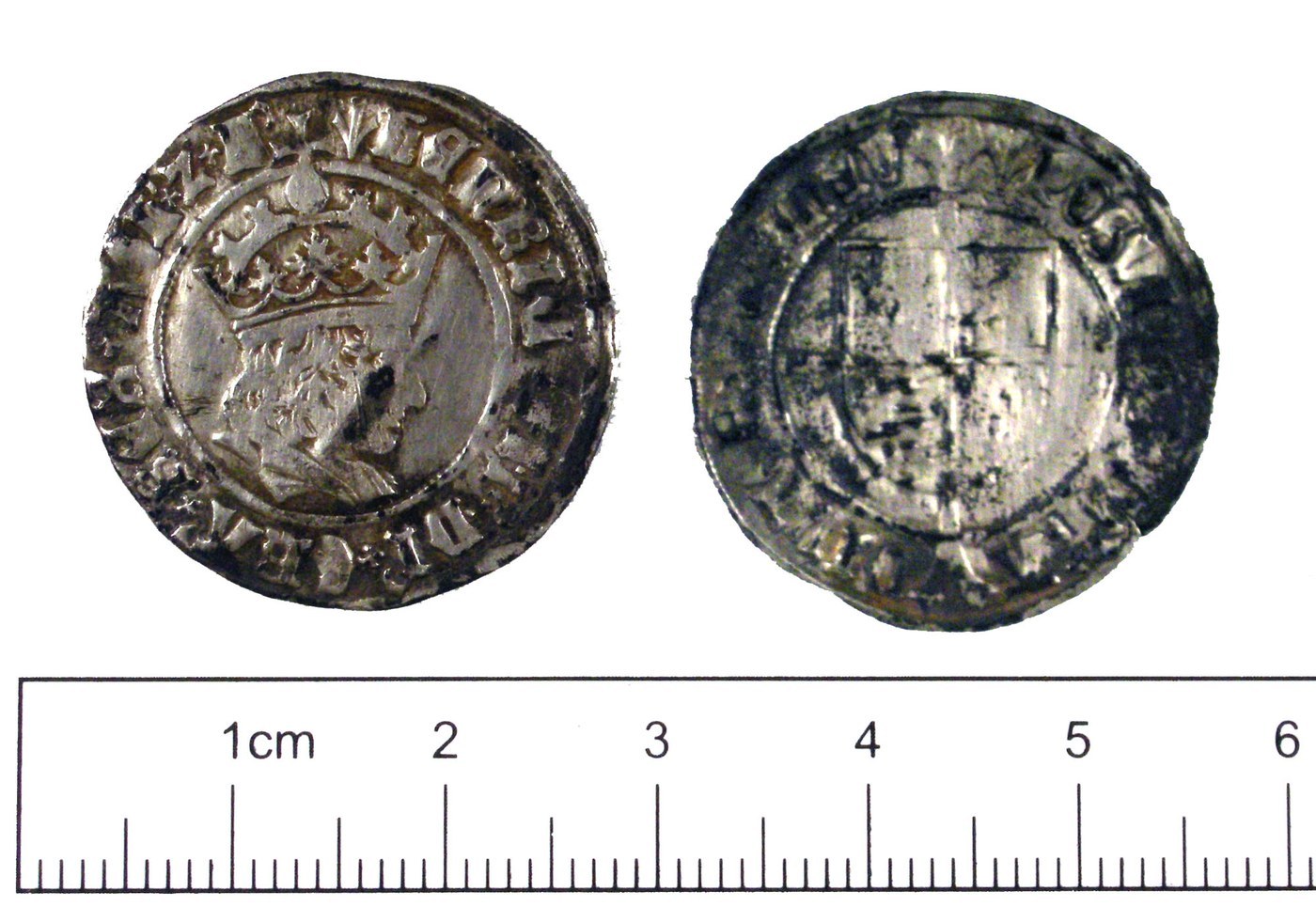
Start with size, metal, and fabric. A Henry VII groat is a broad, thin hammered silver coin of fourpence size, larger than a penny or half-groat, and struck by hand so its flan is usually a little irregular and rarely perfectly round. If your coin is small, thick, and chunky, or machine-round with a milled edge, it is not a hammered Tudor groat.
Read the obverse portrait. This example shows a crowned profile portrait of Henry VII facing left, ringed by a Latin legend naming the king. A realistic profile bust marks the later portrait groats of the reign; earlier Henry VII groats instead use a stylized full-face crowned bust. Note the crown form and the style of the portrait, as these help place the coin within the reign.
Check the reverse design. The reverse here carries a shield bearing the quartered English royal arms within a surrounding inscription, the style paired with the profile portrait. Older groats of the period often show a long cross with a legend across the field instead, so a shield-of-arms reverse is a useful clue that you are looking at the later portrait coinage.
Hunt for the mint mark. Small symbols placed in the legends, known as initial or mint marks, let specialists attribute a groat to a particular mint (such as the Tower of London, Canterbury, or York) and to a phase of the reign. Locating and matching this mark against a reference is often the key step in a precise attribution, since portraits and shields can otherwise look similar.
Beware look-alikes and fakes. Groats of neighboring reigns, from Edward IV through Henry VIII, share the crowned-bust format and can be confused at a glance, so read the name in the legend carefully. Because Tudor silver is collectable, cast copies and tooled coins exist; genuine pieces show crisp hand-struck detail and honest wear rather than soft, blurred surfaces or casting seams. Confirm that diameter and weight fit a groat, and seek an experienced dealer or specialist opinion for anything of real value.
Frequently asked questions
How do I tell a Henry VII groat from an earlier medieval groat?
Read the king's name in the obverse legend and check the design. A realistic profile portrait with a shield-of-arms reverse points to Henry VII's later coinage, unlike the facing bust and long-cross reverse of earlier reigns.
What size is a Henry VII groat?
It is a broad, thin hammered silver coin worth fourpence, noticeably larger than a penny or half-groat. Because it was struck by hand, the flan is often slightly irregular rather than perfectly circular.
Why can't I read all the letters around the edge?
Hammered coins were struck by hand, so legends are frequently off-center, weakly struck, or worn. Partly legible inscriptions are normal and do not by themselves indicate a fake.
How do I avoid buying a fake?
Genuine groats show sharp hand-struck detail and natural wear, while casts look soft and may show seams. Check that size and weight suit a groat, look for a plausible mint mark, and get expert help before paying serious money.