
How to Identify the Hanover 1/6 Thaler
Recognize this German States silver piece by its leaping Saxon Steed, its one-sixth-Thaler fraction, and the 1688 date.
Read the full Hanover 1/6 Thaler encyclopedia entry →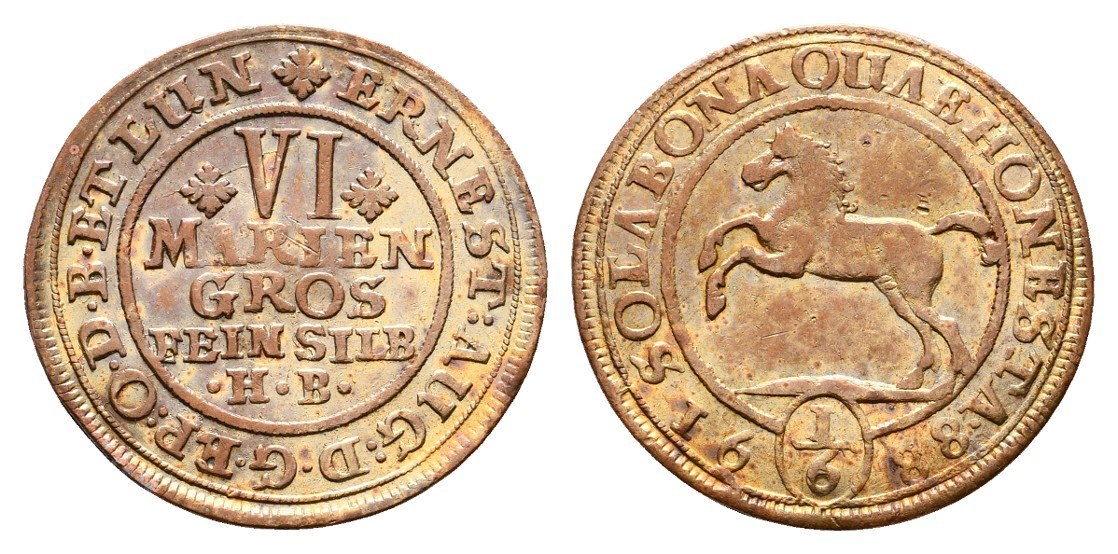
Start with the horse. The defining feature of Hanover / Brunswick-Luneburg coinage is the leaping or rearing horse (the Saxon Steed) shown in profile on the obverse. If your coin has this galloping horse surrounded by a Latin legend, you are almost certainly looking at a Hanover-family issue rather than another German state.
Confirm the denomination. Turn to the reverse and find where the value is stated as a sixth of a Thaler. Late-17th-century German fractional silver almost always spells out or marks its fraction plainly, so a clearly indicated 1/6 value alongside the date 1688 confirms both the type and the year.
Check size and metal. The 1/6 Thaler is a modest silver coin, noticeably smaller and lighter than a full Thaler but larger than the tiny silver denominations. It should be non-magnetic with the honest weight and ringing tone of period silver; a dull, magnetic, or under/overweight piece points to a replica.
Rule out look-alikes. The same horse appears on many other Brunswick-Luneburg and later Hanover denominations (1/12, 1/4, full Thaler and beyond) and across different reigns, so do not rely on the horse alone. Read the fraction and date carefully to separate a 1/6 Thaler from its larger and smaller relatives, and check the ruler named in the legend.
Authenticate carefully. Genuine 1680s silver shows slightly irregular hand-striking, period lettering, and natural toning rather than a flawless machine finish. Weight and diameter should match published specifications for the type. For any coin of value, seek third-party grading or a specialist opinion before buying or selling.
Frequently asked questions
How do I tell a 1/6 Thaler from a 1/12 or 1/4?
Read the reverse fraction directly rather than judging by size. All share the leaping horse, so the stated value and legend are what distinguish the sixth from the twelfth or quarter Thaler.
Does the horse alone prove it is from Hanover?
The Saxon Steed strongly points to Brunswick-Luneburg / Hanover, but confirm with the legend, ruler's name, and denomination, since the emblem was used across many issues and reigns.
What are the quickest authenticity checks?
Confirm silver (non-magnetic, correct weight, ringing tone), look for genuine hand-struck relief and period lettering, and verify that the 1688 date and 1/6 fraction read cleanly; send high-value coins for professional grading.