
How to Identify the Halve Rijksdaalder van Leicester
A collector's guide to recognizing the Leicester-type half rijksdaalder by its armored bust, split shield, provincial legends, and silver hammered fabric.
Read the full Halve Rijksdaalder van Leicester encyclopedia entry →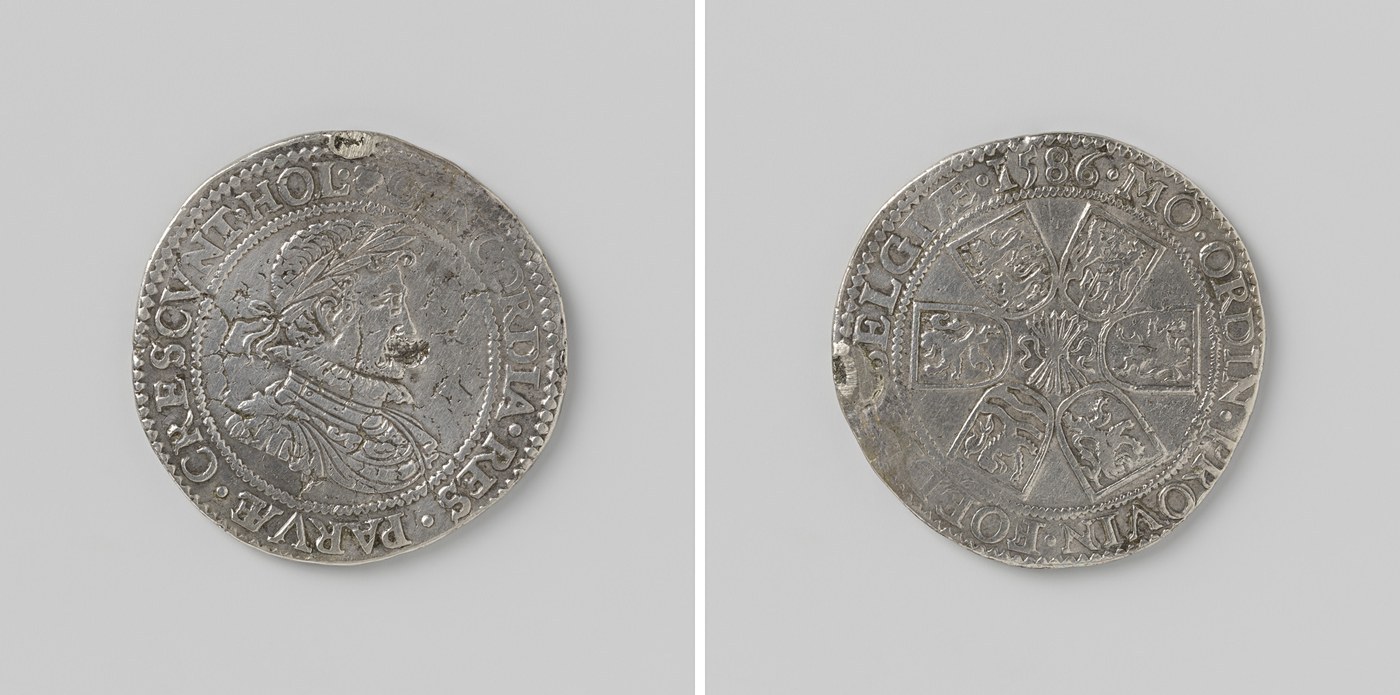
Read the Portrait First
The defining obverse feature is a helmeted, armored bust facing right, a martial figure, not a crowned king or an allegorical head. This armored portrait is the signature of the Leicester-standard rijksdaalder family. If the coin instead shows a robed monarch, a saint, or a plain heraldic design on the obverse, it is a different type.
Confirm the Reverse Shield
Turn the coin over and look for a heraldic shield, typically shown split or quartered and set within decorative ornament, framed by a Latin legend. On these pieces the arms and inscriptions identify the issuing province and the coin's role as money of the united estates. The combination of armored bust and decorated split shield, read together, is what confirms the type.
Check Size, Weight, and Metal
This is a hammered silver coin. As a half rijksdaalder it is a mid-to-large piece, smaller and lighter than the crown-sized full rijksdaalder but struck in the same style. Expect real silver fabric with the tone and heft of struck silver, and the slightly irregular flan and strike typical of hand-hammered coinage. A perfectly round, lightweight, or magnetic piece of this design is a warning sign.
Match Legends, Dates, and Mint Marks
Because these coins came from several provincial mints over a span of years, expect variation. Look for Latin legends naming a province and the authority of the estates, dates in the 1580s to 1590s, and small mint marks or privy symbols in the fields or legends. Provincial arms rather than a single national emblem point to the early United Provinces. Use these details to distinguish one province and date from another.
Watch for Look-Alikes and Fakes
Other large Dutch and neighboring silver coins of the era share armored or heraldic motifs; always read the denomination cues and compare the full and half sizes so you do not confuse a full rijksdaalder, a quarter, or a foreign daalder with this half. Because it is an old and valued silver type, it attracts casts and altered pieces, so check for seams, wrong weight, mushy detail, and tooled surfaces, and for higher-value examples favor third-party authentication.
Frequently asked questions
What is the single clearest sign of this type?
The helmeted, armored bust facing right on the obverse. Combined with a split, decorated heraldic shield on the reverse, it identifies the Leicester-standard rijksdaalder family rather than a royal or religious coin.
How do I tell the half from the full rijksdaalder?
Compare size and weight. The half is distinctly smaller and lighter than the crown-sized full rijksdaalder while sharing the same armored bust and shield designs and legends.
Why is the strike often uneven or off-center?
These are hand-hammered coins of the late sixteenth century, so weak strikes, irregular flans, and off-center images are normal and do not by themselves indicate a fake.
Should I have one authenticated?
For anything beyond a heavily worn example, yes. As a scarce historic silver type it is faked and altered, so verifying weight, size, and design or using third-party certification protects your purchase.