
How to Identify the Halve Duit (VOC)
A collector's guide to recognizing the VOC copper half duit by its crowned company monogram, small copper format, and eighteenth-century features.
Read the full Halve Duit (VOC) encyclopedia entry →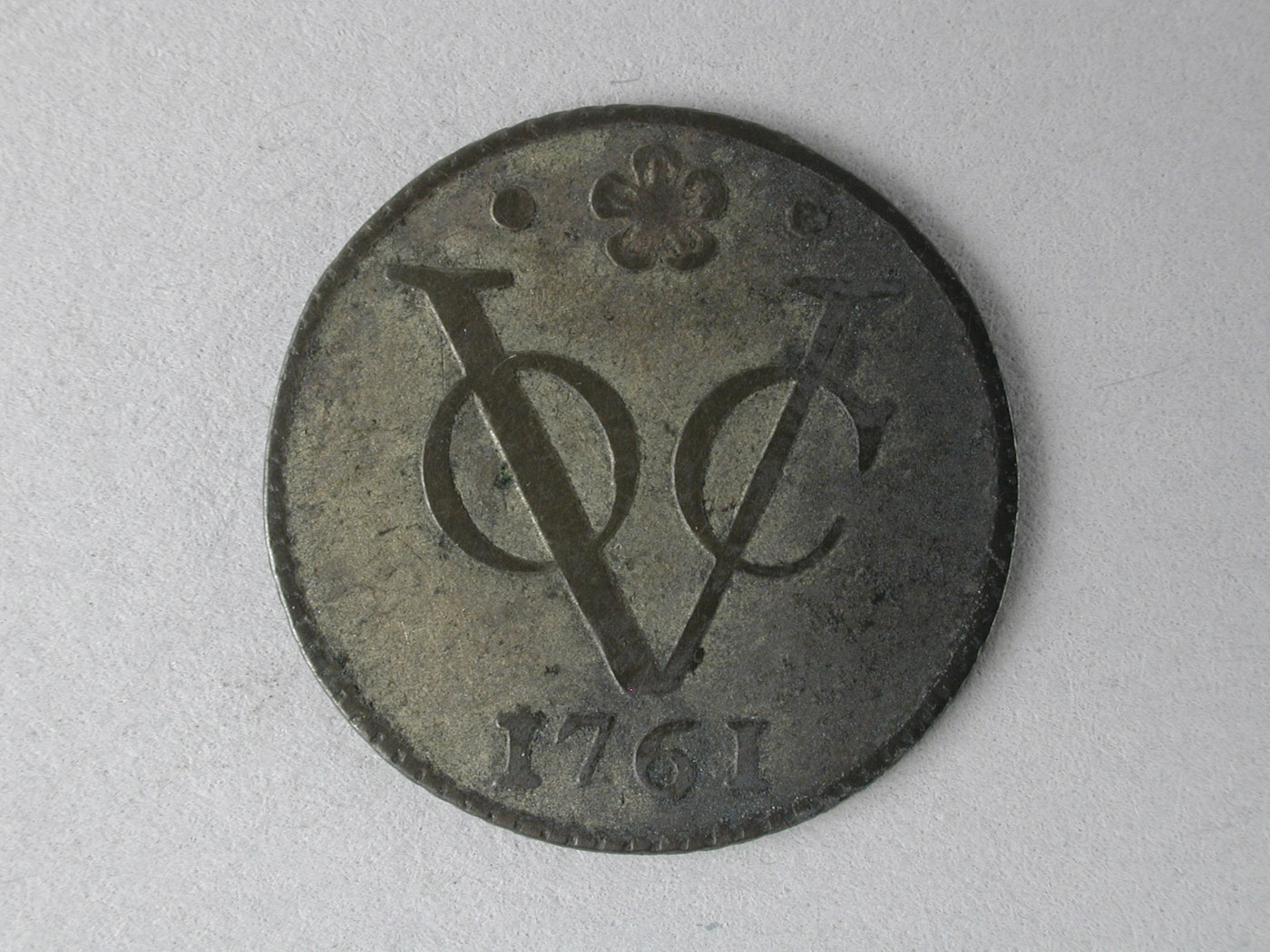
Start With the VOC Monogram
The first thing to confirm is the obverse device: a crowned monogram made of the interlocked letters V, O, and C. This cipher is the corporate emblem of the Dutch East India Company and is the single strongest identifier of the type. Look for the three letters woven together beneath a crown, often flanked by small decorative elements. If the monogram is absent or reads as a different set of letters, the coin is not a VOC issue.
Read the Reverse for Province and Date
Because the obverse only tells you it is a company piece, turn the coin over to pin down details. VOC copper typically shows a provincial coat of arms or mark, a value indication, or a date on the reverse. That side is where you confirm which of the Dutch provincial mints struck it and in which year. In the photographed specimen the reverse is not visible, so exact attribution should wait until that face can be examined.
Check Size, Metal, and Patina
Expect a small, thin, lightweight copper coin, consistent with a half-duit minor denomination. Genuine pieces carry the warm brown or reddish-brown tone of aged copper and are non-magnetic. Flans are frequently irregular and strikes uneven, which is normal for mass-produced low-value copper of the 1700s. A bright, heavy, or magnetic piece, or one with a suspiciously perfect flan, warrants caution.
Rule Out Look-Alikes
The VOC also struck full duits and other small coppers, so read the denomination and compare size rather than assuming any VOC-marked coin is a half duit. Ordinary provincial duits of the Dutch Republic without the company cipher are a related but distinct series. Modern reproductions, tourist replicas, and gilt novelty pieces exist as well, and these often feel wrong in weight, sharpness, or surface. Matching the monogram, small copper module, and eighteenth-century features together is what confirms the type.
Authentication Cautions
Because VOC coins are popular souvenirs, cast copies and fantasy pieces circulate widely. Watch for casting seams, mushy or granular detail, off weights, and artificial patina. Heavy corrosion, pitting, or a drilled hole reduce both certainty and value, so favor coins with legible devices and honest surfaces. When province and date are important to you, base the attribution on a clearly readable reverse rather than the monogram alone.
Frequently asked questions
How do I confirm a coin is a genuine VOC piece?
Look for the crowned VOC monogram, the interlaced V, O, and C letters, on the obverse. Combine that with a small copper flan, honest brown patina, and an identifiable reverse to build confidence in the attribution.
How can I tell a half duit from a full duit?
Compare size and read any value indication on the reverse. The half duit is the smaller, lighter of the two. Both can carry the VOC cipher, so denomination is judged by module and the reverse markings rather than the monogram alone.
Should the coin be magnetic?
No. Genuine VOC half duits are copper and non-magnetic. A magnetic response points to a modern reproduction or a plated base-metal fake rather than a period copper coin.
Where do I find the mint and year?
On the reverse. VOC copper generally shows a provincial arms or mark and often a date there, which is how you confirm the specific mint and year. When the reverse is missing or worn, exact attribution is uncertain.