
How to Identify the Half Sovereign of George III
A collector's guide to recognizing a George III gold half sovereign by its laureate bust, crowned shield, small size, 22-carat gold and date.
Read the full Half Sovereign of George III encyclopedia entry →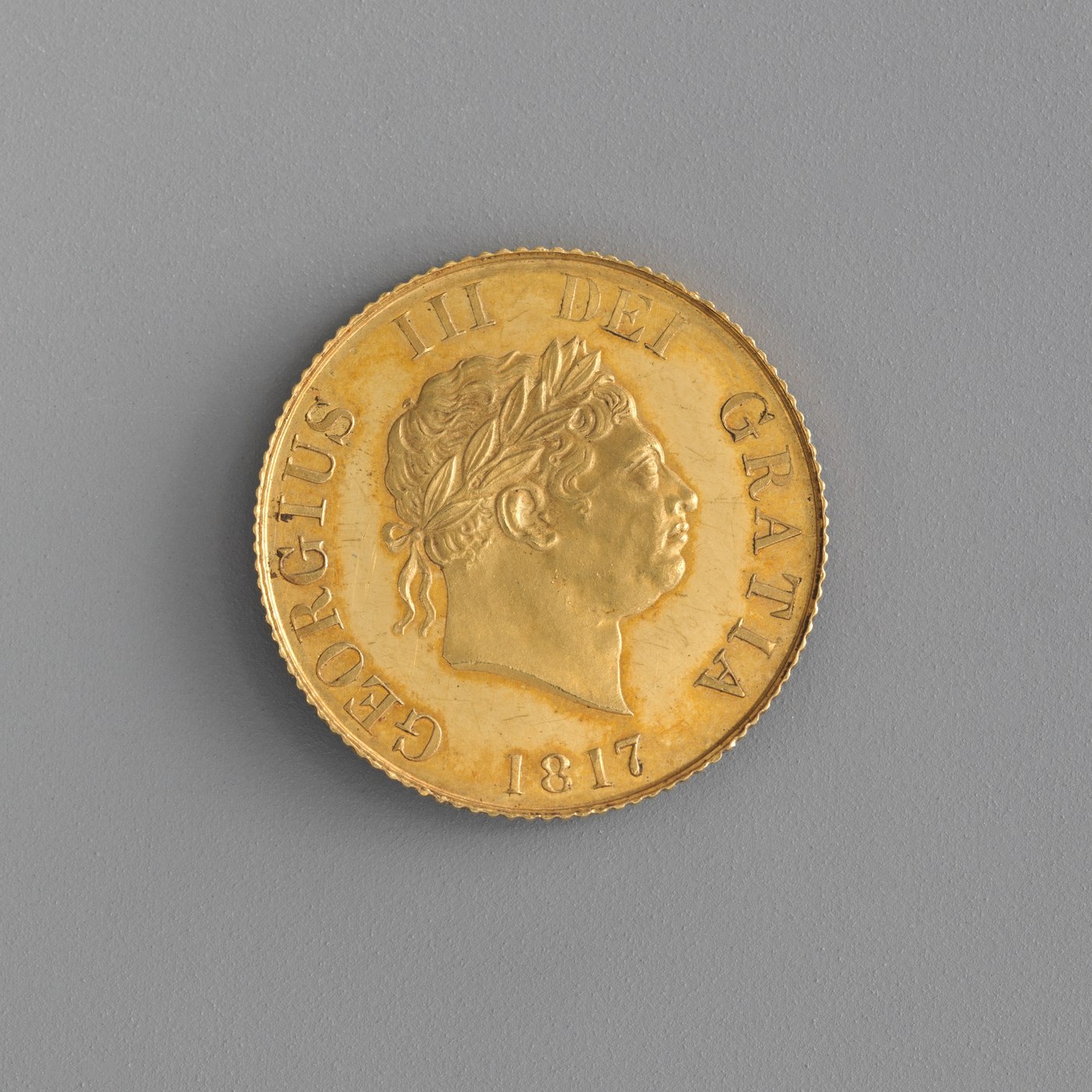
Begin with the obverse portrait. A George III half sovereign shows a laureate bust of the king facing right, meaning his head is wreathed with laurel rather than wearing a crown. Around it runs the Latin legend GEORGIVS III DEI GRATIA. Confirming both the right-facing laureate head and the GEORGIVS III name is the first and most reliable step, because later half sovereigns carry different monarchs and legends.
Check the reverse design. This type has a crowned heraldic shield of the quartered royal arms, with the legend and date around it, rather than a portrait or a modern St George. The early George III shield is relatively plain, unlike the more ornate garnished shields introduced under George IV, so a simple crowned shield with an 1817-1820 date points to this reign.
Measure size and test the metal. A genuine half sovereign is small, about 19 mm across and roughly 3.9-4.0 grams in 22-carat gold, with a warm yellow-gold color. It is noticeably smaller and lighter than a full sovereign. A coin of the wrong diameter, markedly wrong weight, or a pale or magnetic metal is a warning sign that it is a fake, a different denomination, or gold-plated base metal.
Watch for look-alikes and altered pieces. Full sovereigns share the same designs at larger size, and later George IV and Victorian half sovereigns can resemble this type at a glance, so always read the legend and date rather than relying on the shield alone. Because these are small gold coins, many have been mounted in jewellery, giving solder marks, filing or bending at the rim; such damage lowers value and can indicate tampering.
Authenticate before any significant purchase. Counterfeits and cast copies exist, sometimes with soft, mushy detail, seams, casting bubbles, or incorrect weight and diameter. Checking that weight, size, gold color and the correct laureate-bust and crowned-shield designs all agree, and buying from reputable dealers or with independent certification, is the safest approach for a coin of this value.
Frequently asked questions
How do I tell a half sovereign from a full sovereign?
They share the same designs, so use size and weight: the half sovereign is about 19 mm and 3.9-4.0 grams, while the full sovereign is larger and roughly double the weight. Diameter and weight are the reliable distinguishing features.
How can I distinguish a George III half sovereign from later ones?
Read the obverse legend and date. A George III coin names GEORGIVS III and is dated 1817-1820 with a laureate bust and a plain crowned shield, whereas George IV and Victorian pieces carry different names, portraits and often more ornate shield designs.
What size and weight should a genuine coin be?
About 19 mm in diameter and roughly 3.9-4.0 grams in 22-carat gold. A coin that is much lighter, undersized, oversized, or made of pale or magnetic metal is likely a fake, plated, or a different denomination.
Does jewellery mounting affect the coin?
Yes. Many small gold half sovereigns were set in jewellery, leaving solder traces, filing, polishing or bent rims. Such damage reduces collector value and warrants extra caution, so inspect the edge and surfaces closely and seek authentication.