
How to Identify the Half Laurel
A collector's guide to attributing James I's hammered gold Half Laurel by its laureate bust, quartered shield, size and mint marks.
Read the full Half Laurel encyclopedia entry →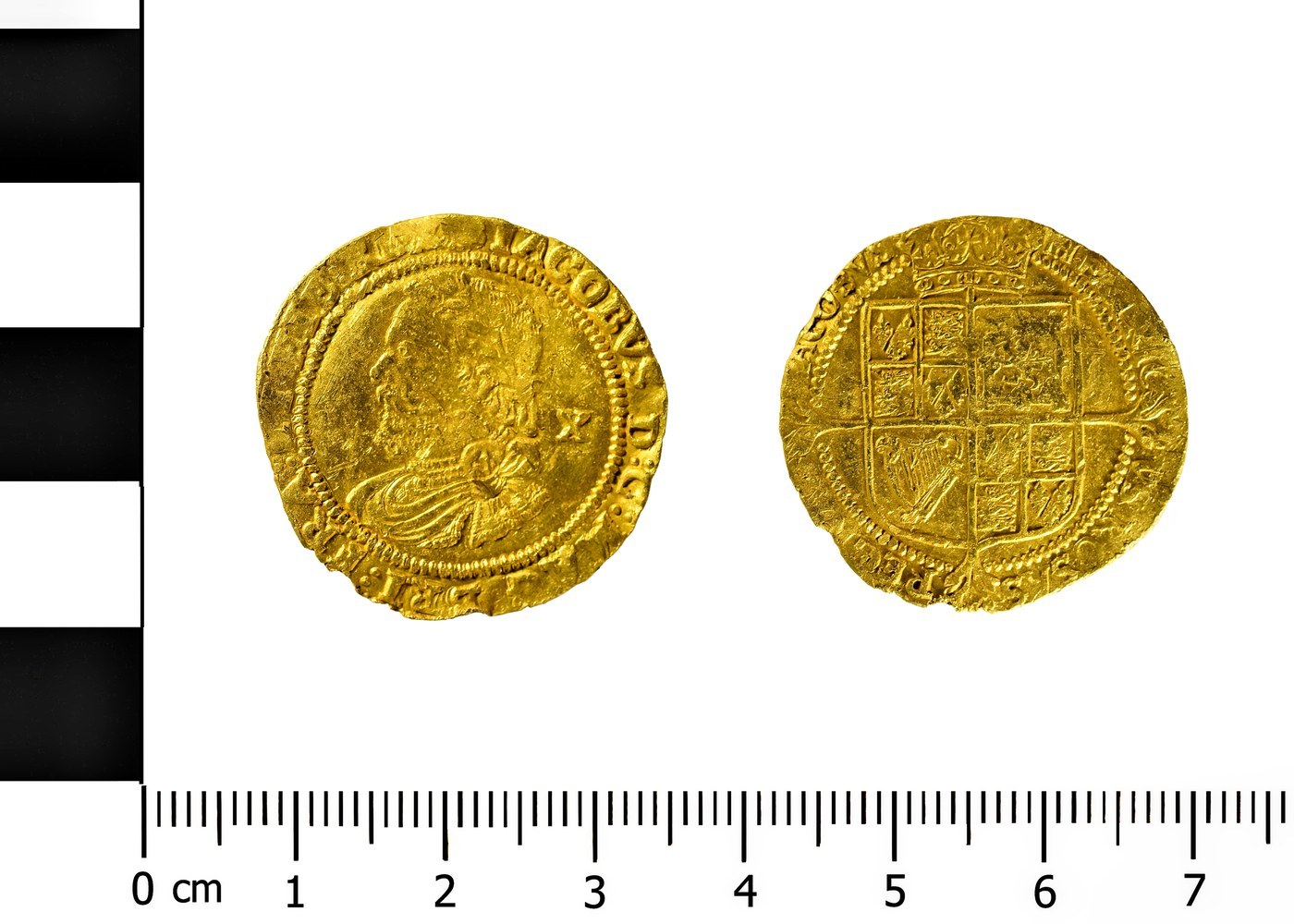
Start with the portrait. The Half Laurel shows the crowned, laureate profile bust of James I facing right, wearing a Roman-style laurel wreath rather than a plain crowned or bare head. This wreath is the single most telling feature and the origin of the Laurel name; a right-facing wreathed profile inside a beaded border, ringed by a Latin legend naming the king, is what you are confirming, as in the photographed example. Read the legend to verify it names James rather than a later Stuart or an earlier monarch.
Turn to the reverse. Expect a crowned shield of the royal arms with quartered heraldic divisions set in a compartmented design, combining the arms of England, Scotland, France and Ireland to reflect James's united crowns. The specific arrangement of the quartering and the surrounding motto distinguish the Laurel reverse from the earlier Unite and from coins of other reigns, so match both sides before attributing the type.
Check size, metal and fabric. This is a mid-sized hammered gold coin, smaller and lighter than the full twenty-shilling Laurel and larger than the Quarter Laurel. Weigh and measure it against published specifications for the ten-shilling piece: a coin that is markedly light may be clipped, which hurts both authenticity confidence and value. Genuine strikes show hand-cut lettering, a slightly irregular flan and the soft, sometimes doubled relief of hammered work rather than the crisp, uniform edges of milled coins.
Locate the mint mark. A small initial mark in the legend indicates the period of issue within James I's final coinage of the 1620s. Cross-reference the mark, legend spelling and bust style against a standard reference for Stuart hammered gold to separate a common issue from a scarcer one and to guard against mismatched or altered pieces.
Be cautious with authentication. Early English gold is heavily faked, and cast copies, tooled surfaces, mounted or ex-jewelry pieces and outright replicas all circulate. Look for casting seams, bubbles, unnaturally smooth fields, solder traces at the rim, or lettering that lacks natural hand-cut variation. Given the value at stake, have any candidate examined by a specialist in early English hammered coinage or submitted to a reputable grading service before purchase.
Frequently asked questions
How do I tell a Half Laurel from a full Laurel?
Both share the laureate bust and quartered shield, so the difference is scale: the Half Laurel is a smaller, lighter ten-shilling piece, while the full Laurel is a larger twenty-shilling coin. Weigh and measure against published specifications to confirm the denomination.
How is the Half Laurel different from James I's Unite?
The Unite shows the king in a crown, whereas the Laurel series shows him wreathed in laurel like a Roman emperor. If the profile wears a laurel wreath rather than a crown, you are looking at a Laurel-type coin.
How can I be sure it is genuine and not a cast copy?
Genuine pieces are hand-struck, with slightly uneven flans and hand-cut lettering. Watch for casting seams, air bubbles, mushy detail, solder marks or incorrect weight. For a coin of this value, professional authentication is strongly advised.