
How to Identify the Half Guinea
The smaller half-value companion to the British guinea, sharing the same gold standard and monarch portraits but struck at roughly half the size and weight.
Read the full Half Guinea encyclopedia entry →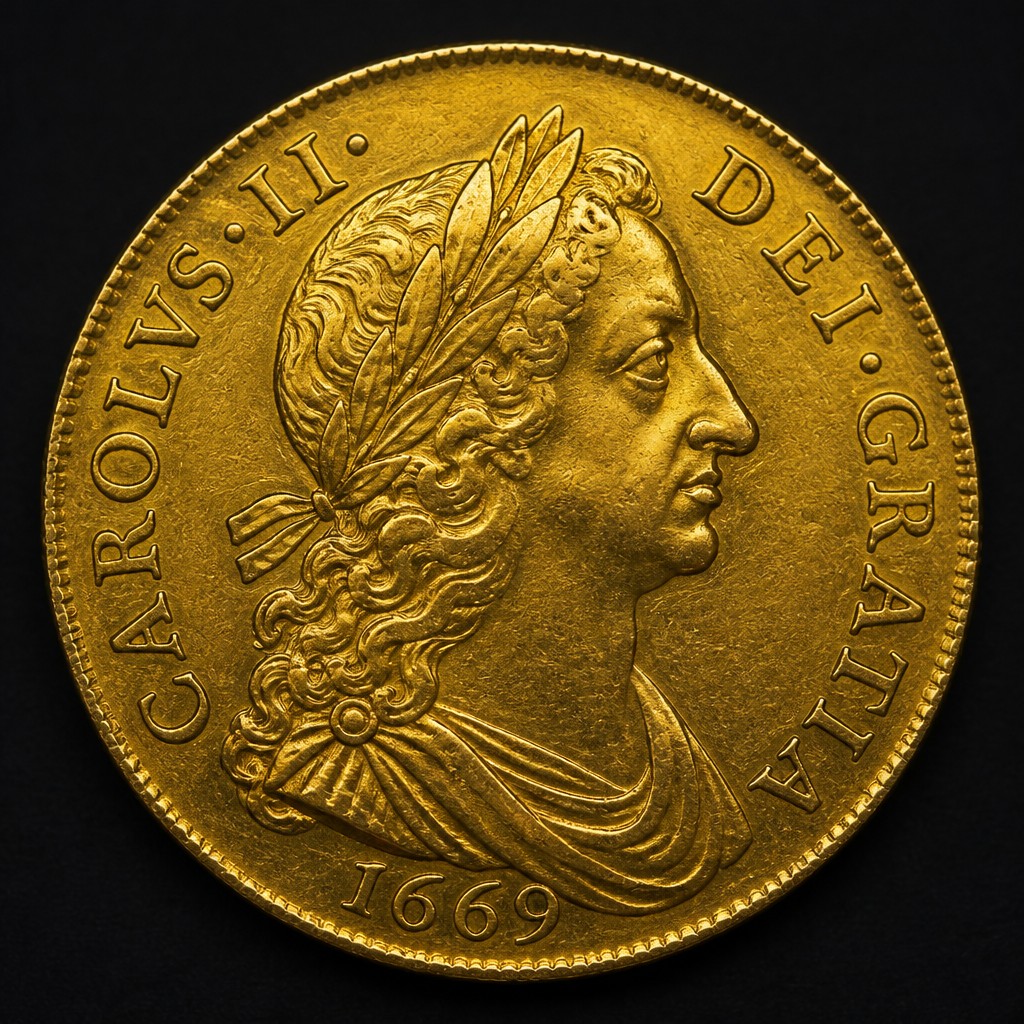
What It Is
The half guinea was struck alongside the full guinea from the 17th through early 19th centuries as a smaller, more convenient gold denomination for everyday high-value transactions in Britain, following the same monetary history and eventual valuation shifts as its larger counterpart. It disappeared from production at the same time as the guinea, in the years following 1816's currency reform, which replaced both with the sovereign and half sovereign under a new weight standard.
Obverse Design
The obverse mirrors the guinea's approach, showing a portrait bust of the reigning monarch of the time, from Charles II through George III, with the same kinds of hairstyle and regalia variations used to pin down the specific reign and type.
Reverse Design
The reverse generally follows the same crowned, cruciform shield design used on the full guinea for the corresponding monarch and period, scaled down to the smaller flan, though minor style variations exist between issues. As with the guinea, the exact arrangement of the shields and central rose or star changed somewhat from reign to reign, so comparing the reverse layout can help narrow down the approximate date range even before checking the date itself.
Size, Weight, and Metal
Struck in the same gold standard as the guinea, the half guinea weighs roughly half as much, around 4.2 grams, with a smaller diameter typically in the range of about 18-20mm depending on the specific monarch and era of issue.
Mint Marks and Where to Find Them
Like the guinea, half guineas were produced at the Royal Mint in London without a branch mint letter system, so dating relies on the date below the bust and comparison of the portrait style to the known sequence of monarchs and design types.
Telling It Apart from Similar Coins
The most direct way to separate a half guinea from a full guinea is by size and weight, since the design themes are closely related. There is also a third-guinea denomination from George III's reign, smaller still than the half guinea, so all three should be compared carefully by diameter and weight when uncertain.
Judging Condition at a Glance
Because the design elements are smaller and more delicate than on the full guinea, examine the monarch's portrait and the shield's engraved lines closely, as wear can obscure fine detail more quickly on this reduced-size coin. A half guinea retaining sharp separation between the individual shields and a clearly defined portrait is in noticeably better condition than one where these fine lines have merged from wear.
Authenticity Red Flags
Confirm the coin's weight and diameter against the expected standard for its specific monarch and date, inspect the edge pattern for consistency with genuine period issues, and be wary of any example whose portrait style or date combination does not match documented half guinea types.
Frequently asked questions
How is a half guinea different from a full guinea?
It follows the same design themes and gold standard but is struck at roughly half the weight, about 4.2 grams, and a smaller diameter around 18-20mm.
Is there an even smaller guinea denomination?
Yes, George III's reign also introduced a third-guinea coin, smaller still than the half guinea, so diameter and weight comparison helps tell all three apart.
Does the half guinea have mint marks like later sovereigns?
No, half guineas were struck only at the Royal Mint in London and do not use the branch mint letter system seen on later sovereigns.
What should I check to confirm a half guinea's date and monarch?
Compare the obverse portrait style and the date below the bust to reference images for the specific monarch's known half guinea types.