
How to Identify the Half Guinea of George II
A collector's guide to identifying a George II half guinea by its left-facing bust, crowned shield reverse, gold fabric, size, date and legends.
Read the full Half Guinea of George II encyclopedia entry →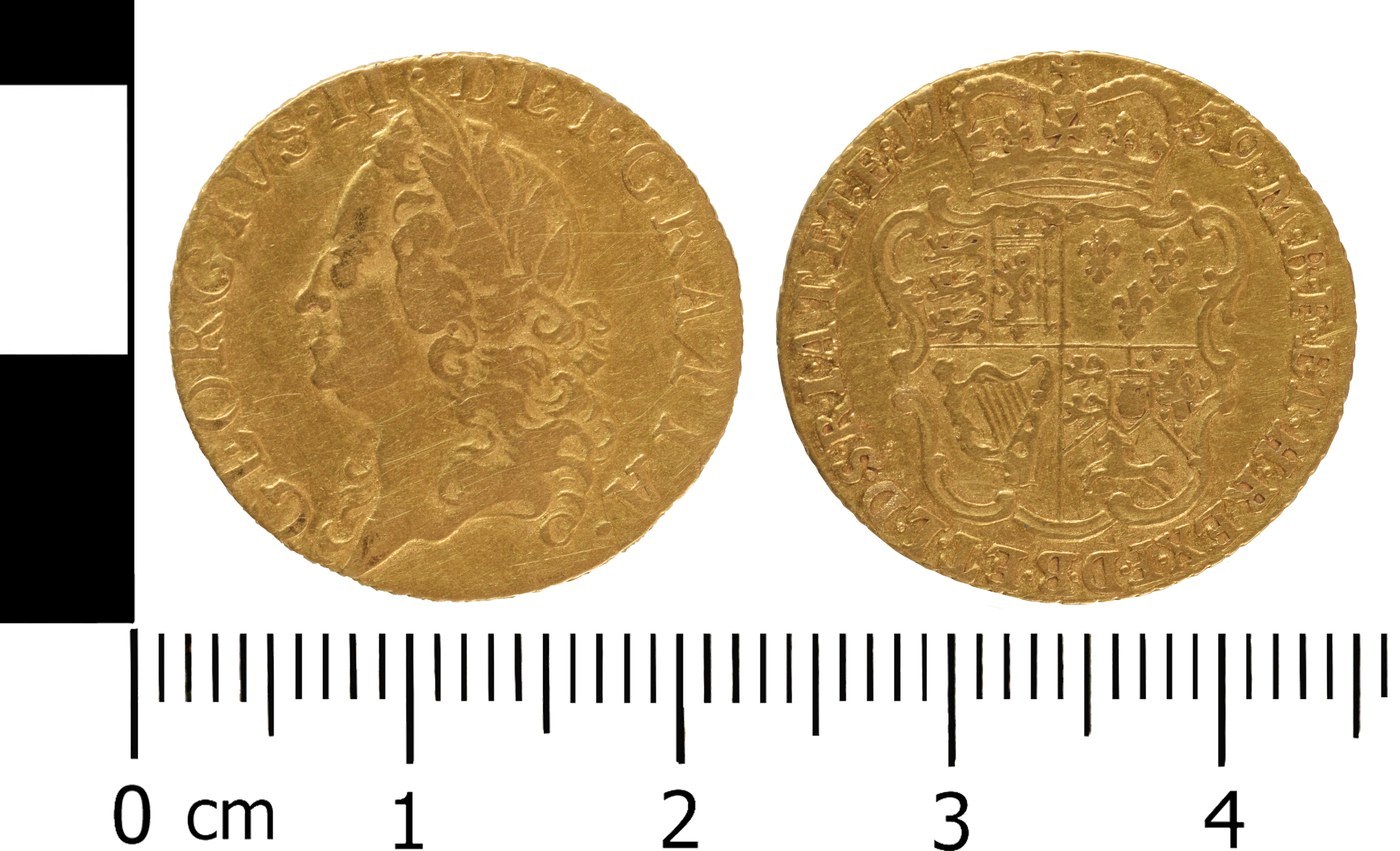
Start with the obverse portrait. A George II half guinea shows the king's laureate bust facing left, encircled by a Latin legend naming him and his titles. The left-facing direction is a useful first check, since it is a fixed feature of this reign's portrait; read as much of the legend as survives to confirm the ruler. Note that the bust style changed through the reign, so an old-head or young-head distinction and small design details help pin down the exact issue.
Examine the reverse. It carries a crowned heraldic shield bearing the quartered royal arms of the period, with a surrounding Latin legend and the date. Locate and read the date carefully; on the coin shown it is 1759, a later-reign year. The specific arrangement of the arms and the crown, together with the date, should be matched against a reference catalogue to confirm the year and variety.
Check size, metal, and edge. The half guinea is a small gold coin, distinctly smaller and lighter than a full guinea. It should show a rich gold colour, a crisp milled (machine-struck) fabric, and a reeded edge. Measure the diameter and weigh the coin, then compare against published half guinea specifications; a piece that is the wrong size or weight, or that does not read as gold, is not what it claims to be.
Rule out look-alikes. Do not confuse the half guinea with the larger full guinea, with quarter guineas or third guineas, or with later George III gold, all of which share a broadly similar portrait-and-shield layout. The denomination is settled by measuring diameter and weight rather than by design alone, and by matching the exact bust and reverse to catalogued types for the reign.
Authenticate before assuming value. Georgian gold is frequently faked, and genuine coins are sometimes mounted, bent, polished, or repaired, all of which reduce value. Look for signs of casting such as seams or bubbles, for solder marks or edge disturbance from mounting, and for unnatural surfaces from cleaning. Because grade and originality strongly affect price, have any apparently valuable example examined by a specialist in British milled gold and seek a firm attribution to a specific date and bust variety.
Frequently asked questions
Which side is the obverse?
The side with the laureate bust of George II facing left, surrounded by his Latin name-and-titles legend, is the obverse. The crowned heraldic shield of the royal arms with the date is the reverse.
How can I tell a half guinea from a full guinea?
They share a similar design, so the surest test is size and weight: the half guinea is distinctly smaller and lighter. Measure the diameter and weigh the coin, then compare to published specifications for each denomination.
Where do I find the date?
The date appears on the reverse, in the legend around the crowned shield. On the example shown it reads 1759. A clear, legible date is important for confirming the exact issue and its scarcity.
How do I know it is genuine gold and not a fake?
Genuine coins are struck gold with crisp detail, a reeded edge, and correct size and weight. Casts show seams and bubbles, and mounted or repaired coins show solder or edge damage. For anything of value, get a specialist opinion before relying on it.