
How to Identify the Half Groat of Henry VIII
A collector's checklist for attributing Henry VIII half groats by portrait, legend, mint marks, size, and the tell-tale signs of debasement.
Read the full Half Groat of Henry VIII encyclopedia entry →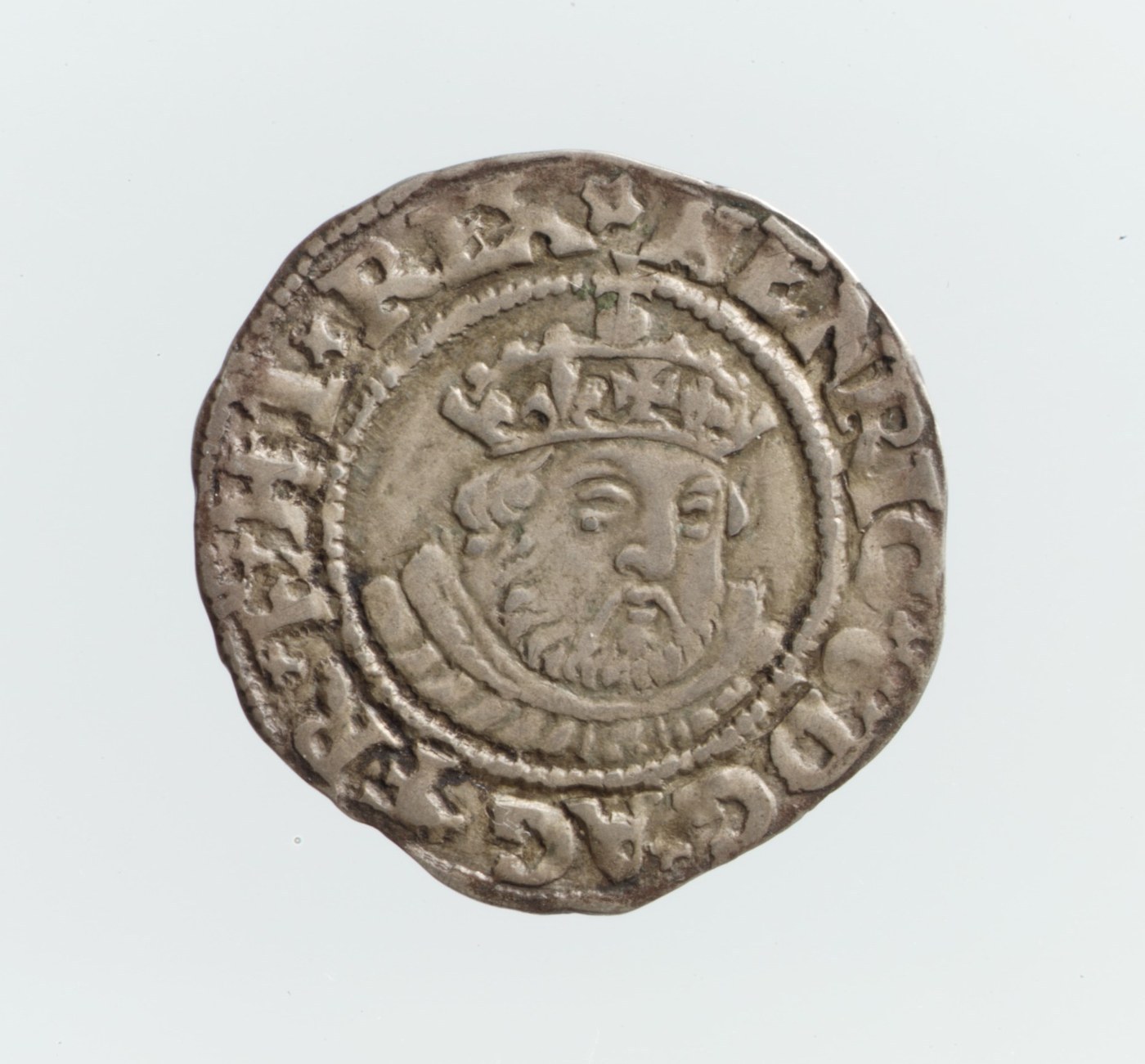
Start with size and metal. A half groat is a small, thin silver coin, clearly smaller than a groat and larger than a penny, usually around 19 to 22 mm across and roughly a gram in weight. Genuine pieces are hand-hammered, so expect an irregular edge, slightly off-center striking, and a flan that is not perfectly round. A crisp, perfectly circular, machine-even coin is a red flag for a modern replica.
Read the obverse. Henry VIII half groats show a crowned bust with a Latin legend naming HENRIC VIII as king. Note whether the portrait faces forward, as on the photographed bearded facing bust, or is in an older Henry VII-style profile; this helps separate the first coinage from the later second and third coinages. The bearded, aged facing portrait points to the middle-to-late reign.
Check the reverse when you can see it. It typically bears a royal shield over a long cross with the motto POSVI DEVM ADIVTOREM MEVM. Crucially, look beside the shield for an archbishop's initials or ecclesiastical marks such as a cardinal's hat or crossed keys. These identify Canterbury or York issues and are one of the most useful attribution clues on this denomination.
Use the mint mark. The small symbol at the start of the legend, combined with portrait style, is how specialists assign a coin to a particular coinage and date bracket. A standard reference such as Spink is the fastest way to match mark and style to an issue.
Watch for debasement and fakes. Pale, grayish metal or a coppery tinge at the worn high points suggests a third-coinage 'Old Coppernose' piece rather than a problem with the coin. Be cautious of cast copies (which show a soft, grainy surface and seams), tooled portraits, and coins with added or re-engraved detail. When value or authenticity is in doubt, have the coin examined by a dealer or society experienced in English hammered silver.
Frequently asked questions
How do I tell a half groat from a full groat?
Size is the quickest test: the groat (fourpence) is a distinctly larger coin, while the half groat (twopence) is smaller and lighter. Both share similar portrait and legend styles, so compare diameter and weight.
How can I tell which mint struck my half groat?
Look at the reverse for an archbishop's initials or marks and check the mint mark at the start of the legend. Canterbury and York issues carry ecclesiastical marks; matching these against a reference points you to the mint.
Should I clean a Henry VIII half groat?
No. Cleaning hammered silver almost always reduces its value by creating scratches and an unnatural surface. Collectors prefer original, undisturbed patina even on worn coins.
My coin looks coppery. Is it fake?
Not necessarily. Debased third-coinage half groats often show copper at the worn nose and high points, which is period-correct. A grainy surface with casting seams, however, does point to a modern copy.