
How to Identify the Half Farthing
The Half Farthing is a small 19th-century British copper coin worth one-eighth of a penny, struck mainly for use in Ceylon between 1828 and 1856.
Read the full Half Farthing encyclopedia entry →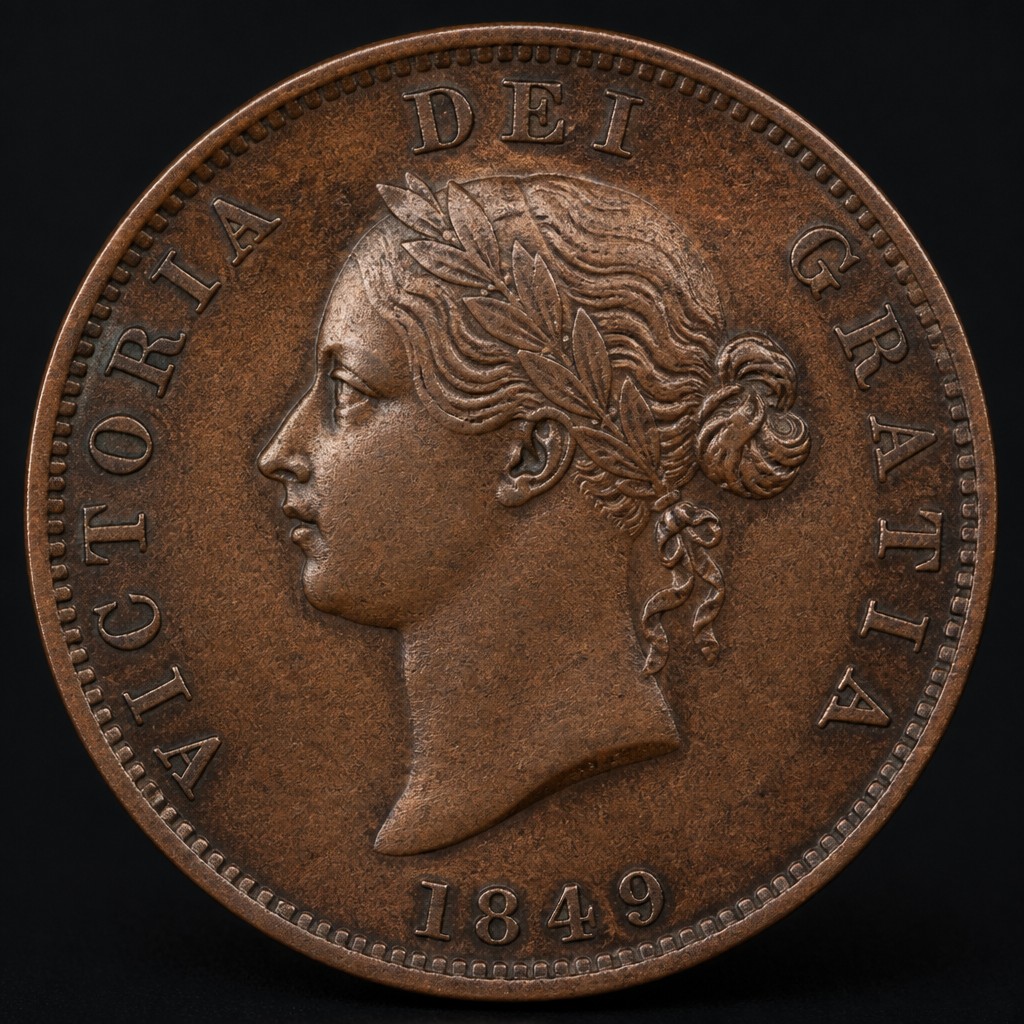
What Is It
The Half Farthing is a small copper coin representing one-eighth of a penny, or half the value of a standard farthing. It was struck between 1828 and 1856 under George IV, William IV, and Queen Victoria, primarily to meet the needs of colonial commerce in Ceylon (present-day Sri Lanka), though it remained legal tender throughout the United Kingdom as well.
Obverse Design
The obverse carries the portrait of the reigning monarch matching the coin's date: George IV's bare head, William IV's bare head, or the young head of Queen Victoria, each surrounded by the standard Latin royal legend of the period.
Reverse Design
The reverse shows a seated figure of Britannia holding a trident and shield, a design consistent with other small-denomination British copper coinage of the era, along with the words HALF FARTHING and the date arranged around or beneath the figure.
Size, Weight, and Metal
Struck in copper (and later bronze on some later farthing-related issues), the Half Farthing weighs approximately 2.8 grams and measures about 18mm in diameter, notably smaller than a standard farthing.
Mint Marks and Where to Find Them
Half Farthings were produced at the Royal Mint in London and do not carry branch mint marks. The denomination is spelled out directly on the reverse as HALF FARTHING, removing any ambiguity about its value once the coin is in hand.
Telling It Apart from Similar Coins
The clearest way to distinguish a Half Farthing from a regular farthing is size: the Half Farthing is noticeably smaller in diameter and lighter in weight. It should also not be confused with the Third Farthing or Quarter Farthing, other small fractional denominations issued for different colonial territories (Malta and Ceylon respectively); reading the denomination spelled out on the reverse is the most reliable way to tell them apart.
Judging Condition at a Glance
Wear shows first on the monarch's portrait, particularly hair and facial detail, and on Britannia's raised arm, shield, and trident on the reverse. Because these coins saw genuine colonial commercial use, moderate to heavy wear is common, and well-struck, high-detail examples are comparatively harder to find.
Authenticity Red Flags
Because Half Farthings are a lesser-known and lower-value denomination, they are less frequently counterfeited than gold coins, but reproduction or heavily cleaned/altered examples do circulate in the collector market. A genuine piece should show the correct weight near 2.8 grams and clearly legible HALF FARTHING wording; overly shiny, artificially toned, or oddly light examples deserve closer scrutiny.
Frequently asked questions
What was the Half Farthing used for?
It was struck mainly to serve colonial trade needs in Ceylon, though it was also legal tender within the United Kingdom during its period of issue.
How much was a Half Farthing worth?
It was worth one-eighth of a penny, or half the value of a standard farthing, in pre-decimal British currency.
How do I tell a Half Farthing from a regular farthing?
The Half Farthing is noticeably smaller and lighter, and the denomination HALF FARTHING is spelled out directly on the reverse, removing any doubt.
Which monarchs appear on Half Farthings?
Half Farthings were struck under George IV, William IV, and Queen Victoria between 1828 and 1856, so the obverse portrait varies depending on the coin's date.