
How to Identify the Half Crown
A visual guide to the British Half Crown, worth two shillings and sixpence, identified by its royal shield or crest reverse, silver or cupro-nickel content, and reeded edge.
Read the full Half Crown encyclopedia entry →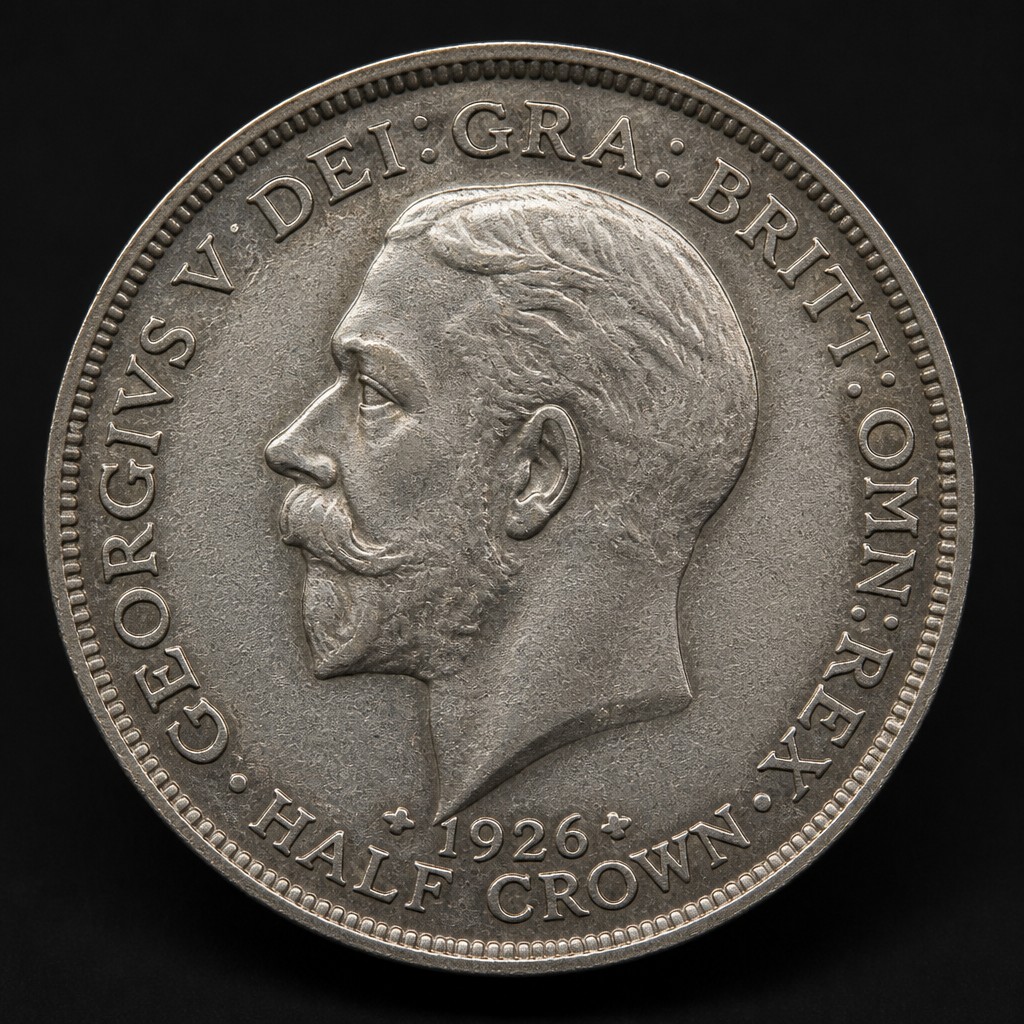
What It Is
The Half Crown was a British coin worth two shillings and sixpence (one-eighth of a pound) that circulated from the Tudor period until decimalisation, with the last dated pieces struck in 1967. It was demonetised at the end of 1969. Because it was the largest silver-colored coin in everyday use, it was a familiar sight in pockets and purses for generations. Earlier Victorian, Edwardian, and George V half crowns used their own distinct reverse artwork before the shield design familiar from the George VI and Elizabeth II eras was adopted, so the exact look of a given coin depends heavily on which monarch's reign it comes from.
Obverse Design and Inscriptions
The obverse carries a right- or left-facing profile portrait of the reigning monarch, with the royal title abbreviated in Latin around the rim (for example "ELIZABETH II DEI GRATIA REGINA F.D." on later issues). Earlier coins may show George V, George VI, or Victorian and Edwardian portraits, each with the corresponding legend and date.
Reverse Design and Inscriptions
Reverse designs varied by reign. Elizabeth II and George VI half crowns typically show a crowned shield bearing the royal arms, flanked or supported by decorative scrollwork, with "HALF CROWN" not spelled out in words but understood by size and design tradition. Some Victorian and earlier issues instead show a crowned cruciform arrangement of shields. Always compare the exact shield layout to the corresponding monarch's series.
Size, Weight, Metal, and Edge
The half crown measures roughly 32 mm in diameter. Coins struck before 1920 are 92.5% silver; from 1920 to 1946 they were reduced to 50% silver; from 1947 onward they were struck in cupro-nickel. Weight is close to 14.1 grams across these changes. The edge is finely reeded.
Mint Marks and Where to Find Them
Regular-issue British half crowns from the Royal Mint's London facility carry no mint mark. Rare colonial or Empire strikes may show a small mint letter near the date; check reference images for the specific monarch and year if a mark is present.
Telling It Apart From Similar Coins
The half crown is often confused with the smaller florin (two shillings) or the similarly sized crown (five shillings). Compare diameter carefully: the half crown sits between these two in size, and its shield-based reverse differs from the florin's cross-of-shields or seated-figure designs used in various periods.
Judging Condition at a Glance
On well-preserved coins, the finest details are the hair curls or laurel wreath on the portrait and the fine lines within the shield's engraving. Heavy wear flattens these first, along with the raised rim. Silver-content coins from before 1947 often show a warmer tone; cupro-nickel issues stay silvery-white even with wear.
Authenticity Red Flags
Be cautious of coins with soft, mushy details throughout, incorrect weight for the stated date and composition, or a portrait style that does not match the claimed monarch and year. Cast reproductions often show a seam line on the edge and a grainy, dull surface rather than crisp reeding. Also confirm that the reverse artwork actually matches the coin's stated monarch and date range, since mismatched dies or fantasy combinations are a common problem with low-quality replicas.
Frequently asked questions
What years were half crowns made?
Half crowns were struck for centuries, with the final dated coins issued in 1967; they were withdrawn from circulation at the end of 1969 ahead of decimalisation.
Are half crowns silver?
Only those dated 1946 and earlier contain silver, and only pre-1920 coins are the higher 92.5% fineness; 1947 onward they are cupro-nickel.
How can I tell a half crown from a florin?
The half crown is larger (about 32 mm versus 28 mm) and heavier, and its reverse features a crowned shield design rather than the florin's cross-of-shields or figural motifs.
Where is the mint mark on a half crown?
Standard London-struck half crowns have no mint mark; only certain overseas or special strikes carry a small mint letter near the date.