
How to Identify the Half Crown of William IV
A collector's guide to recognizing a William IV silver half crown by its bare-head portrait, IIII legend, crowned-shield reverse, size and metal.
Read the full Half Crown of William IV encyclopedia entry →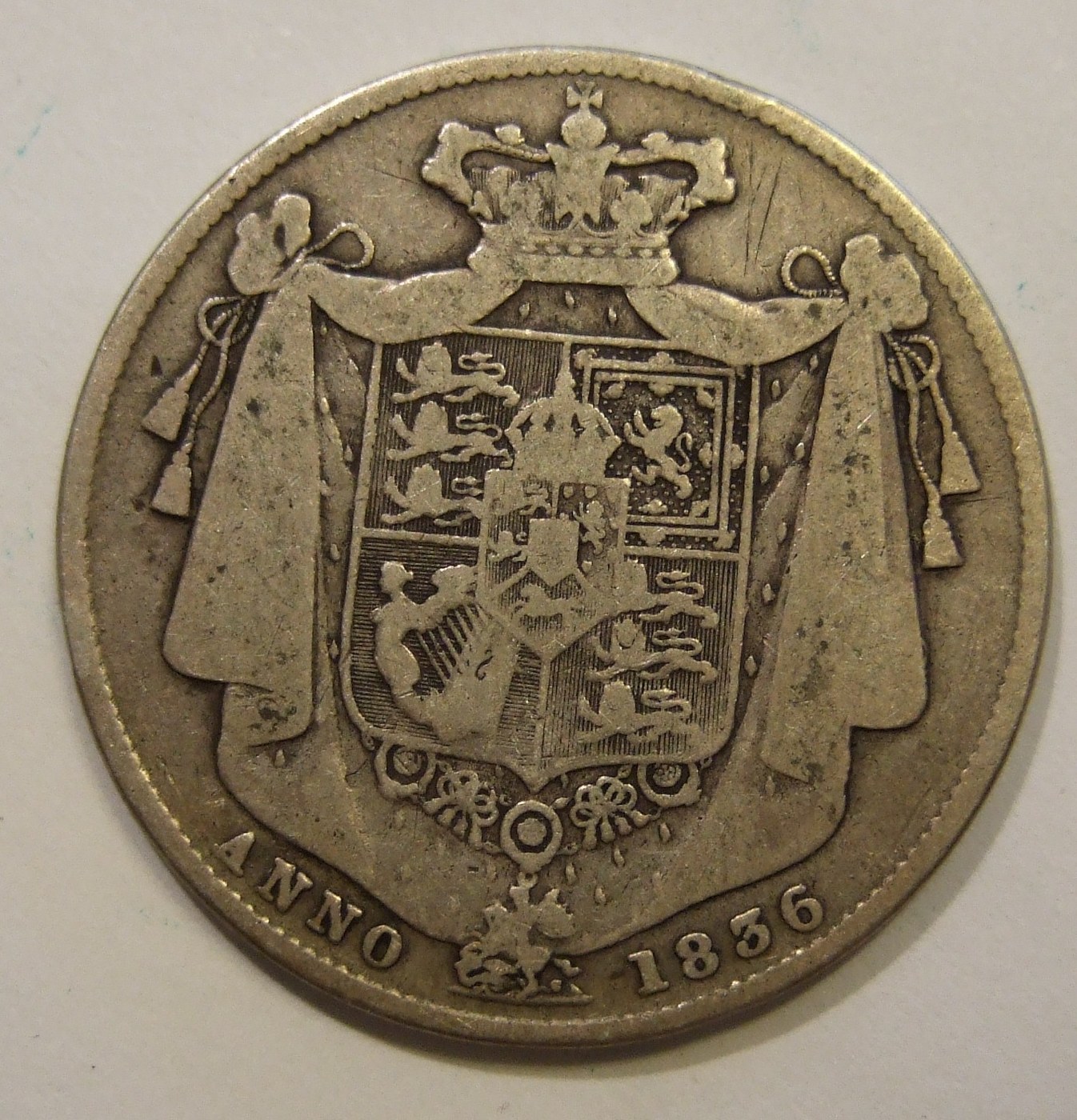
Start with the obverse portrait and legend. A William IV half crown shows the king bareheaded and facing right, with no crown or laurel wreath, surrounded by the legend GULIELMUS IIII D:G BRITT ANN. The most telling single detail is the regnal number written as IIII rather than IV, an older Roman form used on this king's coinage; combined with the name Gulielmus (Latin for William), it confirms the reign at a glance. Read the date, such as 1836, which is part of the design and places the coin within the short 1830 to 1837 reign.
Turn to the reverse and check the arms. The William IV half crown carries a crowned royal coat of arms: a quartered shield beneath a large crown with heraldic supporters. Note the coat-of-arms style and the way the shield and crown are arranged, since different British silver denominations and reigns use different treatments of the royal arms. This crowned-shield layout helps separate the type from the reverses used on George IV and later Victorian half crowns.
Confirm size, metal, and edge. The half crown is a substantial silver coin about 32 to 33 millimetres in diameter with a reeded (grooved) edge, struck to the standard half-crown weight in sterling-standard silver. Measuring the diameter and weighing the coin distinguishes a genuine half crown from the smaller shilling or the larger crown, and from lighter base-metal imitations. The metal should show a proper silver tone rather than the grey of a plated or pot-metal copy.
Compare against look-alikes and watch for pitfalls. Milled half crowns of neighbouring reigns share the general format, so rely on the IIII legend and the specific portrait and reverse to tell William IV apart from George IV and Victoria. Be aware that dates and details can be altered on damaged coins, and that this popular type has attracted reproductions and forgeries; cast copies show soft detail, seams, or wrong weight, and a magnet test will expose base-metal fakes since genuine coins are non-magnetic silver.
Authenticate anything of value. Because condition drives price and because well-known British silver types are copied, examine the coin closely for tooling, added or re-cut detail, or an edge that does not match a proper reeded strike. For a high-grade or potentially scarce date, seek an opinion from a specialist dealer or grading service and compare against recent sales of confirmed examples before relying on an identification or price.
Frequently asked questions
Which side is the obverse?
The side with the bare-headed portrait of the king facing right and the GULIELMUS IIII D:G BRITT ANN legend is the obverse. The crowned royal coat of arms with supporters is the reverse.
How do I know it is William IV and not another monarch?
Look for the name Gulielmus and the regnal number written as IIII, plus the distinctive bare-head portrait facing right. These, with a date between 1830 and 1837, confirm William IV rather than George IV or Victoria.
How can I tell a genuine coin from a fake?
Check that the diameter, weight, and reeded edge match a real half crown and that the metal is non-magnetic silver, not plated base metal. Soft detail, casting seams, wrong weight, or a magnetic response indicate a copy.
What makes one William IV half crown worth more than another?
Condition is the main factor, so coins with sharp hair and heraldic detail and original surfaces are worth more. The specific date matters too, since scarcer dates in this short series can command a premium.