
How to Identify the Half Angel (Angelet)
The Half Angel, or Angelet, was a small English gold coin worth half the value of the Angel, sharing its famous design of St Michael slaying a dragon.
Read the full Half Angel (Angelet) encyclopedia entry →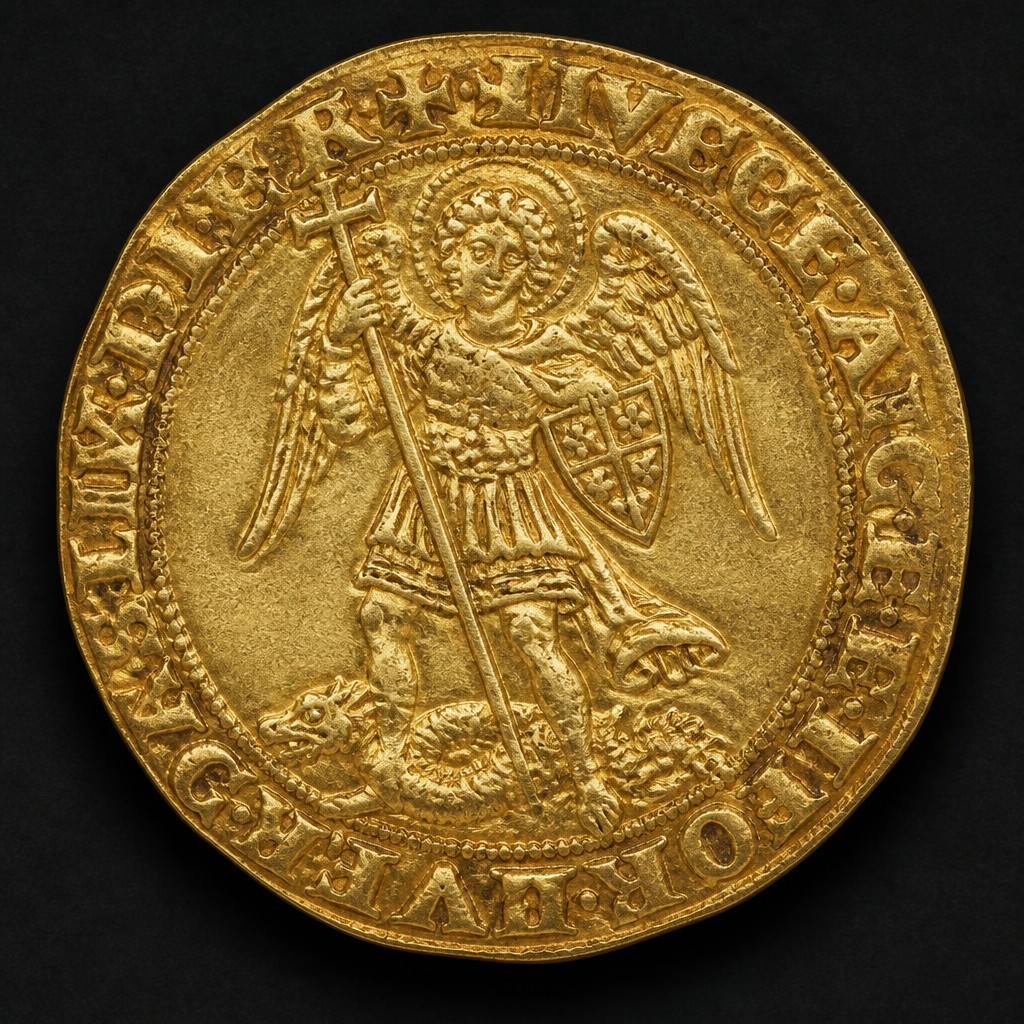
What It Is
The Half Angel, also known as the Angelet, was an English gold coin worth half the value of the full Angel. First struck under Edward IV and continued through the Tudor period, it shares the Angel's celebrated religious imagery on a smaller scale, making it a compact but historically rich piece for identification.
Obverse Design
The obverse shows the Archangel Michael standing over a dragon, spearing it with a long cross-topped staff, the same iconic design used on the full-size Angel. The king's title is inscribed around the edge in Latin, naming the reigning monarch and his principal titles.
Reverse Design
The reverse depicts a ship with a large cross for a mast, often with a shield of royal arms hanging from the mast and rays or a rose nearby, echoing the maritime imagery common to English gold coinage of the period and reinforcing themes of royal protection and trade.
Size, Weight, Metal & Edge
Struck in gold, the Half Angel is noticeably smaller and lighter than the full Angel, generally weighing around 2 to 2.5 grams depending on the issuing reign, with a diameter smaller than a modern penny. As a hammered coin, its edge is irregular rather than milled, and the flan can be slightly uneven in thickness.
Mint Marks & Dating
Like other hammered coins, the Half Angel has no numeral date. Small privy marks placed at the start of the obverse legend help specialists narrow down the issuing period, though identifying them typically requires comparison with reference charts for the relevant reign and mint.
Telling It Apart From Similar Coins
The clearest comparison is with the full Angel, which shares the same design but is larger and heavier. Weighing the coin is the most reliable way to distinguish a Half Angel from its full-size counterpart when the size difference isn't immediately obvious, since wear can make two coins look closer in diameter than they truly are.
Grading at a Glance
Examine the sharpness of St Michael's figure and the dragon beneath his feet, as these details wear down with handling. A well-preserved Half Angel shows a clear ship outline on the reverse and crisp lettering; excessive smoothing or a flattened central design indicates heavier wear and lower overall grade.
Authenticity Red Flags
Because genuine examples are hand-hammered, be cautious of coins with unnaturally perfect, mechanically round edges or a weight that doesn't align with gold of the expected size. A design that looks too sharply modern or lacks the slight irregularities typical of hand striking is a warning sign, as is a suspiciously bright, unworn surface on a coin claimed to be centuries old. Cross-checking the privy mark against the claimed reign is a further useful safeguard.
Frequently asked questions
What is the difference between the Angel and the Half Angel?
They share the same St Michael and dragon design, but the Half Angel is smaller, lighter, and worth half the Angel's face value.
Why is it also called an Angelet?
Angelet is simply a diminutive form of Angel used to describe the half-value coin.
What image appears on the obverse?
The Archangel Michael spearing a dragon, a design shared with the full Angel.
Does the Half Angel have a date on it?
No, being a hand-hammered coin it lacks a numeral date; dating relies on subtle privy marks.