
How to Identify the Hadrian Travel Series Denarius
A silver denarius from Hadrian's famous 'Travel Series,' identified by reverse personifications of Roman provinces each paired with a distinctive regional attribute or animal.
Read the full Hadrian Travel Series Denarius encyclopedia entry →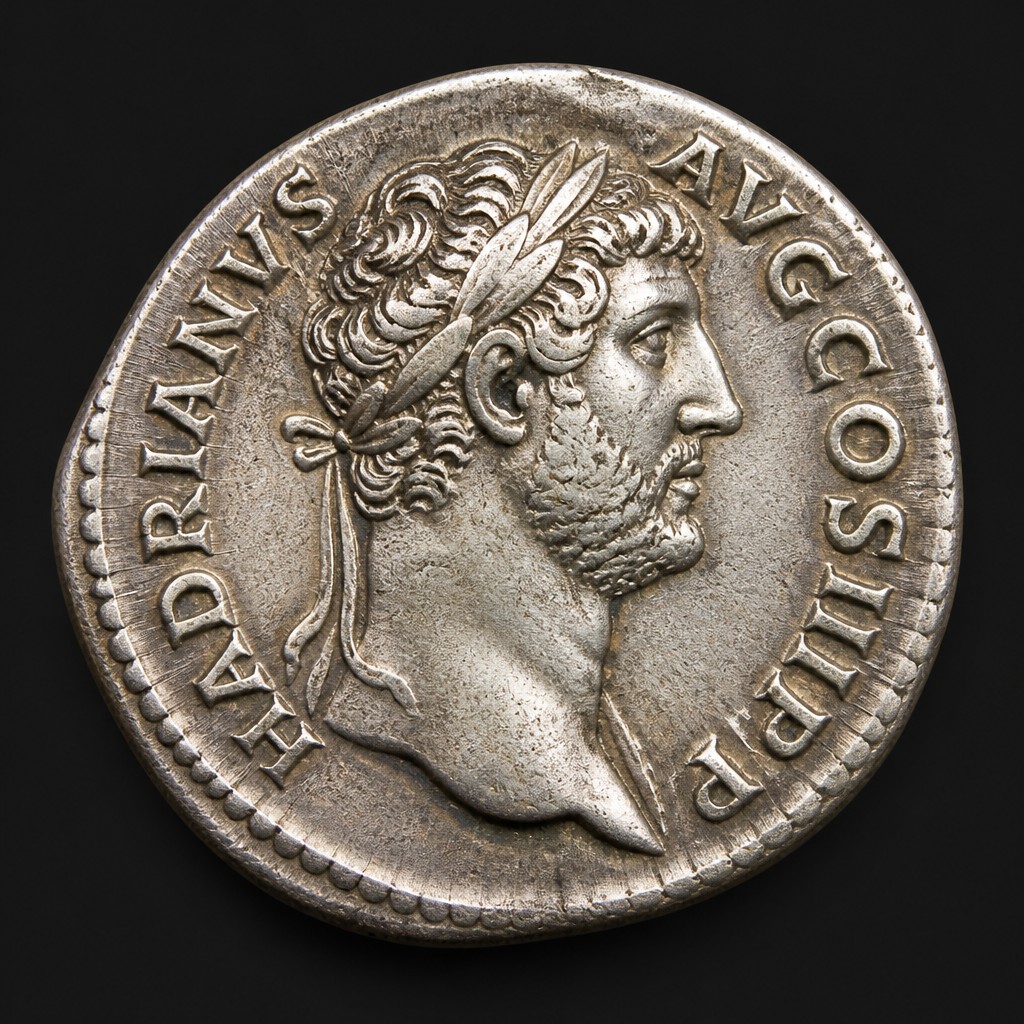
What the Coin Is
Hadrian ruled from AD 117 to 138 and became known for touring the provinces of the empire extensively. Late in his reign, roughly AD 134-138, the Rome mint issued an extensive "Travel Series" (sometimes called the "Province Series") of denarii and matching sestertii commemorating his visits, arrivals, and the restoration of provincial loyalty, each coin personifying a different region.
Obverse Design & Inscriptions
The obverse shows a bare or laureate head of Hadrian right; many of his portraits include a neatly trimmed beard, a style he helped popularize among Roman emperors. The legend typically reads HADRIANVS AVG COS III P P.
Reverse Design & Inscriptions
Each coin in the series depicts a personification of a specific province, standing or reclining, holding an attribute or accompanied by an animal that identifies the region: Africa is shown with a scorpion and a basket of grain, Hispania reclines with a rabbit and an olive branch, Aegyptos holds a sistrum with an ibis nearby, and Germania appears with a shield and spear, among others. A related group of reverses reads ADVENTVI AVG, showing Hadrian sacrificing before the personification of the province he is "arriving" in.
Size, Weight, Metal & Edge
The denarius measures roughly 18mm across and weighs about 3.2-3.4 grams, with silver fineness modestly reduced from earlier standards. The edge is plain.
Mint Marks & Where to Find Them
All coins in this series were struck at Rome for empire-wide circulation; there is no separate mint-mark system, and provinces are identified purely through the reverse imagery and legend rather than any mint-location code.
Telling It Apart from Similar Coins
The key identification step is matching the small attribute object or animal in the reverse field to the correct province name in the legend, since several reclining-figure reverses look similar at a glance until this detail is examined closely. Compared to earlier or later denarii of Hadrian without province legends, the Travel Series is distinguished by having a specific province name spelled out around the design.
Judging Condition & Grade at a Glance
Because the identifying attributes (small animals, tools, or plants) are often delicately engraved and low in relief, they are usually the first details to wear away. A coin where the attribute is still clearly recognizable commands a notably higher grade than one where only the general pose of the standing or reclining figure survives.
Authenticity Red Flags
This series is heavily collected and correspondingly popular with forgers producing "reference" or tourist copies; look for a grainy cast surface, incorrect letter spacing or malformed letters in the legend, and softened, indistinct attribute details that lack the crisp linear engraving expected of an authentic struck coin. Weight noticeably outside the normal range for the denomination is another useful check.
Frequently asked questions
How do I identify which province a Travel Series coin represents?
Match the small object or animal held by or placed near the reclining or standing figure, such as a scorpion for Africa or an ibis for Aegyptos, to the province name spelled out in the surrounding legend.
Why did Hadrian issue this series?
He traveled extensively throughout the empire during his reign, and the series was struck late in his rule to commemorate his visits and reinforce ties between Rome and its far-flung provinces.
What does ADVENTVI AVG mean on some of these coins?
It translates roughly to 'on the arrival of the emperor,' marking a related group of reverses showing Hadrian sacrificing before a province's personification to mark his visit.
Why is Hadrian often shown with a beard?
Hadrian was one of the first Roman emperors to be regularly depicted bearded, a stylistic choice that set his portraiture apart from his clean-shaven predecessors like Trajan.
What makes this series prone to forgery?
Its popularity with collectors and the relatively small, delicate reverse details make it an attractive target for cast copies and tooled reproductions, so careful examination of the attribute objects is important.