
How to Identify the Hadrian Denarius
A guide to Hadrian's silver denarius, highlighting his signature bearded portrait, the famous travel-series province reverses, and how to distinguish his coinage from predecessors and successors.
Read the full Hadrian Denarius encyclopedia entry →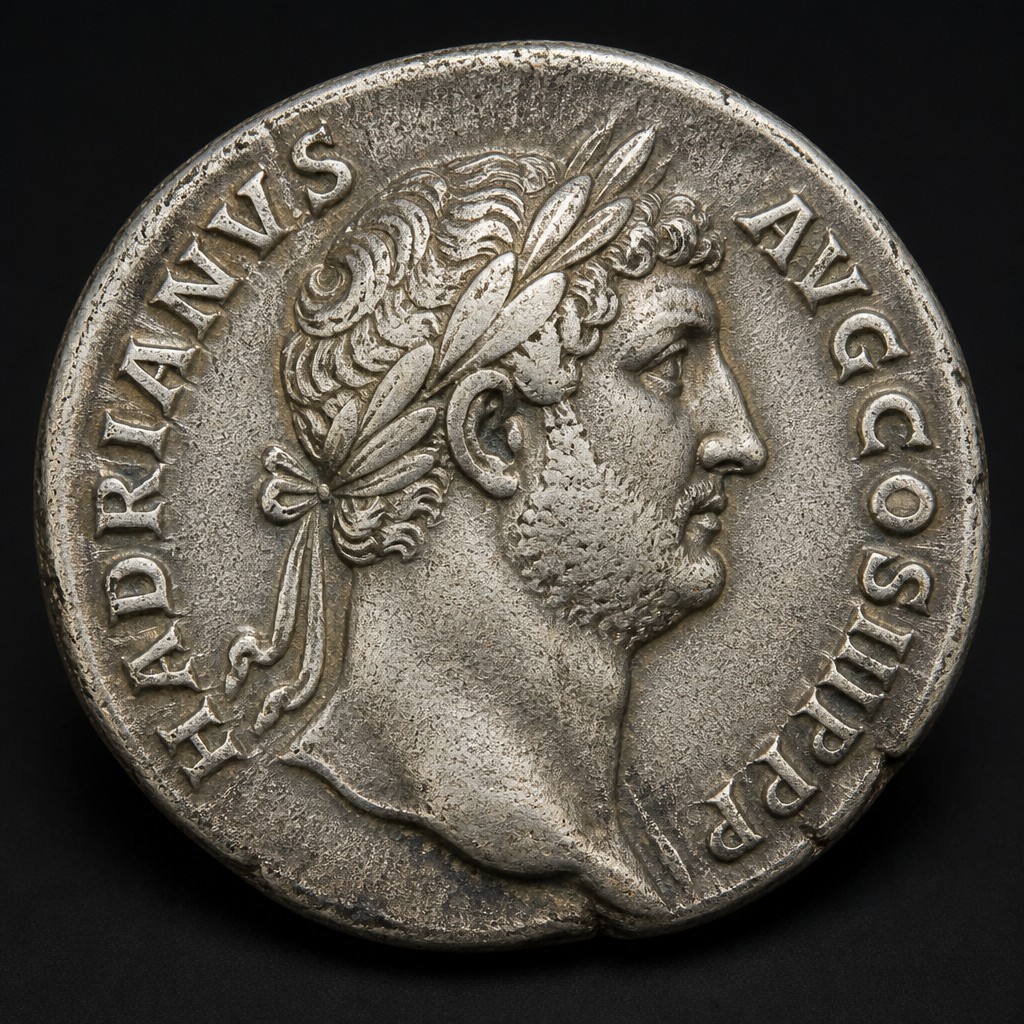
What This Coin Is
This silver denarius was struck under Emperor Hadrian, who reigned from AD 117 to 138. It is notable for introducing the bearded imperial portrait style and for an extensive "travel series" commemorating the many provinces he visited.
Obverse Design
The obverse shows a bearded head of Hadrian facing right, either bare-headed or laureate depending on the issue, marking a stylistic break from the clean-shaven portraits of his predecessors. The legend usually reads HADRIANVS AVGVSTVS or a close variant, with title abbreviations changing across his reign.
Reverse Design
Reverse designs are extremely varied, including standing personifications of provinces such as Africa, Britannia, Hispania, and Gallia, each shown with distinctive attributes like grain ears, a shield, or a regional animal, alongside more conventional types like Roma, Fortuna, Salus, and Felicitas.
Size, Weight, and Metal
These denarii measure roughly 18-19mm across and weigh around 3.3-3.4 grams, consistent with other 2nd-century denarii.
Mint Marks and Dating
Struck primarily at Rome without a distinct mint mark, the specific year of issue is narrowed using the combination of consulship number and tribunician power in the legend, since Hadrian's long reign produced many title variations.
Telling It Apart From Similar Coins
The bearded portrait itself is the fastest way to separate Hadrian from Trajan, who is clean-shaven, at a glance. Among bearded emperors, compare hairstyle and facial modeling carefully against Antoninus Pius or Marcus Aurelius, whose portraits use somewhat different beard and hair treatments.
Grading at a Glance
Examine the beard and hair curls for strike sharpness, along with the reverse personification's attributes such as shield details, animal features, or drapery folds. The travel-series types reward closer inspection since their identifying attributes are often small.
Authenticity Red Flags
Because the province types are popular with collectors, they are a frequent forgery target. Check that the attribute held by the personification matches documented genuine combinations, verify weight near the 3.3-3.4 gram standard, and look for casting seams or unnaturally smooth, doughy details that suggest a modern reproduction.
Frequently asked questions
Why does Hadrian have a beard when earlier emperors don't?
Hadrian was the first emperor to consistently wear a beard on his coin portraits, reportedly influenced by his admiration for Greek culture and philosophy, and this set a stylistic precedent most later emperors followed.
What is the "travel series"?
A set of reverse types issued during and after Hadrian's extensive tours of the empire, each personifying a specific province he visited with distinctive regional attributes.
How many different province types exist?
Numismatists have catalogued numerous distinct province personifications from Hadrian's reign, each identifiable by unique attributes such as regional animals, tools, or dress, though exact counts can vary by reference.
Can I date a Hadrian denarius just from the portrait style?
Not precisely; portrait style changed gradually over his 21-year reign, so the legend's consulship and tribunician power numbers are a more reliable dating tool than portrait appearance alone.