
How to Identify the Gustav I Silver Coin
A collector's checklist for attributing Gustav Vasa silver: reading the armored royal bust, the crowned lion reverse, and confirming denomination.
Read the full Gustav I Silver Coin encyclopedia entry →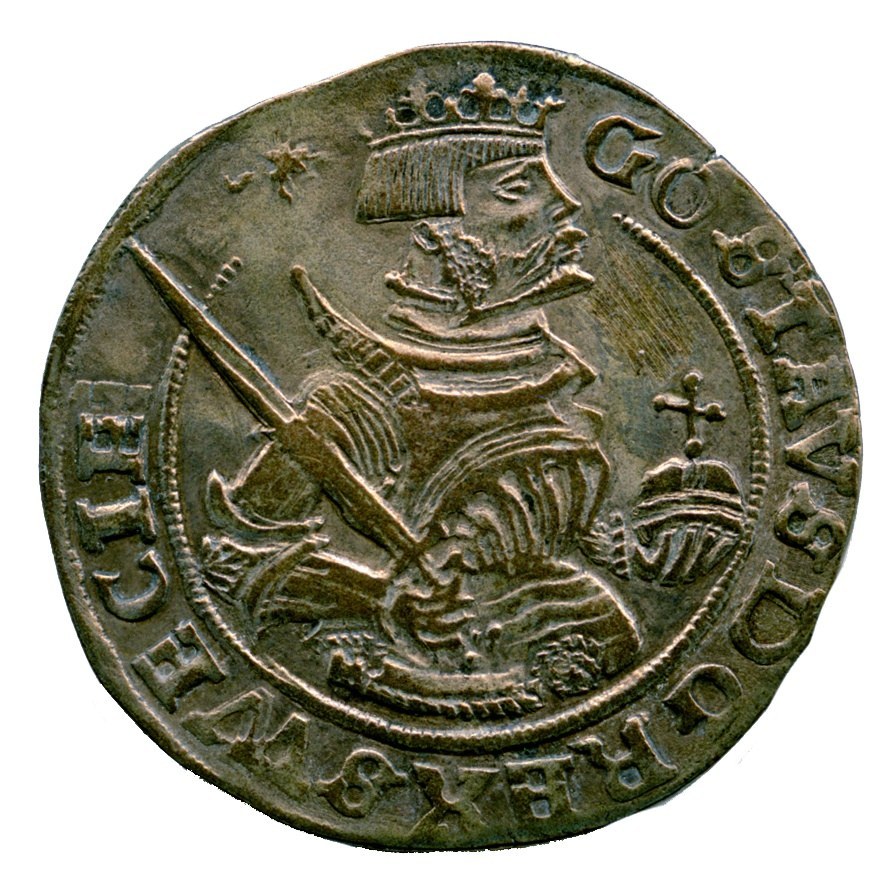
Start with the obverse portrait. The defining feature is a right-facing profile bust of Gustav I wearing both a crown and armor. A realistic, individualized royal portrait like this marks the coin as 16th-century Renaissance work and is the single strongest clue that you are looking at Gustav Vasa's coinage rather than an earlier medieval Swedish penning or bracteate, which bear only simple symbols.
Read the reverse device. Look for a crowned lion rampant with royal insignia — a heraldic image, not a religious scene. Then read the surrounding Latin legend, which should name the king and his title. Legends on hand-struck coins often run partly off the flan, so rotate the coin and reconstruct the text from the visible letters. A visible date (here around 1530) helps place the issue within the 1521–1560 reign.
Measure before you name a denomination. Because the face value here is unknown, do not guess it from the design. Weigh the coin to a hundredth of a gram and measure its diameter, then compare against published standards for Gustav I marks, öre, and dalers. Denomination on this coinage is inferred from size and weight, and the large silver daler (from 1534) is easily distinguished from the smaller pieces.
Expect hammered-coinage traits. Genuine examples show an irregular flan, some off-center striking, and uneven relief — normal for hand-struck silver. Be cautious of pieces that are too perfectly round, too crisp, or that show casting bubbles, seams, or a soft, mushy surface, all of which point to cast copies. Toning should look natural for old silver rather than uniformly applied.
Confirm before you commit. Worn 16th-century Swedish silver is genuinely difficult to attribute, and this reign has been imitated. Compare your coin against reference plates and recent auction photos, and have a specialist in Scandinavian coinage verify both authenticity and the exact type/denomination before buying, selling, or insuring it.
Frequently asked questions
How do I tell this from an earlier medieval Swedish coin?
Earlier Swedish medieval coins are thin bracteates or small penningar bearing only simple symbols. Gustav I's silver instead shows a detailed, individualized crowned royal portrait — a Renaissance feature that later coins share but medieval ones do not.
Can I identify the denomination from the picture?
No. The design is shared across denominations, so you must measure diameter and weight and compare them to published standards for the mark, öre, and daler. Images alone are not enough.
What are common signs of a fake?
Cast copies often show seams, casting bubbles, a soft or grainy surface, and suspiciously perfect roundness. Genuine hand-struck coins have irregular flans, some off-center strike, and natural silver toning.
Should I clean the coin to read it better?
No. Cleaning old silver removes original surface and toning and reduces both value and legibility of fine detail. Photograph under raking light and consult a specialist instead.