
How to Identify the Gupta Empire Gold Dinar
The Gupta gold dinar is known for its varied artistic obverse scenes of the king in action (archer, horseman, tiger-slayer) paired with a seated goddess reverse and Sanskrit legends.
Read the full Gupta Empire Gold Dinar encyclopedia entry →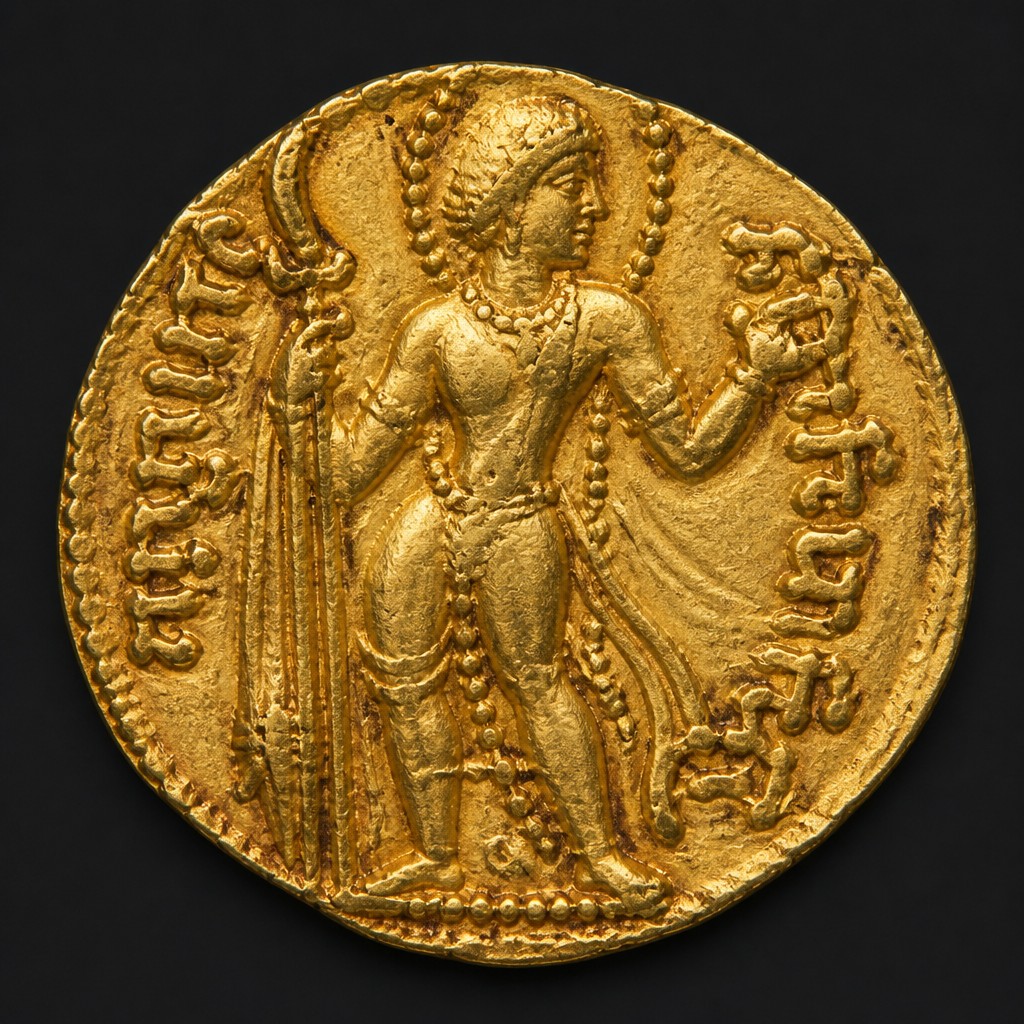
What It Is
The Gupta Empire (approximately 4th to 6th century AD) issued a celebrated series of gold coins, called dinars, that are considered a high point of ancient Indian numismatic art. Unlike the earlier punch-marked coinage of the subcontinent, Gupta dinars were struck with fully unified, carefully engraved die designs modeled loosely on the earlier Kushan gold coinage standard.
Obverse Design
Gupta dinars are famous for their variety of obverse "types," each showing the reigning king engaged in a specific symbolic action: standing as an archer with bow, riding a horse, slaying a tiger or lion, playing a musical instrument (vina), or performing a horse sacrifice (ashvamedha), among others. A Sanskrit legend in Brahmi script, often naming the king and a laudatory epithet, curves around the scene.
Reverse Design
The reverse commonly depicts a goddess—most often identified as Lakshmi, the goddess of prosperity—seated on a throne or lotus, sometimes holding a lotus flower or cornucopia, with a Brahmi legend that may name the king's title or queen. Some later Gupta issues substitute other deities or symbolic figures depending on the specific ruler and coin type.
Size, Weight, and Metal
Struck in gold, Gupta dinars generally follow the earlier Kushan weight standard of roughly 7.5 to 9 grams (rather than the lighter Roman/Byzantine-influenced standard used farther west), with a diameter typically in the 20mm range. Edges are plain and hand-struck, and slight flan irregularity is normal.
Mint Marks
Gupta dinars generally do not carry explicit mint city names; instead, attribution to a specific ruler relies on reading the Brahmi legend naming the king and recognizing the particular obverse "type" (archer, horseman, tiger-slayer, etc.) associated with each reign, since certain kings favored specific types.
Telling It Apart From Similar Coins
The active, narrative obverse scenes (a king performing a distinct action) separate Gupta dinars clearly from the flat, static bust portraits typical of Kushan, Roman, or Sassanian coinage. Compared to later, cruder imitative gold issues produced by some regional successor states, genuine high-quality Gupta dies show much sharper, more naturalistic figural detail and clean Brahmi lettering.
Judging Condition at a Glance
Look at the fine details of the king's figure (facial features, weapon or object in hand, drapery folds) and the seated goddess on the reverse, since these finely engraved scenes show wear first at the highest raised points. A coin retaining crisp detail in the figures and a fully legible legend is considered notably better than one with flattened, indistinct scenes.
Authenticity Red Flags
Watch for an obverse "type" combined with a royal name that does not match documented historical pairings, Brahmi lettering that looks stylistically inconsistent or garbled, a weight well outside the roughly 7.5-9 gram range, or figural engraving that looks stiff, shallow, or overly uniform compared to the lively, individually cut dies typical of genuine Gupta issues.
Frequently asked questions
Why do Gupta dinars show different scenes on the obverse?
Gupta rulers issued multiple distinct coin 'types,' each showing the king performing a specific symbolic action such as archery, horseback riding, or tiger-slaying, allowing different reigns and events to be visually distinguished.
Who is the goddess usually shown on the reverse?
Most commonly identified as Lakshmi, the Hindu goddess of prosperity and wealth, typically seated on a throne or lotus, though some issues show other figures depending on the ruler.
What weight standard do these coins follow?
Gupta dinars generally follow the earlier Kushan gold weight standard of roughly 7.5 to 9 grams, heavier than the Roman/Byzantine-influenced gold standard used in coinage farther west.
How do I know which king issued a given dinar?
Read the Brahmi legend for the king's name and note the specific obverse type, since particular Gupta rulers favored certain scenes (for example, tiger-slayer types are associated with specific reigns).
Do Gupta dinars have mint marks?
No explicit city mint marks are typical; attribution relies on the royal name in the legend and the recognized obverse design type rather than a separate mint symbol.