How to Identify the Guinea of George II
A collector's guide to identifying a George II guinea by its bust, legend, shield reverse, gold content, size and weight, and by spotting look-alikes and fakes.
Read the full Guinea of George II encyclopedia entry →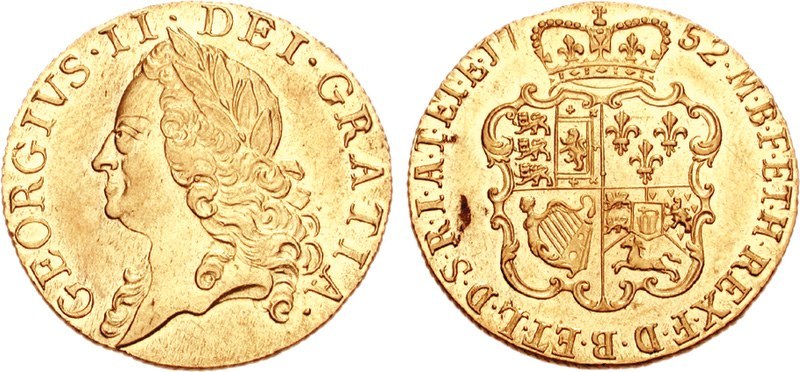
Start with the obverse portrait and legend. A George II guinea shows the king's laureate bust in profile facing left, styled in the Baroque manner, with a Latin legend that begins GEORGVS.II.D.G and continues with his titles. Confirm the "II" in the name to separate this reign from the guineas of George I and George III, and read the date where it is present, since the portrait was revised during the long reign and early and later busts differ.
Examine the reverse design. The guinea's reverse carries a crowned heraldic shield bearing the quartered royal arms, framed by ornamental Baroque detail, with a surrounding legend. Study the arrangement of the arms and read the legend, as these features distinguish issues within the reign and help separate the guinea from other Georgian gold denominations that use related but not identical reverses.
Check metal, size, and weight. The guinea is a high-purity gold coin, so it should show the warm colour and noticeable heft of gold and, as a milled piece, regular machine-struck lettering and a clean edge. Measure the diameter and weigh the coin, then compare against published specifications: the guinea sits between the smaller half-guinea and the larger two- and five-guinea pieces, and size and weight are the most reliable way to confirm the denomination rather than judging by design alone.
Rule out look-alikes. Half-guineas and multiple-guinea pieces share the same basic portrait-and-shield formula but differ in size, and guineas of neighbouring reigns carry a different sovereign's name and bust. Read the regnal name and number carefully, and beware of coins that have been mounted, tooled, or polished, which alters the surfaces and the edge.
Authenticate before relying on any identification or value. Gold guineas have long been targets for casting and forgery, and modern replicas and jewellery copies exist. Genuine milled gold shows crisp, even lettering, correct weight and diameter, and honest wear; cast fakes show seams, bubbles, soft detail, or wrong weight. Because the coin is valuable, have any significant example weighed, measured, and examined by a specialist or submitted for professional grading before assuming a date, variety, or price.
Frequently asked questions
Which side is the obverse?
The side with the king's profile bust facing left and the Latin legend beginning GEORGVS.II.D.G is the obverse. The crowned heraldic shield with its Baroque ornament is the reverse.
How do I know it is George II and not George I or III?
Read the regnal name and number in the obverse legend: a George II guinea shows GEORGVS.II. The bust style and, where present, the date also help place it within the 1727-1760 reign against a reference catalogue.
How do I confirm it is a full guinea and not a half-guinea?
Measure the diameter and weigh the coin, then compare to published specifications. The guinea, half-guinea, and multiple-guinea pieces share a similar design but differ clearly in size and weight.
How can I spot a fake gold guinea?
Genuine milled gold shows crisp even lettering, correct weight and diameter, and honest wear. Cast copies show seams, bubbles, or soft detail and often the wrong weight. Because guineas are valuable, get a specialist opinion or professional grading for anything significant.
Guinea of George II identified by the community
Recent Guinea of George II coins identified with Coin Identifier.