
How to Identify the Guatemala Quetzal Silver
A visual identification guide to Guatemala's silver Quetzal coin, featuring the country's national bird perched on a scroll, and the national arms on the reverse.
Read the full Guatemala Quetzal Silver encyclopedia entry →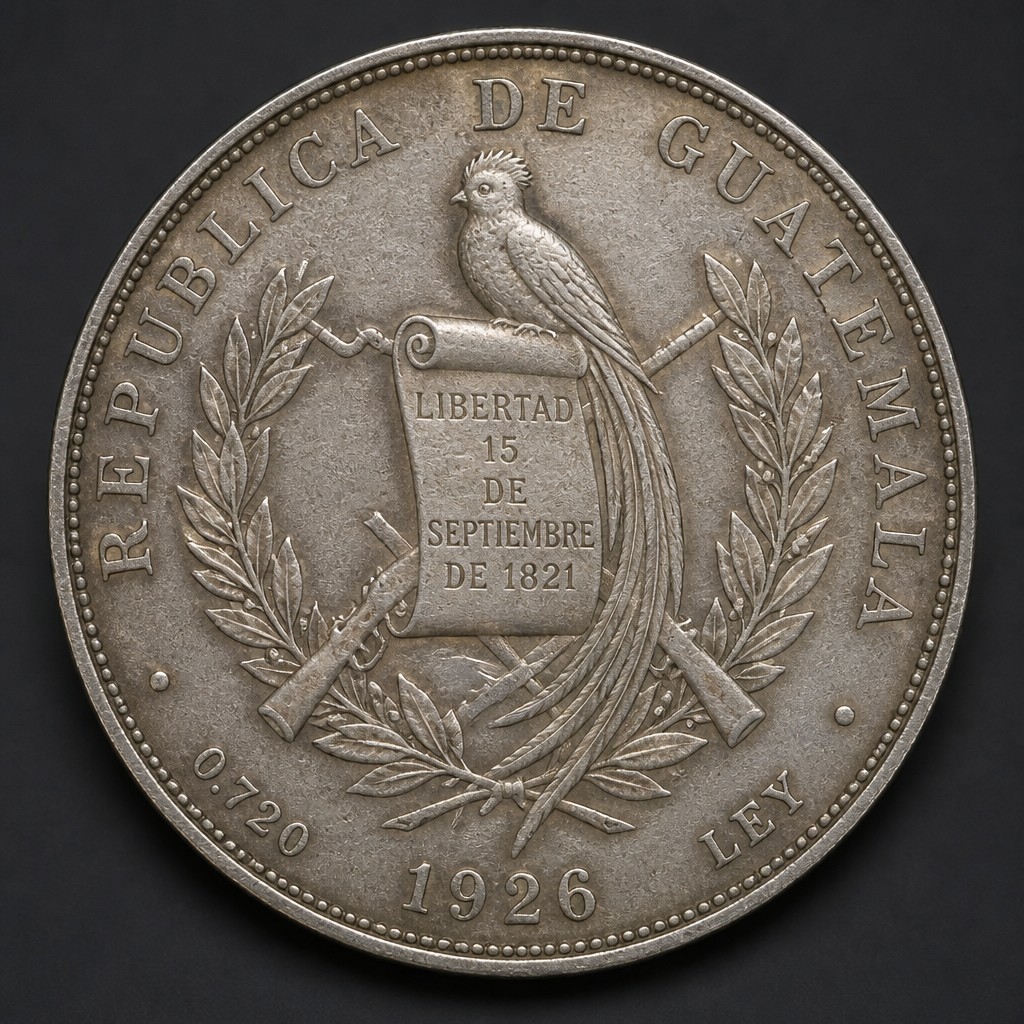
What It Is
The Quetzal became Guatemala's national currency in the 1920s, replacing the earlier peso, and the coin is named after the resplendent quetzal, a brightly colored bird considered the country's national symbol and a representation of liberty in Guatemalan iconography. Silver Quetzal coins were struck in several denominations, with the full 1 Quetzal being a substantial crown-size silver piece.
Obverse Design
The obverse features the quetzal bird itself, shown in profile perched on a scroll or plinth, often with its long tail feathers clearly rendered. The country name and denomination typically appear as part of the surrounding legend.
Reverse Design
The reverse displays Guatemala's national coat of arms, which includes crossed rifles and swords, a wreath, and a scroll, along with the date of issue.
Size, Weight, Metal, and Edge
The 1 Quetzal coin is crown-sized, comparable to a large silver dollar, generally struck in silver of around .720 to .900 fineness depending on the specific issue, with smaller fractional denominations (such as 1/4 and 1/2 Quetzal) reduced proportionally in size and weight. Edges are typically reeded.
Mint Marks
Because these coins were struck at foreign mints on contract in some years, look for small mint identification letters near the rim or base of the design; the absence of a local Guatemalan mintmark is normal for many dates, since Guatemala did not always strike its own coinage domestically during this period.
Telling It Apart From Similar Coins
The quetzal bird design is distinctive and not shared by other countries' coinage, making this one of the easier Latin American silver types to identify at a glance. Do not confuse it with the earlier Guatemalan 8 Reales/peso, which uses a mountain-and-sun design rather than a bird.
Judging Condition
Examine the bird's tail feathers and breast for wear, as these are the highest points on the obverse. On the reverse, check the fine details of the crossed weapons and wreath. Sharp feather striations and a fully legible date indicate a coin with less circulation wear.
Authenticity Red Flags
Watch for incorrect weight or diameter, a dull or pitted surface suggesting a cast reproduction, and feather or wreath detail that looks flat or blurred rather than crisply struck. As with other silver world coins, a genuine piece should have a consistent silver-gray color and produce a clear ring when gently spun on a hard surface.
Frequently asked questions
Why does the coin show a bird instead of a person or landscape?
The quetzal is Guatemala's national bird and a longstanding symbol of liberty in the country's iconography, so it was chosen as the central design when the Quetzal currency was introduced.
What is the difference between the Quetzal and the earlier Guatemalan peso?
The peso/8 Reales uses a mountain-and-rising-sun design, while the Quetzal coinage introduced in the 1920s features the quetzal bird on the obverse and the national arms on the reverse.
How much silver does a 1 Quetzal coin contain?
Fineness varies by issue, generally in the range of .720 to .900 fine silver, so check the specific date against a reliable reference for exact composition.
Are there smaller silver Quetzal denominations?
Yes, fractional coins such as 1/4 and 1/2 Quetzal were also struck in silver, at reduced size and weight compared to the full 1 Quetzal.