
How to Identify the Guangxu Yuanbao Dollar
A collector's checklist for the silver Guangxu dragon dollar: reading 光緒元寶, the weight denomination, the dragon reverse and mint inscription, plus authentication cautions.
Read the full Guangxu Yuanbao Dollar encyclopedia entry →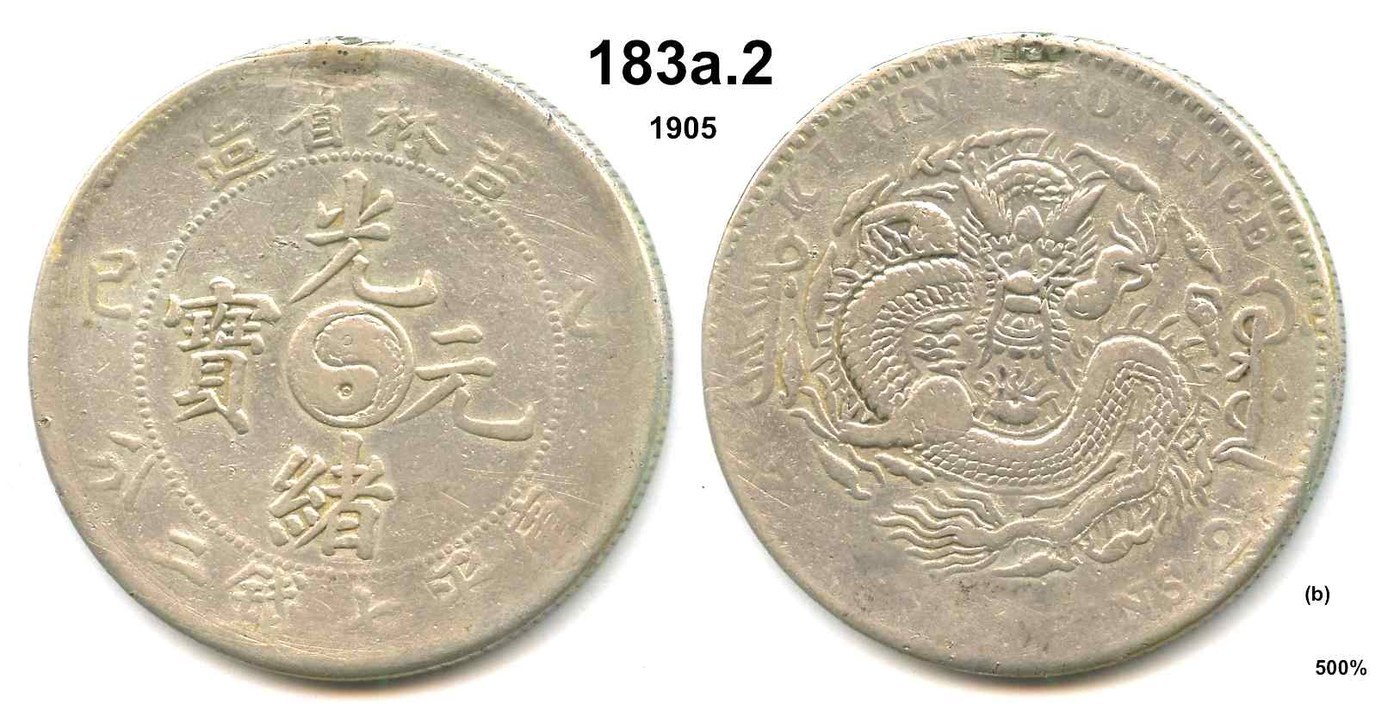
Begin with the obverse inscription, because it names the type. Look for the four characters 光緒元寶, read top-bottom-right-left as Guang-xu-yuan-bao. Around or beside them you should find a smaller inscription naming the province and a denomination stated as a silver weight; on the full dollar this is typically seven mace and two candareens. Many issues also carry a short Manchu script in the center. If the coin does not read 光緒元寶, it is a different type — the Xuantong and republican dragon dollars, for instance, use different legends.
Turn to the reverse to confirm and to attribute the piece. A single coiled dragon surrounded by clouds, flames, or a flaming pearl is the hallmark of the series. Read the encircling inscription carefully: it usually names the mint or province, often with an English translation, and that text — not the dragon alone — is what pins the coin to a specific issue. Compare the dragon's posture, scales, and the surrounding ornament against reference images, since styles differ from mint to mint.
Check size and weight to be sure you have the dollar rather than a fraction. The one-dollar coin is crown-sized, roughly 39 mm across and about 26-27 grams of silver. Half dollars, twenty-cent, and ten-cent pieces reuse the same design at smaller diameters and lighter weights, so measure and weigh the coin against published figures for the type rather than judging by appearance.
Beware of look-alikes and outright fakes. Dragon dollars are among the most heavily counterfeited world coins: cast copies may show seams, a grainy or greasy surface, mushy characters, or soft dragon detail, and struck fakes can be dangerously close. Genuine silver examples are heavy for their size and ring clearly. Watch also for tooled fields, added or re-cut characters, and coins whose weight or diameter falls outside the expected range.
Because the series spans dozens of provincial varieties with wide differences in rarity, treat identification as two steps: first confirm the type from 光緒元寶 plus a dragon reverse and a weight denomination, then attribute the exact issue from the mint inscription. For any purchase of consequence, rely on coins authenticated by a reputable grading service rather than on the design alone.
Frequently asked questions
What is the fastest way to recognize a Guangxu Yuanbao dollar?
Look for the four characters 光緒元寶 on one side paired with a single coiled dragon on the other, plus a denomination given as a silver weight (seven mace and two candareens for the full dollar). That combination identifies the type.
How do I tell which province struck my coin?
Read the inscription that encircles the dragon on the reverse. It generally names the mint or province, often with an English rendering, and the dragon style varies by mint, so both help you attribute the exact issue.
How can I tell a full dollar from a smaller denomination?
Measure and weigh it. The dollar is crown-sized at about 39 mm and 26-27 grams of silver; halves and minor coins share the same design at smaller diameters and lighter weights, so the physical size settles which denomination you have.
Are these coins often faked?
Yes. Dragon dollars are heavily counterfeited, so check weight and diameter against published figures, inspect the characters and dragon for crisp detail rather than cast softness or seams, and for valuable pieces buy examples certified by a reputable grading service.