
How to Identify the Guangxu Yuanbao 7 Mace 2 Candareens
A collector's checklist for the Guangxu silver dragon dollar: the dragon face, the Guangxu Yuanbao legend, the 7 Mace 2 Candareens value, size and metal, and fake cautions.
Read the full Guangxu Yuanbao 7 Mace 2 Candareens encyclopedia entry →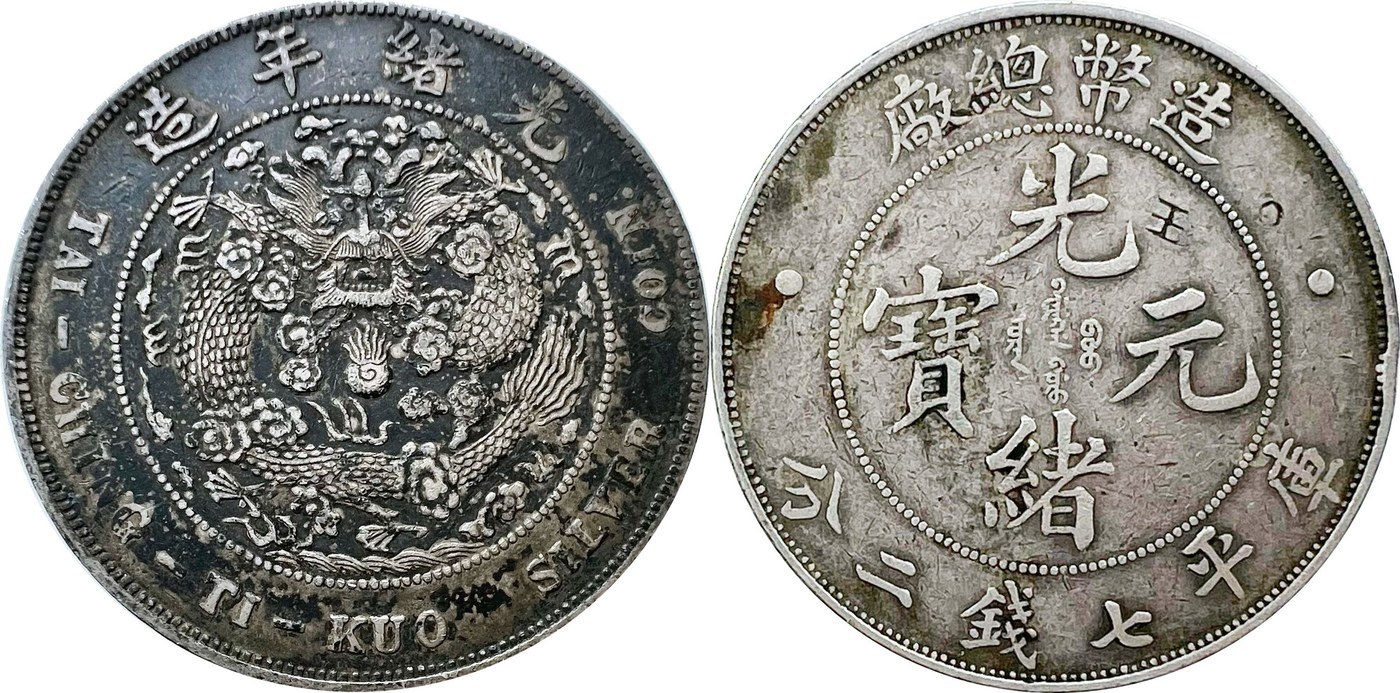
Start with the dragon face, because the coiled Chinese dragon is the quickest way to recognize the type. Look for a dragon amid clouds or scrollwork, ringed by a beaded or ornamental border, with fine detail in the scales, claws, and eye. On many issues the outer legend of this face carries a romanized value such as "7 MACE AND 2 CANDAREENS," which both names the denomination and confirms you are looking at a trade-dollar-standard piece.
Turn to the character face for the identity of the issue. The central Chinese characters should read Guangxu Yuanbao, naming the Guangxu reign, and additional characters give the denomination and often a mint or province name. Many pieces also carry Manchu script within the design. If the reign characters do not name Guangxu, or if the coin lacks the 7 Mace 2 Candareens value, it is a different type even if it looks superficially similar.
Confirm the physical traits. This is a large, heavy silver coin in the crown / trade-dollar size class, close to a Mexican peso or U.S. silver dollar in diameter and weight. Weigh and measure it against published specifications for the specific issue, and expect a solid feel and a clear silver ring. A coin that is noticeably light, undersized, dull-sounding, or magnetic should be treated with suspicion.
Mind the many varieties. Because different provincial and imperial mints struck Guangxu dragon dollars, the exact dragon style, legends, and characters vary from issue to issue. Small differences in the dragon, the arrangement of characters, or the mint name can separate a common coin from a rare one, so match your coin to reference images for the specific mint rather than assuming all dragon dollars are equal.
Authenticate carefully. Guangxu dragon dollars are among the most heavily faked Chinese coins. Cast copies may show seam lines, a grainy or soft surface, mushy dragon detail, or lettering that lacks crisp edges; some fakes are underweight or made of base metal with a silver wash. For any coin of real value, compare weight, diameter, and design against known-genuine examples and favor pieces authenticated by a reputable grading service before buying.
Frequently asked questions
What is the fastest way to recognize this coin?
Look for the coiled Chinese dragon on one face and the Chinese characters reading Guangxu Yuanbao on the other, together with a 7 Mace 2 Candareens value. That combination of the dragon, the reign name, and the silver-weight denomination identifies the type.
Where do I find the denomination on the coin?
The value appears in the Chinese characters on the character face and is often repeated in a romanized legend such as "7 MACE AND 2 CANDAREENS" around the dragon face. Both express the same traditional silver weight, roughly 0.72 tael.
Why do two Guangxu dragon dollars look different?
Different provincial and imperial mints produced these coins, so the dragon style, legends, and mint names vary between issues. Those differences also affect rarity, so match your coin to references for its specific mint rather than treating all dragon dollars as identical.
How can I avoid counterfeits?
Check that the weight and diameter match published figures for the issue, confirm the coin is non-magnetic silver with a true ring, and inspect the dragon and characters for crisp detail rather than soft, cast-looking surfaces. For valuable examples, buy coins authenticated by a reputable grading service.