
How to Identify the Guangxu Yuanbao 20 Cents
A collector's checklist for the Qing silver 20 cents: reading the dragon and Guangxu Yuanbao legend, the taiji reverse, size and weight, and spotting fakes.
Read the full Guangxu Yuanbao 20 Cents encyclopedia entry →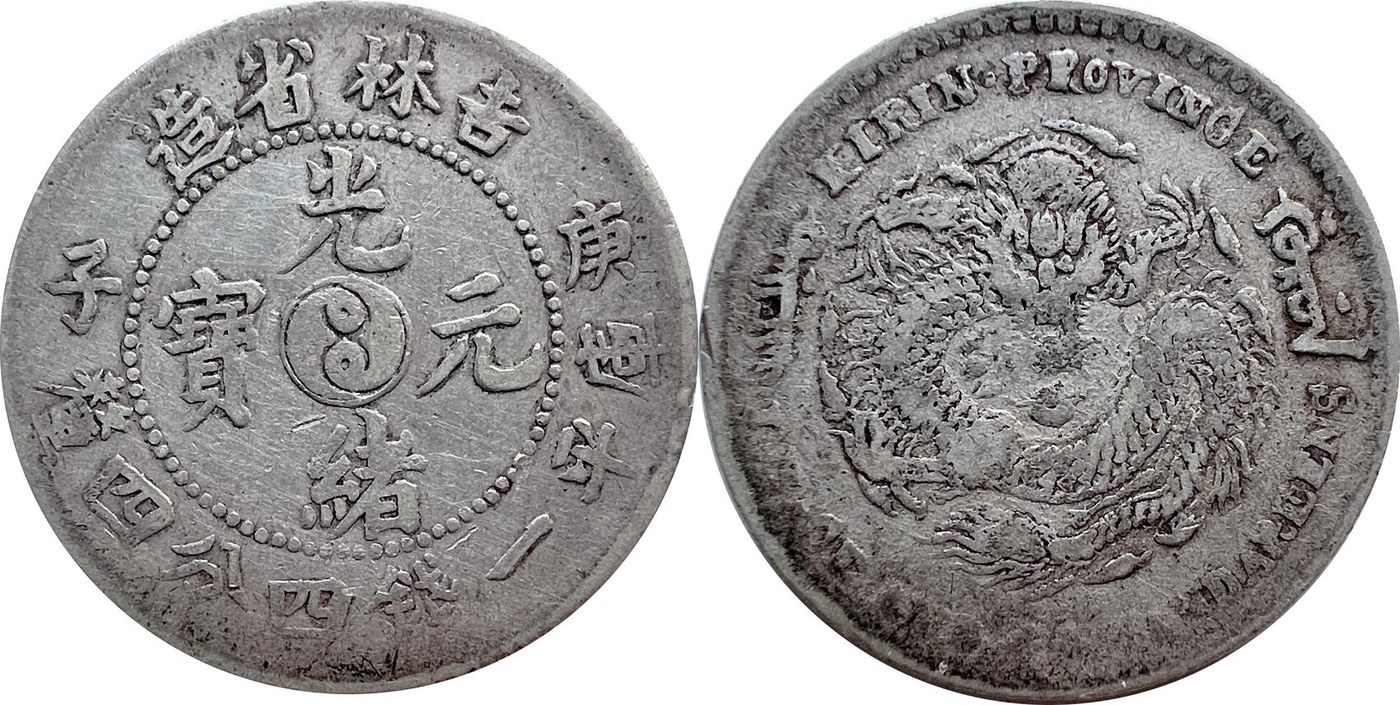
Begin with the dragon face. A genuine Guangxu Yuanbao 20 cents shows a single Chinese dragon in raised relief, framed by Chinese characters and fine ornamental detail. The key legend is Guangxu Yuanbao (光緒元寶), which names the emperor and marks the piece as silver currency. Many issues also spell out "20 Cents" in English on this side, a useful confirmation of the denomination.
Examine the other face and its center. On this type a yin-yang (taiji) symbol occupies the middle, ringed by Chinese characters giving the province/mint and the value in weight form, 1 mace 4.4 candareens (庫平一錢四分四釐). The taiji center is the strongest attribution clue: it is characteristic of the Kirin (Jilin) provincial series. Coins with a plain field, a rosette, or Manchu-script center are different provincial issues, so read the central device and legends carefully rather than assuming province from the dragon alone.
Check size, metal, and edge. Expect a small silver coin about 23–24 mm in diameter, weighing roughly 5–5.4 grams, with a reeded edge and the sharp, cleanly raised detail of a machine-struck coin. A cast texture, seams, a plain edge, or a coin that is markedly under- or over-weight are warning signs.
Watch for look-alikes and varieties. The 20 cents is easily confused with its sibling denominations—the larger dollar and half-dollar and the smaller 10 cents and 5 cents—so verify the denomination text and the coin's diameter. Within the 20-cent series, provinces and years differ in dragon style, legend arrangement, and cyclical or Western dating, all of which affect attribution and value.
Apply authentication caution. The Guangxu dragon series is among the most counterfeited of Chinese coins, and many genuine coins have been cleaned or artificially toned. Inspect the dragon's scales and legends for crisp original detail, check weight and diameter against expected ranges, and be wary of soft, greasy-looking surfaces or lettering. For any higher-value or uncertain example, obtain expert opinion or third-party grading before purchase.
Frequently asked questions
How do I tell the 20 cents from the 10 cents or the dollar?
Read the denomination text and measure the coin. The 20 cents is about 23–24 mm and states its value as 1 mace 4.4 candareens (and often "20 Cents" in English), while the 10 cents is smaller and lighter and the dollar is much larger at roughly 39 mm. Diameter and the stated value together settle it.
Which side is the obverse?
Collectors usually treat the side bearing the Guangxu Yuanbao legend and denomination as the obverse and the dragon side as the reverse, though catalog conventions vary. Either way, use the dragon, the Chinese legend, and the taiji center together to identify the coin.
Does the yin-yang symbol confirm the province?
It is a strong clue. A taiji (yin-yang) device at the center of this denomination is characteristic of the Kirin (Jilin) provincial issues. Confirm by reading the surrounding Chinese characters, which name the mint, since central devices and legends differ from province to province.
Are most of these coins genuine?
Not all. Guangxu dragon silver is heavily counterfeited and frequently cleaned. Check for struck (not cast) fabric, a reeded edge, correct weight and diameter, and crisp dragon detail, and seek authentication or grading for any valuable or doubtful piece.