
How to Identify the Guangxu Yuanbao 1 Mace 4.4 Candareens
A collector's walkthrough for the small Guangxu silver dragon coin: reading the characters, the mace-and-candareen weight, size and metal, and spotting fakes.
Read the full Guangxu Yuanbao 1 Mace 4.4 Candareens encyclopedia entry →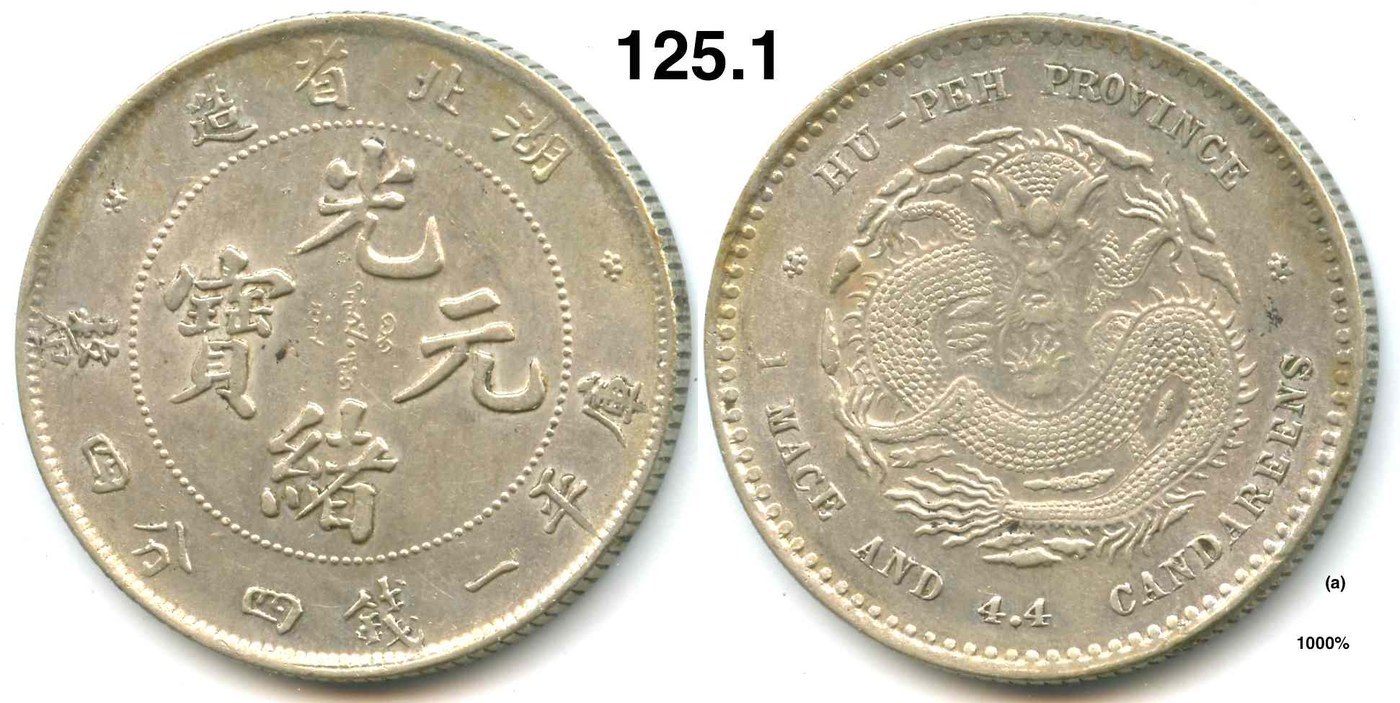
Start with the character-side, which carries the identity of the coin. The four central Chinese characters read Guangxu Yuanbao, naming the reign and marking the piece as silver currency. Around them you will find the issuing authority and the denomination, given as a weight: 1 Mace 4.4 Candareens (一錢四分四釐). Locating those characters and the weight statement is the surest way to confirm the type before worrying about which province struck it.
Use the weight to fix the denomination. In the tael system one mace equals ten candareens, so 1 mace 4.4 candareens is 1.44 mace — precisely one-fifth of the 7 mace 2 candareen "dollar." That makes this the 20-cent subsidiary coin, a small silver piece rather than a large crown. If a coin the size of a full dragon dollar claims this weight, be suspicious; the denomination and the physical size should agree.
Turn to the dragon reverse for confirmation and variety. The dragon is shown coiled in an ornamental design, often ringed by a legend and, on many provincial issues, an English inscription naming the province and value. Compare the dragon's posture, the number and rendering of its scales and claws, and the surrounding text against reference images: these details separate one province and variety from another even when the denomination is identical.
Check the physical coin against published specifications for the variety you suspect. Weigh and measure it — genuine subsidiary silver pieces fall within a defined diameter and weight range — and note that authentic silver has a characteristic ring and heft. A coin that is too light, undersized, magnetic, or dull in tone deserves close scrutiny.
Finally, treat authentication seriously, because Chinese dragon coins are among the most heavily faked of all world coins. Look for cast seams, grainy or greasy-looking surfaces, mushy characters, and dragons with soft, blurry detail, all signs of a copy. Watch too for coins with the wrong calligraphy style or legends for the province named. For any valuable example, favor coins certified by a reputable grading service and compare weight, diameter, and design against known-genuine references before buying.
Frequently asked questions
What is the quickest way to recognize this coin?
Read the character side for the four central characters Guangxu Yuanbao and the weight statement "1 Mace 4.4 Candareens," then confirm the ornamental dragon on the reverse. That combination identifies the type; the province legends then tell you the variety.
How does the mace-and-candareen weight tell me the value?
One mace equals ten candareens, so 1 mace 4.4 candareens is 1.44 mace of silver. Since the full dollar is 7 mace 2 candareens, this coin is exactly one-fifth of it — the 20-cent subsidiary piece — and should be correspondingly small.
How do I tell which province struck my coin?
Read the legends around the characters and dragon, including any English inscription, which typically name the issuing province. The dragon's style and calligraphy differ by mint, so compare those details to reference images for the specific variety.
How can I guard against counterfeits?
Check weight and diameter against published figures, confirm the silver is non-magnetic and rings true, and inspect the dragon and characters for crisp detail rather than soft, cast-looking surfaces or seams. For valuable pieces, buy examples authenticated by a reputable grading service.