
How to Identify the GSA Morgan Dollar
A Morgan silver dollar, usually Carson City struck, sold by the U.S. General Services Administration in its original hard plastic holder from the 1972-1980 government sales.
Read the full GSA Morgan Dollar encyclopedia entry →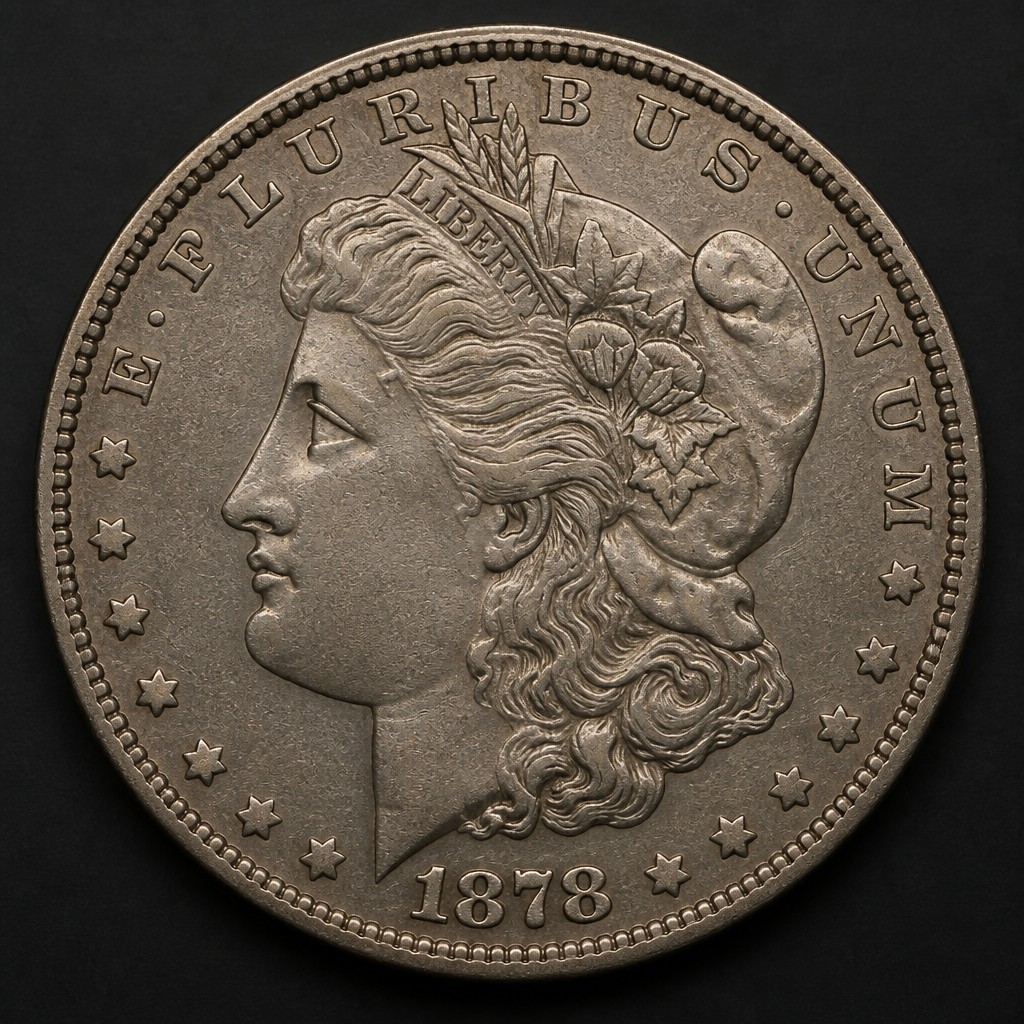
What It Is
A "GSA Morgan Dollar" is not a separate coin design, it is a genuine Morgan silver dollar, overwhelmingly from the Carson City mint, that was part of a hoard of roughly 3 million coins discovered in Treasury vaults and sold to the public by the U.S. General Services Administration between 1972 and 1980. The term describes the coin's packaging and documented provenance rather than a different strike or design.
Obverse and Reverse Design
Because these are standard Morgan dollars, the obverse shows George T. Morgan's left-facing Liberty head with LIBERTY on her cap and stars around the rim, while the reverse shows an eagle with spread wings holding arrows and an olive branch, encircled by a wreath, with IN GOD WE TRUST, UNITED STATES OF AMERICA, and ONE DOLLAR around the design.
Size, Weight, and Metal
The coin itself follows standard Morgan dollar specifications: 38.1 mm diameter, 26.73 grams, 90% silver and 10% copper, with a reeded edge.
The GSA Holder Itself
The defining identification feature is the packaging. Genuine GSA dollars come sealed in a rectangular hard plastic holder with a black plastic insert that frames the coin, allowing both sides to be viewed without removing it. Early sales (1972-1974) included a black outer presentation box, while later sales (1979-1980) used simpler brown cardboard boxes. Each holder was originally accompanied by a numbered certificate describing the sale.
Mint Marks Found in GSA Holders
Most coins in GSA holders show the "CC" mintmark on the reverse below the wreath, reflecting the hoard's Carson City origin, though a small number of common-date coins without a mintmark were also included in some sales.
Telling a Genuine GSA Holder From a Reproduction
Look closely at the plastic holder's clarity, the black insert's finish, and how snugly the coin sits without rattling. Reproduction or aftermarket holders sometimes have looser seams, cloudier plastic, or a coin that shifts when tilted. The coin should never have been cleaned or dipped, as coins sold by the government were released exactly as they came out of the vaults.
Judging Condition at a Glance
Because most GSA coins were never circulated, look for original mint luster, sharp hair and feather detail, and a lack of contact marks. Toning ranges from untoned white to attractive rainbow colors picked up from decades of storage in canvas bags, and this natural bag toning is generally viewed as a normal, unaltered characteristic rather than a defect.
Authenticity Red Flags
Watch for a coin removed from its original holder and resealed in a look-alike case, mismatched certificate numbers, or a holder that appears reglued or tampered with along the seams. A coin with a suspicious mintmark, incorrect weight, or a texture inconsistent with genuine bag-toned Morgan dollars should be examined carefully before assuming it is an authentic GSA piece.
Frequently asked questions
Is a GSA Morgan dollar a different coin from a regular Morgan dollar?
No. It's the same Morgan silver dollar design and specifications, just sold by the government in a distinctive hard plastic holder with documented provenance.
Are all GSA dollars from Carson City?
The vast majority carry the CC mintmark since the hoard originated from Carson City mint bags, though a few common-date coins without mintmarks were also included in some sales.
Does removing the coin from its GSA holder lower its value?
Collectors generally place a premium on coins that remain sealed in their original, intact GSA holder with matching certificate.
What does the black insert in the holder look like?
It's a rigid black plastic frame that holds the coin between two clear plastic layers so both sides remain visible without opening the holder.
Is toning on a GSA dollar a bad sign?
Not usually. Natural bag toning from decades of storage in canvas mint bags is common and generally considered an authentic, untouched characteristic.