
How to Identify the Groat of Henry VIII
A collector's guide to spotting a Tudor silver groat of Henry VIII: quartered arms, long cross reverse, mint marks and hammered-strike clues.
Read the full Groat of Henry VIII encyclopedia entry →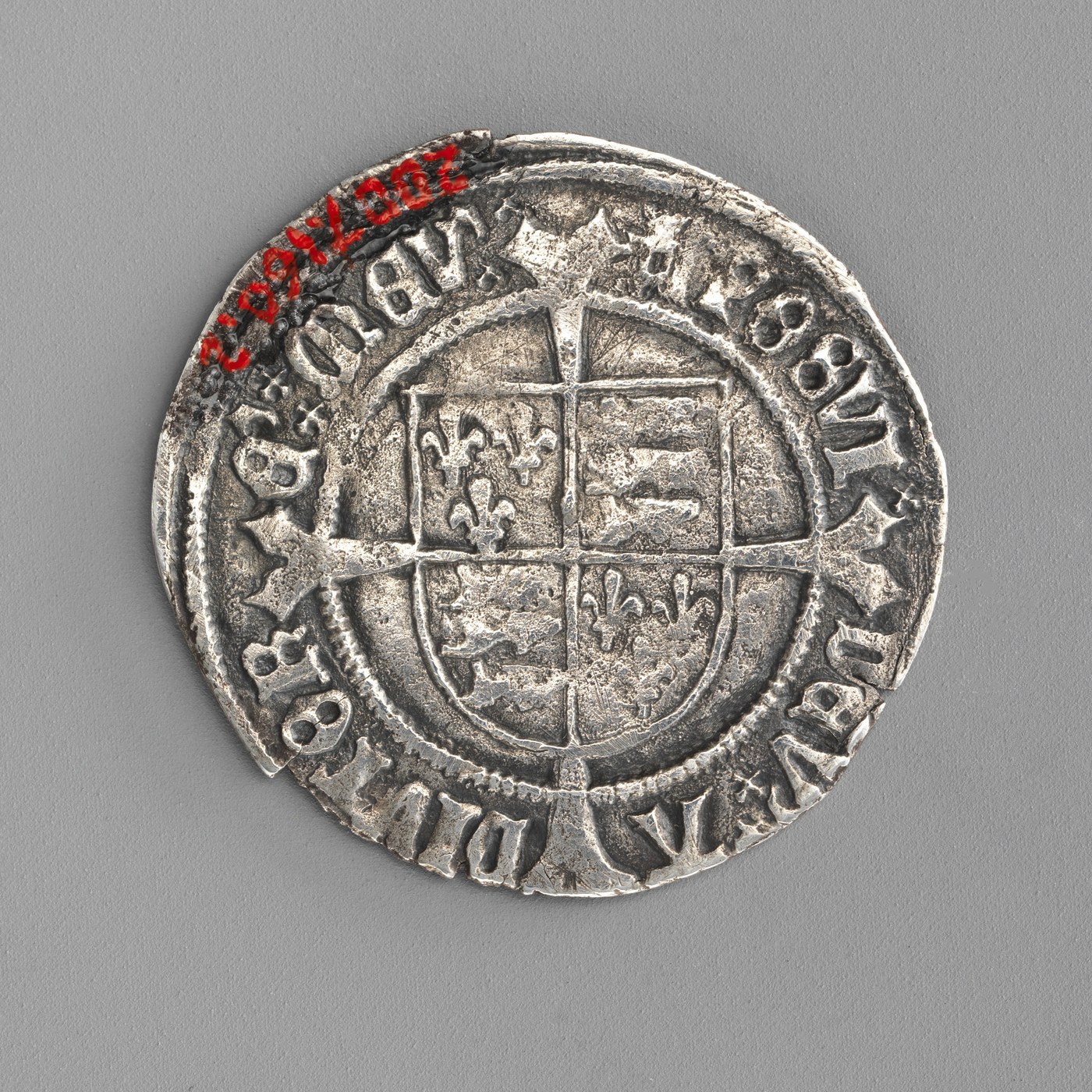
Start with size and metal. A groat is a broad, thin silver coin, noticeably larger than a penny but small by modern standards. The surfaces should read as silver, usually with grey or iridescent toning, and the edge will be plain and slightly irregular rather than milled. Any coin with a perfectly round flan, sharp raised rim and machine-even surfaces is not a genuine hammered groat.
Examine the two faces. On this type, one side carries the royal arms as a shield quartered with the lions of England and the fleurs-de-lis of France, contained within an inner circle. The other side shows a shield set over a long cross whose limbs run out toward the rim and break up the surrounding legend into segments. The Latin legends around each side name the king and his titles in abbreviated form.
Find the initial mark. At the start of the legend look for a small symbol or device, the mint mark, which was used to indicate the mint and the period of striking. Matching this mark against published Tudor tables is the single most useful step for attributing your coin to a specific mint such as the Tower of London, Canterbury or York, and for placing it within the reign.
Watch for look-alikes and honest confusion. Groats of Henry VII, Edward VI and later Tudor monarchs share the general fabric and can be mistaken for those of Henry VIII, so rely on the legend, portrait style and initial mark rather than shape alone. Continental and Irish issues of the period can also resemble English groats at a glance.
Be cautious about authentication. Cast copies feel greasy or show a seam and bubbles; genuine struck coins have crisp, if uneven, detail and file-free edges. Beware of tooled surfaces, plugged holes, added mint marks or artificial toning. If a coin carries a high price relative to its apparent grade, seek an opinion from a specialist in hammered English silver before buying.
Frequently asked questions
How big is a Henry VIII groat?
It is a broad, thin silver coin, larger than a penny of the period but modest in diameter by modern standards. Exact size varies slightly because each flan was cut and struck by hand.
What is the quickest way to tell a groat from a lesser coin?
Compare size and design. A groat is larger than the penny, halfpenny and farthing, and carries the fuller quartered arms and long cross layout with complete legends rather than the simpler designs of the smaller silver.
Can I identify the exact date of my groat?
Tudor hammered coins do not carry a printed year. Instead you narrow the period using the initial mark, the king's titles in the legend and the style, which together point to a phase of the reign rather than a single calendar year.
Should I clean my groat before identifying it?
No. Cleaning removes original toning and can leave scratches that lower value and obscure detail. Handle it by the edges and, if needed, ask a specialist before doing anything more than gentle dusting.