
How to Identify the Gotha 3 Kreuzer
Recognize the Gotha 3 Kreuzer by its armorial obverse, its laurel-wreathed 3 KREUZER value, the 1830 date, and its small silver format.
Read the full Gotha 3 Kreuzer encyclopedia entry →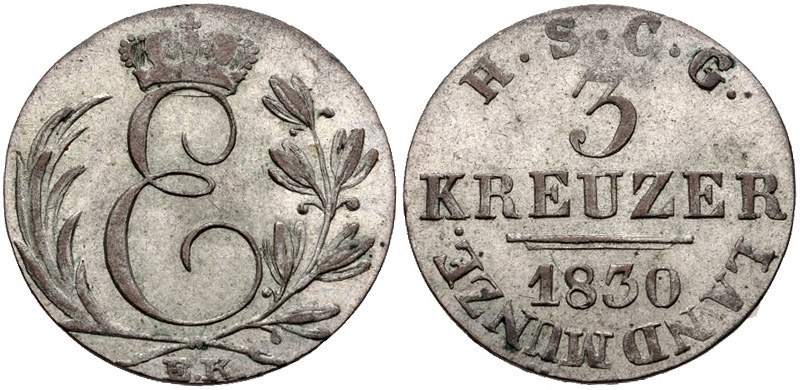
Read the reverse first. The fastest confirmation is the denomination and date: look for 3 KREUZER and the year 1830 enclosed in a laurel wreath. That wreath-framed value is the single most reliable feature for pinning down both the denomination and the year at a glance.
Study the armorial obverse. The other face carries an ornate coat of arms — a shield with decorative scrollwork. Read any legend around the arms, since it typically names the ruling duke or the duchy and is what ties the coin to the specific German state rather than to a look-alike neighbor. Note the exact heraldic charges (fields, crowns, supporters) so you can match them to catalog images.
Check size, metal, and weight. This is a small, thin silver or billon piece, much smaller than a taler or gulden. A modest diameter, light weight, and the pale gray tone of a low-silver alloy all fit a 3 Kreuzer. A coin that is large, heavy, or bright base-metal yellow does not match the type.
Watch for look-alikes. Many German states struck near-identical armorial 3 Kreuzer pieces in the same era, so a wreathed 3 KREUZER reverse alone is not enough — the obverse heraldry and legend are what separate a Gotha issue from a Saxon, Bavarian, or other ducal one. Dates and small design details also differ year to year, so confirm the 1830 date matches the arms you see.
Authenticate carefully. Genuine pieces show crisp, even wear and correct weight for the denomination. Be cautious of tooled or re-engraved arms, cast copies with soft detail or edge seams, and harshly cleaned surfaces that flatten the design. For any coin bought as a scarce variety, compare against reference images and, if in doubt, seek a specialist opinion.
Frequently asked questions
How do I confirm the denomination and date?
Look at the wreath side: it reads 3 KREUZER with the year 1830 inside a laurel wreath. That framed value is the clearest indicator of both denomination and date.
How can I tell it apart from other German 3 Kreuzer coins?
Read the obverse legend and study the coat of arms. Many states used a similar wreathed 3 KREUZER reverse, so the heraldry and the ruler or duchy named around the shield are what identify the issuing state.
What size and metal should I expect?
Expect a small, thin, lightweight coin in silver or low-grade silver (billon) with a pale gray tone. It should be much smaller than a taler or gulden.
What are the warning signs of a bad coin?
Be wary of soft, mushy detail or edge seams that suggest a cast copy, re-engraved or tooled heraldry, and harsh cleaning that dulls the surfaces. Compare against reference images and get expert help for any claimed rarity.