
How to Identify the Gordian III Antoninianus
A visual guide to the antoninianus of Gordian III (238-244 AD), showing how the radiate crown, common reverse types, and portrait age help identify this widely available coin.
Read the full Gordian III Antoninianus encyclopedia entry →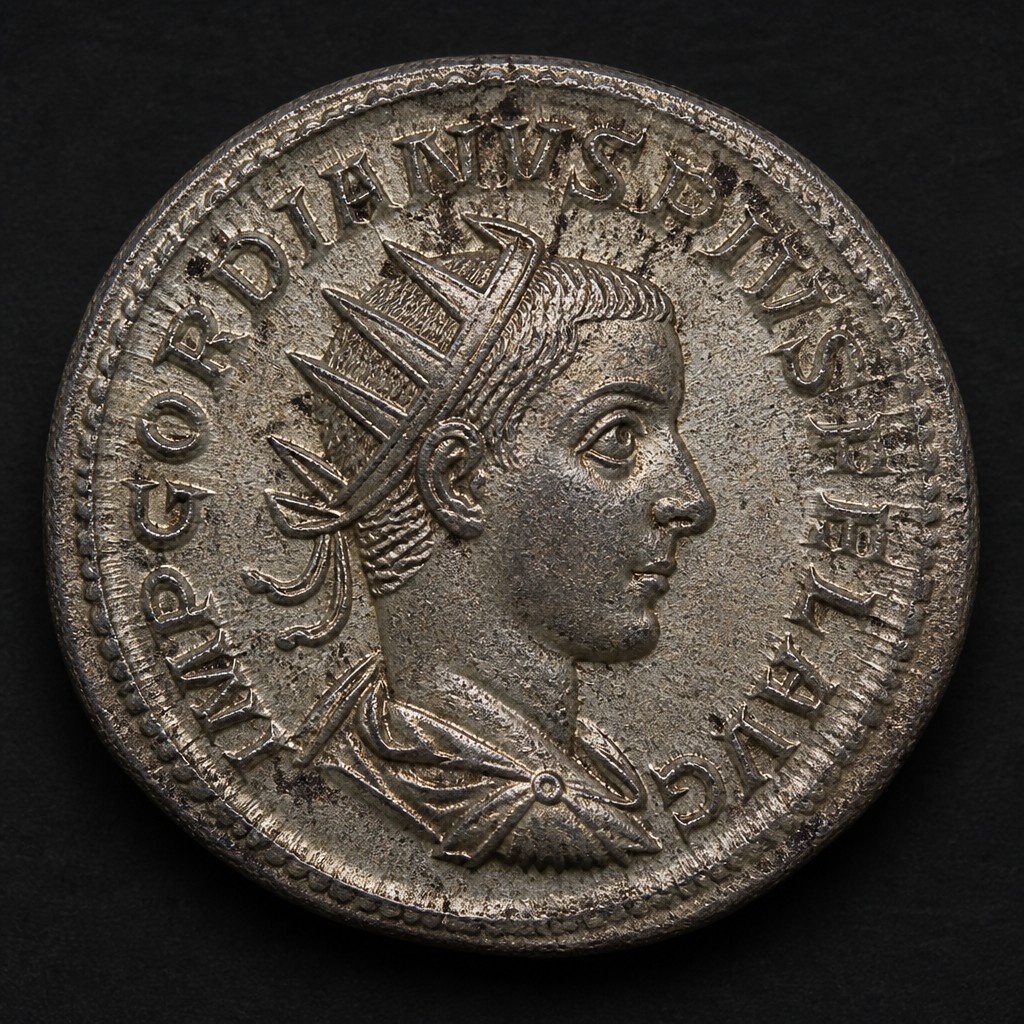
What Is the Gordian III Antoninianus?
Gordian III became emperor in 238 AD at just thirteen years old, following the chaos of the so-called Year of the Six Emperors, and reigned until 244. His antoninianus - a larger radiate-crowned silver coin valued at two denarii - was struck in vast quantities and is one of the most commonly encountered third-century Roman coins today.
Obverse Design and Inscriptions
The obverse shows a radiate, draped or cuirassed bust right, distinguished from a denarius portrait by its spiked radiate crown rather than a plain laurel wreath. The legend typically reads IMP GORDIANVS PIVS FEL AVG, with earlier issues sometimes reading IMP CAES M ANT GORDIANVS AVG.
Reverse Design and Inscriptions
Reverse types are numerous, including Fortuna Redux seated with rudder and cornucopia, Jupiter Stator standing with a spear, Fides Militum, Aequitas holding scales, Pax with branch and scepter, Victoria advancing, and Roma seated with spear and shield.
Size, Weight, and Metal
The coin measures roughly 21-23mm and weighs about 4-5 grams, with a silver content in the range of 40-50%, still recognizably silvery in color on well-preserved examples.
Mint Marks and Where to Find Them
Most coins were struck at Rome, with some later issues from Antioch. Occasional officina (workshop) letters appear in the field, but a fully standardized exergue mint-mark system had not yet developed at this date.
Telling It Apart from Similar Coins
The radiate crown versus plain laurel wreath is the quickest way to tell an antoninianus from a denarius at a glance. Distinguishing Gordian III from his immediate, very short-reigned predecessors Pupienus, Balbinus, or the two Gordians requires simply reading the legend name, as those coins are considerably scarcer. His successor Philip the Arab has an older, fuller, sometimes bearded face, while Gordian III's portrait stays youthful throughout his reign.
Judging Condition at a Glance
Wear shows first on the radiate crown's points, the cheek, and the hair. On the reverse, check the deity's raised arm and drapery folds, which flatten with circulation before other details.
Authenticity Red Flags
Cast fakes show the usual telltale seam, porous surface, and light weight. Tooled coins may display artificially crisp lettering against an otherwise worn field, or a reverse design altered to resemble a scarcer type; compare letterforms and relief style against the coin's overall wear level for consistency.
Frequently asked questions
How do I tell an antoninianus from a denarius at a glance?
Look at the crown: a radiate (spiked) crown means antoninianus, while a plain laurel wreath means denarius. The antoninianus is also somewhat larger and heavier.
What is the most common reverse type on this coin?
There is no single dominant type - Fortuna Redux, Jupiter Stator, Fides Militum, Aequitas, and Pax all appear frequently, since reverse designs changed often during his six-year reign.
Are there mint marks to check?
Not in a standardized form. Most coins came from Rome, and any officina letters that appear are inconsistent rather than part of a systematic mint-mark scheme.
How can I distinguish Gordian III from Philip the Arab, his successor?
Gordian III's portrait stays youthful and beardless throughout his reign, while Philip the Arab is shown as an older, fuller-faced, sometimes bearded man; the legend name confirms it either way.