
How to Identify the Gold Tetradrachm of Ptolemy II and Arsinoe II
A collector's guide to recognizing this Ptolemaic dynastic gold by its overlapping royal busts, Greek legends, gold fabric, and the four rulers depicted.
Read the full Gold Tetradrachm of Ptolemy II and Arsinoe II encyclopedia entry →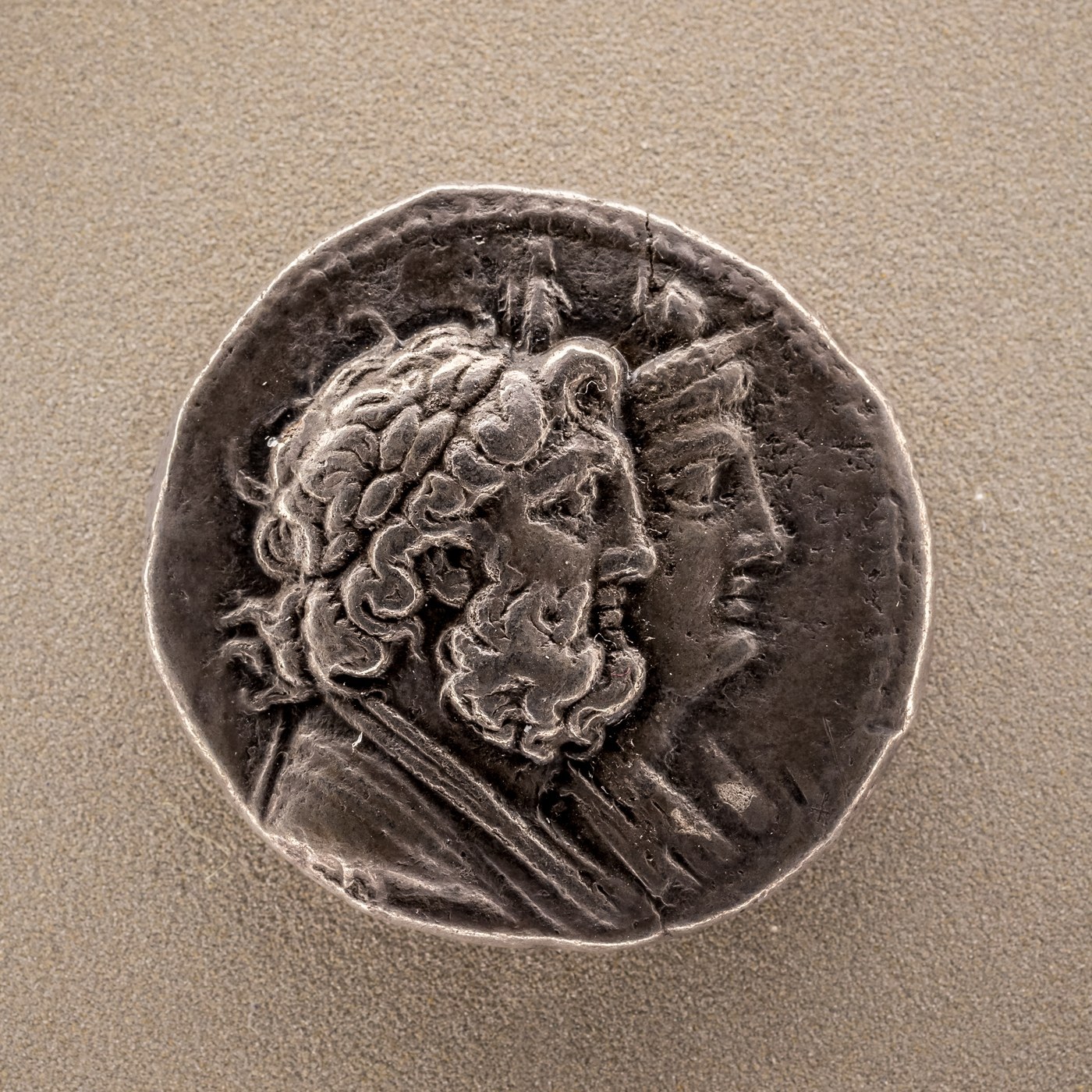
Begin with the metal and the portrait scheme, because together they are unmistakable. This is a coin of solid, high-purity yellow gold that carries two overlapping busts on each side rather than a single head. If a candidate shows only one portrait, or is silver or bronze, it is not this dynastic gold type. The paired, jugate busts are the first thing to confirm.
Read the primary face. You should see two heads facing the same direction, one set slightly behind the other, identified in the standard series as Ptolemy II and Arsinoe II. Look for royal diadems, and often a Greek legend reading ΑΔΕΛΦΩΝ, "of the siblings." The male head may be draped or shown with a spear or aegis; the queen is typically diademed or veiled. The tight overlap of the two profiles is the key diagnostic.
Turn the coin over for the second pair, Ptolemy I and Berenike I, the deified founders, usually accompanied by the legend ΘΕΩΝ, "of the gods." Confirming that each side carries its own royal couple, with the two dynastic legends, separates this issue from single-portrait Ptolemaic and other Hellenistic gold. Weak or off-flan legends are common, so read what is present rather than inventing letters.
Measure and weigh the coin. Ptolemaic dynastic gold of this design was issued in more than one denomination, so the type alone does not fix the value; only the weight and diameter place a coin within the series. Expect a hand-struck flan that is slightly irregular, with centering that can crop part of the busts or legends at the rim. Genuine gold shows a warm, even color and metallic luster rather than a brassy or dull tone.
Finally, treat authentication as essential. This is a famous, valuable type that is widely copied and faked, including cast reproductions and modern fantasy pieces. Watch for a seam around the edge, a soft or bubbly surface, incorrect weight, or lettering and portrait style that look mushy or wrong for the period. Because so much is at stake, rely on specialist cataloguing, third-party certification, and documented provenance before treating any example as genuine.
Frequently asked questions
How do I tell this from single-portrait Ptolemaic gold?
This type shows two overlapping busts on each side, a royal couple per face, rather than one head. Many Ptolemaic gold coins carry a single portrait or a cornucopia reverse; the paired jugate busts and the two dynastic legends are what set this dynastic issue apart.
Which side is which couple?
The reigning couple, Ptolemy II and Arsinoe II, appear together with the legend ΑΔΕΛΦΩΝ, "of the siblings." The founders, Ptolemy I and Berenike I, appear together with ΘΕΩΝ, "of the gods." Reading the legends is the surest way to confirm each side.
Does identifying the type tell me the denomination?
No. The same jugate design was struck in more than one gold denomination, so you must weigh and measure the coin to place it in the series. Type identifies the issue; weight and diameter identify the denomination.
What are the main warning signs of a fake?
Look for an edge seam, a soft or bubbly surface, wrong weight, or portrait and lettering styles that look mushy or off-period. This valuable type is heavily faked, so seek specialist attribution, certification, and provenance before trusting any example.