
How to Identify the Gold Sovereign
A collector's guide to recognizing an early gold sovereign by its royal portrait, heraldic shield reverse, 22 mm size, and 22-karat gold color.
Read the full Gold Sovereign encyclopedia entry →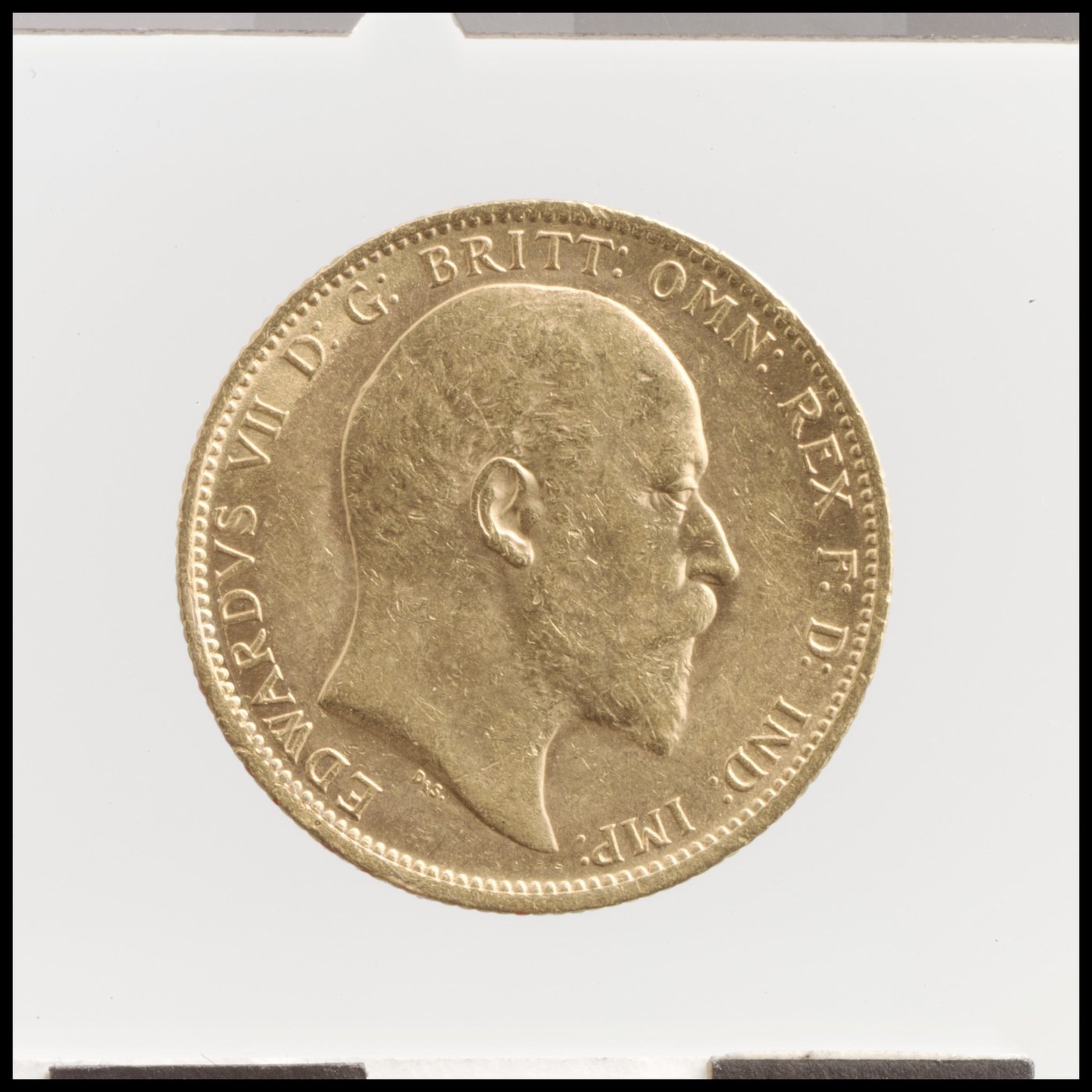
Begin with the obverse portrait and legend. The sovereign described here shows George III facing left with a laurel wreath around his head and a Latin inscription naming him as king. The direction the bust faces, the wreath, and the surrounding legend together identify the monarch, while the date — 1817 on this coin — pins down the year. Read the legend carefully, as the wording and the king's name are primary diagnostics.
Examine the reverse design. This sovereign carries a crowned heraldic shield bearing the quartered royal arms rather than a figural scene. Note the shape of the shield, the crown above it, and any surrounding ornament or garter, since the exact heraldic arrangement helps confirm the type and period. Sovereigns of different reigns used either shield-of-arms reverses or the famous St George and dragon, so record which one you see.
Measure the coin. A full sovereign is small and dense: about 22 mm in diameter, roughly 8 grams in weight, and struck in 22-karat gold with just under a quarter ounce of pure gold. Its warm yellow color, heft, and precise dimensions are strong authentication clues, so a scale and calipers are your best first tools. Beware half-sovereigns, which share the designs at a smaller size and lighter weight.
Watch for look-alikes and fakes. Gold sovereigns are among the most counterfeited world coins, and gilded base-metal copies, wrong-weight casts, and altered dates all exist — early high-value dates like 1817 are especially worth scrutinizing. Compare weight, diameter, and thickness against published sovereign specifications, and look for crisp, well-defined lettering and heraldry; mushy detail or an off weight is a warning sign.
For any sovereign of real value, especially an early dated piece, go beyond a casual check. Confirm the exact date and monarch, weigh and measure the coin, and for significant examples rely on professional authentication or third-party grading before you buy, sell, or insure it.
Frequently asked questions
How do I tell a full sovereign from a half sovereign?
By size and weight. A full sovereign is about 22 mm and roughly 8 grams; a half sovereign shares the same designs but is noticeably smaller and about half the weight. Measuring the diameter and weighing the coin is the quickest way to tell them apart.
What confirms the monarch on an early sovereign?
The obverse portrait direction and the Latin legend. On this coin George III faces left with a laurel wreath, and the surrounding inscription names him as king. Reading the legend and matching the bust to the date is the reliable way to identify the ruler.
How can I check a sovereign is real gold?
Weigh it and measure its diameter and thickness against published sovereign specifications, and check for the warm 22-karat color and sharp detail. Gilded or underweight copies fail these checks. For valuable early dates, use professional authentication.
Does a shield reverse mean it is not a real sovereign?
No. Sovereigns were issued with heraldic shield reverses as well as the St George and dragon design. A crowned shield of the royal arms is a legitimate sovereign reverse, so identify the coin by its portrait, legend, size, and metal rather than by expecting one particular reverse.