
How to Identify the Gold Panda (China)
An identification guide to the Chinese Gold Panda bullion coin, covering its Temple of Heaven obverse, yearly-changing panda reverse, purity standard, and the careful checks needed to spot the widely counterfeited series.
Read the full Gold Panda (China) encyclopedia entry →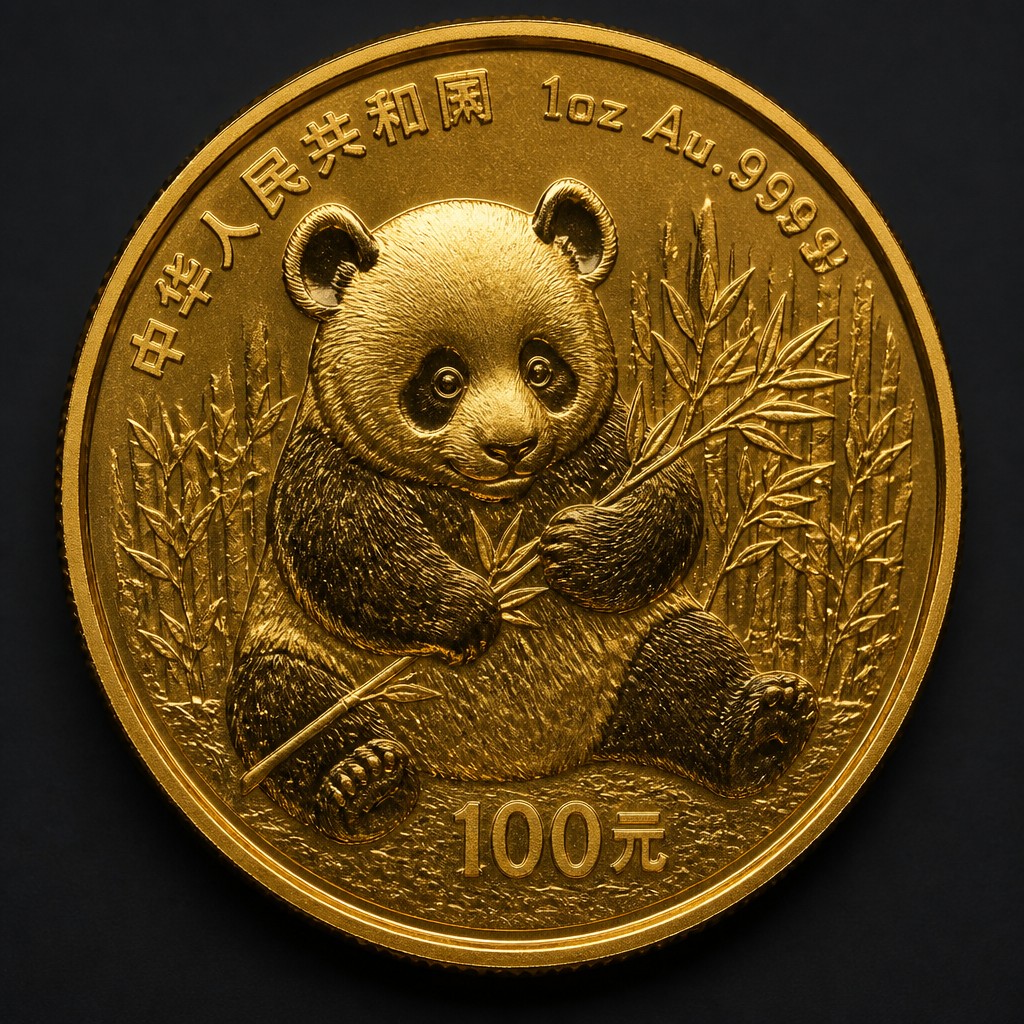
What This Coin Is
The Gold Panda is China's flagship gold bullion and collector coin series, first issued in 1982 by the People's Bank of China. Unlike many bullion coins that keep the same design every year, the Gold Panda changes its panda-themed reverse design annually, making each year's coin distinct.
Obverse Design
The obverse consistently shows the Temple of Heaven's Hall of Prayer for Good Harvests in Beijing, along with the inscription "People's Republic of China" and the year, both rendered in Chinese characters.
Reverse Design
The reverse shows one or more pandas in a design that changes essentially every year, depicting the animals in different poses and settings such as eating bamboo or climbing. A few years have reused an earlier design, but most years are visually unique, which collectors use to quickly identify the date even without reading the Chinese year.
Size, Weight, Metal, and Edge
Gold Pandas are struck in .999 fine gold and issued in several sizes, historically including 1 ounce, 1/2 ounce, 1/4 ounce, 1/10 ounce, and 1/20 ounce, with gram-denominated sizes (such as 30g, 15g, 8g, 3g, and 1g) introduced from 2016 onward. The edge is reeded on most sizes.
Mint Marks and Where to Find Them
Early Gold Panda issues sometimes carry a small privy mark identifying the producing mint, such as Shenyang, Shenzhen, or Shanghai, typically placed in a small, unobtrusive spot within the design.
Telling It Apart From Similar Coins
Because the panda design changes yearly, correctly matching the reverse artwork, denomination, and date printed in Chinese characters to the known official design for that year is the main identification task. The Gold Panda series is, unfortunately, one of the most heavily counterfeited modern bullion coin series, so verifying a specific date's design against a reliable reference is important.
Judging Condition
Bullion-strike Gold Pandas are generally handled carefully and sold in protective packaging, so grading typically focuses on the sharpness of the panda's fur texture and facial detail, along with the presence of any bag marks or handling marks from minting and shipping.
Authenticity Red Flags
Counterfeiting of Gold Pandas is common enough that buyers should verify precise diameter and weight against official specifications for the claimed size, check that the reeded edge count and style match genuine examples, and confirm the Chinese characters are correctly formed rather than blurred or stylistically off. Because gold is not magnetic, a coin that responds to a magnet is not genuine gold.
Frequently asked questions
Why does the Gold Panda design change every year?
Unlike many bullion coins that keep a fixed design, the People's Bank of China intentionally changes the panda artwork annually, making each year's coin visually distinct.
What appears on the obverse of every Gold Panda?
Every year shows the Temple of Heaven's Hall of Prayer for Good Harvests in Beijing, along with 'People's Republic of China' and the year in Chinese characters.
Why are Gold Pandas frequently counterfeited?
Their popularity and high value make them an attractive target, so buyers should carefully verify weight, diameter, edge reeding, and design details against official references.
What purity is a Gold Panda?
Gold Pandas are struck in .999 fine gold across all their various weight sizes.