
How to Identify the Gold Guinea
Collector checks for the English gold guinea: reading the Charles II legend, the cruciform-shield reverse, size and metal, elephant marks, and authentication cautions.
Read the full Gold Guinea encyclopedia entry →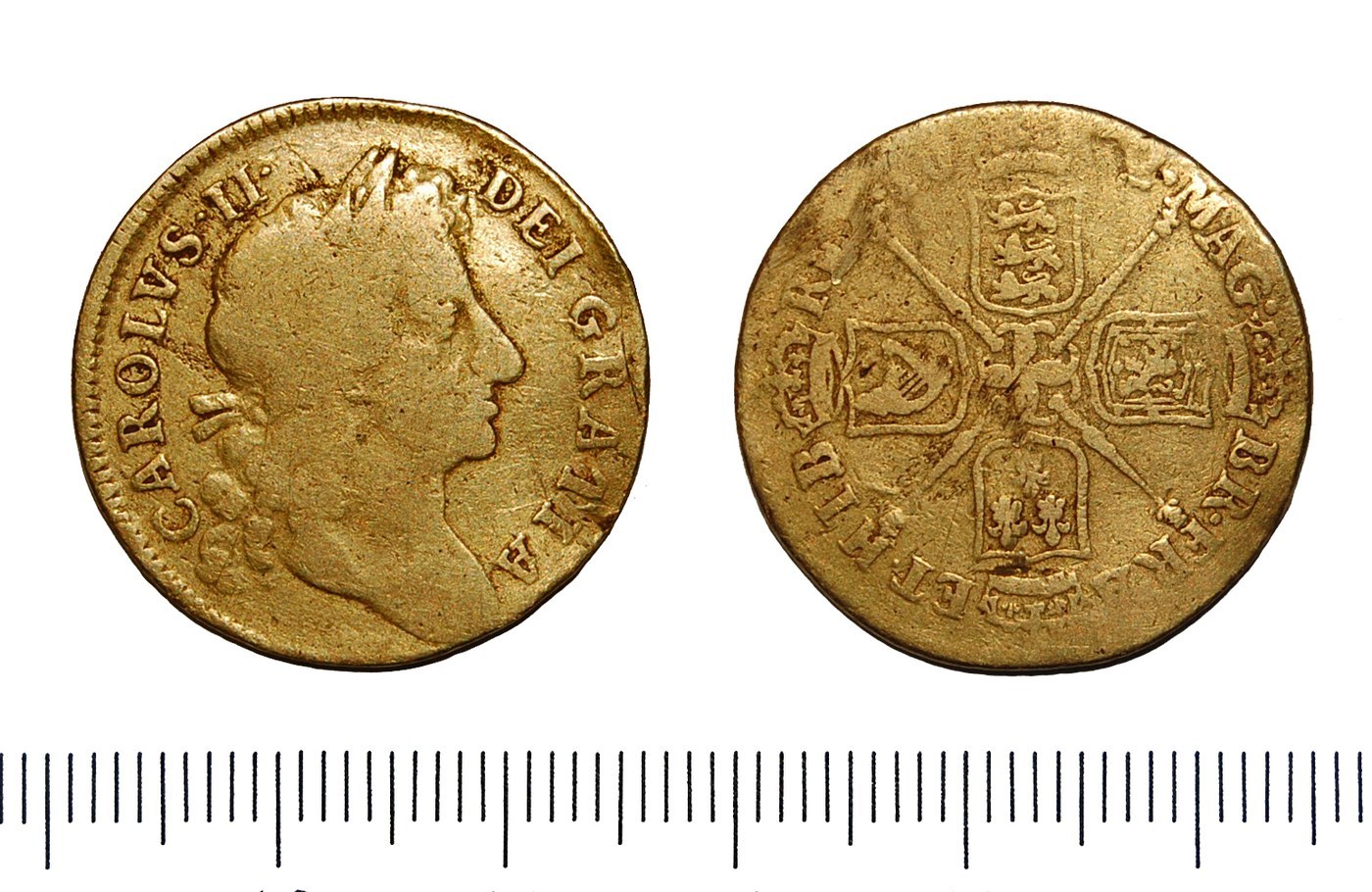
Start with the metal and size. A genuine guinea is struck in rich yellow gold, is dense in the hand, and measures around 25 mm across, smaller than many people expect for a gold coin. If the piece is pale, light, or magnetic, it is not a gold guinea.
Read the obverse legend. On a Charles II guinea like the 1668 example you should see a right-facing laureate bust and the Latin CAROLVS SECVNDVS ("Charles the Second"), often with additional titles such as DEI GRATIA. The style is fine, evenly struck milled work; earlier hammered coins look softer and less regular. Confirm the date falls within the guinea period (1663 onward for Charles II).
Check the reverse layout. Guineas show four crowned shields, the arms of England, Scotland, Ireland, and France, arranged in a cross, with sceptres or linked royal monograms between them and a central Garter star. The exact arrangement and mottoes changed across reigns, so this cruciform-shield design is a strong indicator of an early guinea rather than a later single-shield gold coin.
Look for provenance and mint marks. A small elephant, or elephant-and-castle, below the bust indicates gold from the Royal African Company and appears on some issues; its presence or absence helps pin down the variety. There is no separate mint letter as on some world coins, since guineas were struck at the Royal Mint in the Tower of London.
Authenticate with care. Early gold is widely faked and also frequently mounted as jewellery, then removed. Weigh and measure the coin, inspect the rim for solder traces or filing, and be wary of coins that look too fresh, too soft, or have mismatched obverse and reverse styles. Given the value of genuine Charles II guineas, seek third-party grading or an experienced dealer before buying or selling.
Frequently asked questions
How can I tell a guinea from a later sovereign?
Guineas typically show four crowned shields in a cross on the reverse and name a monarch such as Charles II in Latin. The gold sovereign that replaced the guinea usually shows a single shield or St George and the dragon, and dates from 1817 onward.
What does an elephant below the bust mean?
It marks gold supplied by the Royal African Company from the Guinea coast. An elephant, or elephant-and-castle, appears on some guineas and half-guineas and helps identify the specific issue, though many guineas have no such mark.
How big and heavy should a guinea be?
A one-guinea coin is a small gold piece about 25 mm in diameter and dense for its size. Half-guineas are noticeably smaller, and larger multiples such as two- and five-guinea coins also exist.
Should I clean an old guinea before selling?
No. Cleaning removes original surface and can sharply reduce value. Collectors prefer honest, uncleaned gold, so leave the coin as-is and have it assessed by a specialist.