
How to Identify the Gold Dinar of al-Mustanjid
A collector's guide to attributing an Abbasid gold dinar to al-Mustanjid: reading the calligraphy, the AH date, size and metal, and spotting look-alikes.
Read the full Gold Dinar of al-Mustanjid encyclopedia entry →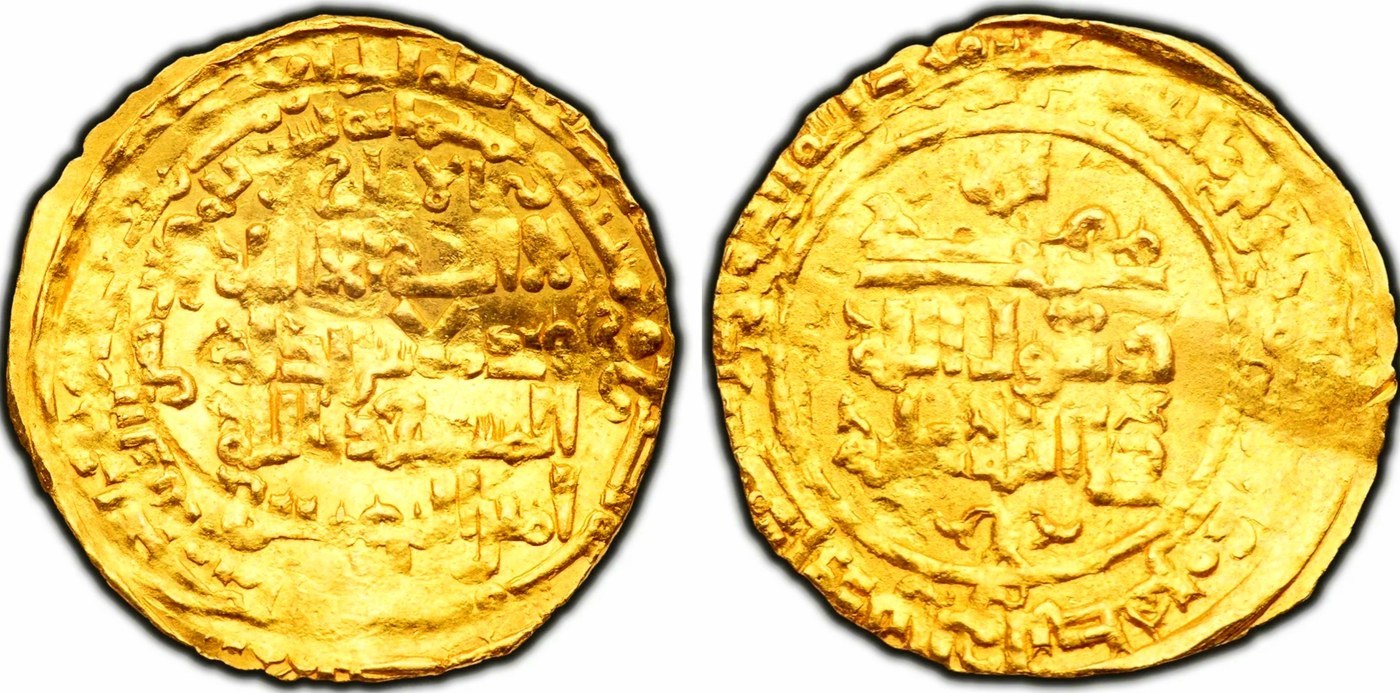
Begin with the physical coin. An al-Mustanjid dinar should be gold, small, and hand-struck on a thin flan, generally in the region of 20–25 mm across and near the classical dinar weight of about 4 grams. The flan is often slightly irregular or wavy rather than a crisp modern circle. A piece that is silver-colored, magnetic, much heavier, or perfectly round and machine-sharp is likely a different coin, a later imitation, or a modern replica.
Attribution rests on the inscriptions, because Abbasid dinars share the same general layout: a central Arabic legend enclosed by one or more concentric ring borders on each side. The core text is the Islamic profession of faith, and the identifying element is the caliph's name and titles — here al-Mustanjid bi'llah. Being able to locate and read that name in the legend is what separates this issue from the many similar dinars of other caliphs, so it is worth comparing the script against a reliable reference or transcription.
Find the date and any secondary names. The Hijri year, AH 557 on this coin, is written out in Arabic words rather than numerals, typically as part of the surrounding legend. Late Abbasid dinars may also name a contemporary secular ruler alongside the caliph; noting these additional names helps confirm the period and can refine the attribution. Because the dies were often larger than the blank, parts of the outer ring legend may be weak or run off the edge, which is normal and not a sign of a fake.
Watch for look-alikes and authentication pitfalls. Many Islamic dynasties struck gold in the same aniconic, calligraphic style, so an old gold coin covered in Arabic script is not automatically an Abbasid dinar, let alone an al-Mustanjid issue — the caliph's name must be read to be sure. Genuine dinars are struck, not cast, so casting seams, surface bubbles, a soft mushy appearance, or a mold line around the rim are warning signs. Modern forgeries and gold-plated base-metal copies also exist.
When uncertain, weigh and measure the coin, photograph both faces sharply, and have the Arabic legend read by someone familiar with Islamic numismatics or checked against standard catalogues. Confirming the caliph's name and the AH date is both the way to secure the identification and the key to understanding where the coin stands within the Abbasid gold series.
Frequently asked questions
How do I know the coin is al-Mustanjid's and not another caliph's?
The layout is shared across Abbasid dinars, so identification depends on reading the caliph's name in the legend. Locating al-Mustanjid's name and titles, together with the AH 557 date, is the definitive confirmation.
Where is the date on the coin?
The Hijri date is written out in Arabic words, usually within the surrounding ring legend rather than as numerals. On this dinar it reads AH 557, roughly AD 1161–1162.
Why is part of the outer inscription missing or weak?
That is typical of hand-struck dinars. The dies were often larger than the thin gold flan, so the outer ring legend can be crowded, faint, or partly off the edge, and the coin may be slightly irregular in shape.
How can I spot a fake dinar?
Genuine dinars are struck, not cast, and are gold to the correct weight. Watch for casting seams, bubbles, a grainy or soft surface, wrong weight, magnetic metal, or gold plating over a base core. When in doubt, weigh and measure it and have the legend verified.