
How to Identify the Gold Dinar of Abd al-Malik
A collector's guide to the early Umayyad 'Standing Caliph' gold dinar: the robed figure, Arabic legends, gold standard, and authentication cautions.
Read the full Gold Dinar of Abd al-Malik encyclopedia entry →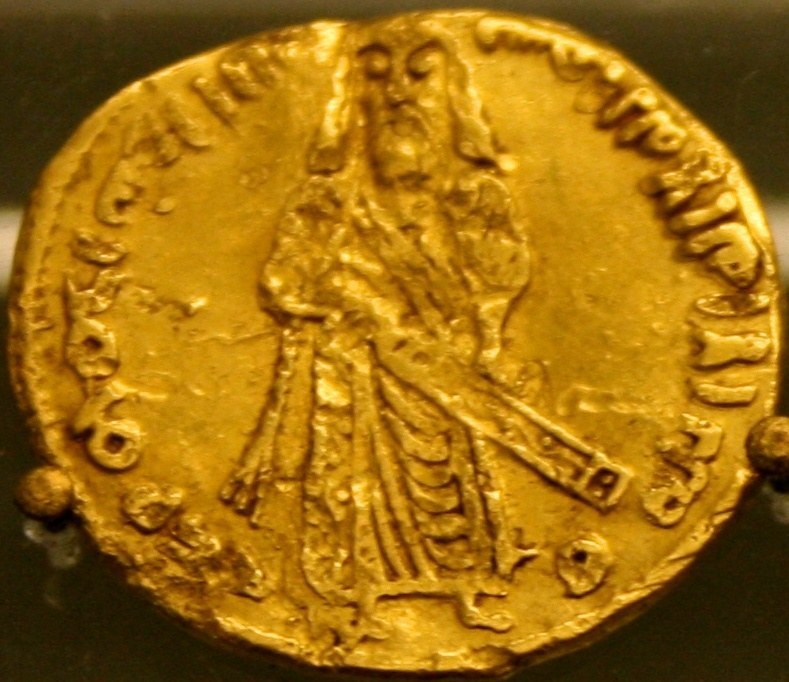
Start with the obverse figure. This transitional dinar shows a single frontal standing person in long robes, surrounded by Arabic calligraphy. That combination is the key diagnostic: it is neither the Byzantine solidus (crowned emperors flanking a cross, with Latin or Greek lettering) nor the later reform dinar (pure Arabic text with no image). If you see one robed standing figure ringed by early Arabic script, you are looking at a Standing Caliph type from Abd al-Malik's era.
Read the script and the reverse. The legends are in early Kufic-style Arabic and draw on Islamic religious formulae; the reverse carries further Arabic inscriptions around a central motif. You do not need to translate every word to attribute the type, but the presence of Arabic (rather than Latin/Greek) legends, together with the figure, confirms the transitional Islamic phase rather than a purely Byzantine coin.
Check size, metal and weight. A genuine dinar of this period is gold, small and thick, weighing roughly 4.2–4.3 grams and measuring about 19–20 mm across, on a hand-struck, slightly irregular flan. Gold does not rust or tarnish, so heavy corrosion or a pale, base-metal look is a warning sign. Weight well below the dinar standard, or a coin that is magnetic, points away from an authentic gold dinar.
Beware of look-alikes and later types. Earlier Umayyad gold that copies the Byzantine solidus, and the fully aniconic reform dinars struck from 77 AH onward, are related but distinct — only the transitional pieces show the standing figure with Arabic legends. Silver dirhams and copper fals of the period share the calligraphic style but are different metals and denominations. Mismatched imagery, script or metal usually means a different coin than the Standing Caliph gold dinar.
Apply strict authentication caution. Early Islamic gold dinars are valuable and heavily counterfeited, including cast copies, modern replicas and tourist pieces. Genuine coins are struck, with crisp Kufic lettering and correct weight and diameter; casts show soft detail, seams or bubbles. Because varieties and legends are technical, and value is high, have any candidate examined by a specialist in early Islamic coinage and favor pieces with documented provenance.
Frequently asked questions
How do I tell a Standing Caliph dinar from a Byzantine solidus?
The Byzantine solidus shows crowned emperors and a Christian cross with Latin or Greek inscriptions. The Standing Caliph dinar shows a single robed standing figure surrounded by Arabic script, marking the shift toward Islamic coinage.
How do I distinguish it from a reformed Islamic dinar?
The reformed dinar (from 77 AH / 696–697 CE) has no figures at all — only Arabic inscriptions. If your coin still shows a standing human figure with Arabic legends, it is the earlier transitional Standing Caliph type.
What weight and size should a genuine dinar be?
About 4.2–4.3 grams of gold and roughly 19–20 mm in diameter, on a hand-struck flan. Significant deviation in weight, or any magnetic response, is a red flag for a counterfeit or a non-gold copy.
How can I avoid buying a fake?
These dinars are frequently forged. Look for sharp struck (not cast) detail, correct weight and diameter, and no seams or bubbles. Given the value and technical varieties, get a specialist opinion and prefer coins with clear provenance.