
How to Identify the Gold Chervonets
A collector's walkthrough for confirming a Soviet sower chervonets: date, emblem, size, metal, and the tell-tale differences between the 1923 original and later restrikes.
Read the full Gold Chervonets encyclopedia entry →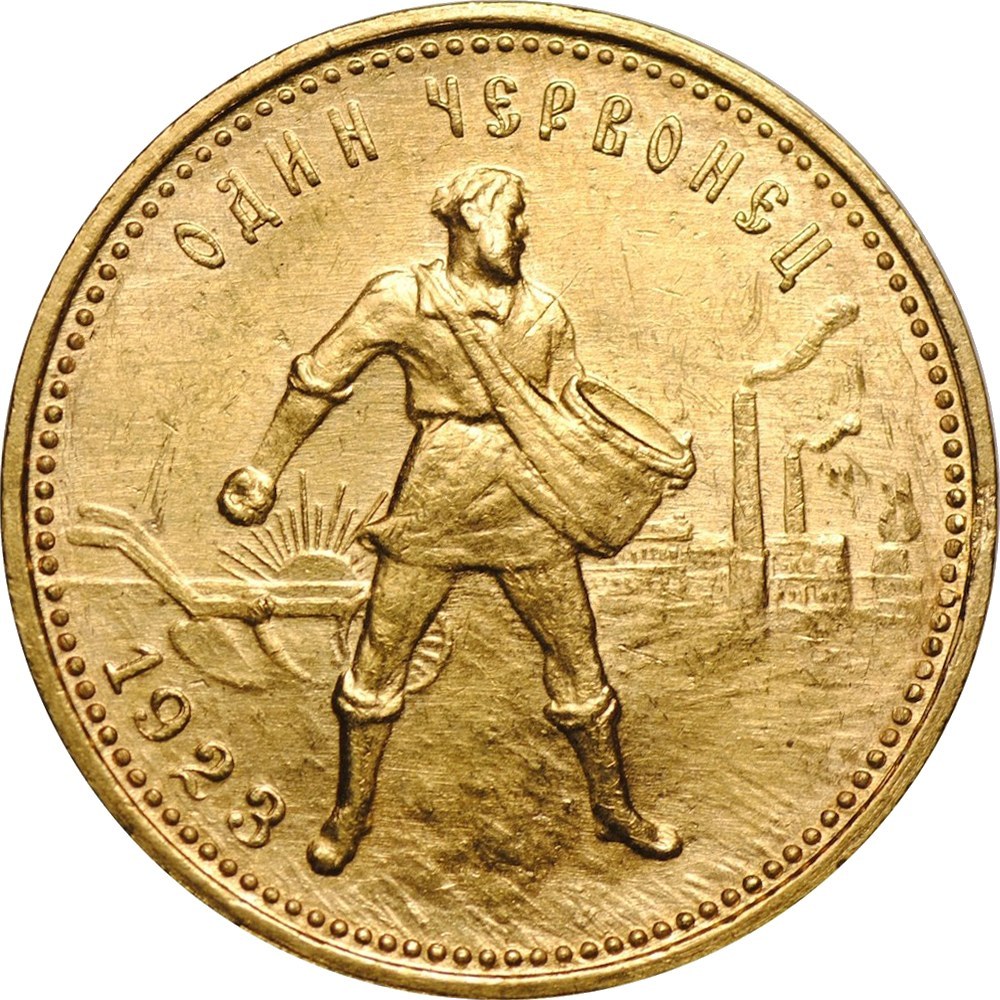
Start with the date and the two design elements. A true sower chervonets shows a peasant casting seed at sunrise, with a rising sun and factory chimneys behind him, and the denomination in Russian around the rim. The opposite side carries the Soviet state emblem, a hammer and sickle within a wheat wreath beneath a banner motto. If either scene is missing or crudely rendered, treat the piece with caution.
The single most important diagnostic is the date. An original is dated 1923 and pairs the sower with the early Soviet emblem showing the hammer and sickle over a globe. Restrikes are dated 1975 through 1982 and use a later, more elaborate emblem with additional ribbons for the union republics. Because the 1923 original is worth many times more than a restrike, confirm the date under magnification before drawing any conclusion about value.
Check the physical specifications. The coin should measure about 22.6 mm in diameter, weigh close to 8.6 grams, and be struck in 900-fine gold, giving it a warm yellow tone and a solid heft for its small size. The edge should be finely reeded. A cast copy will often show a seam, softened detail, bubbles in the surface, or a weight that misses the mark.
Inspect strike quality and lettering. Authentic pieces are sharply machine-struck with crisp Cyrillic text and fine detail in the sower's clothing and the wheat wreath. Fuzzy or uneven letters, mushy hair and drapery, or a grainy field are warning signs. Compare the exact spacing and font of the inscriptions against trusted reference images for the matching year.
Because the 1923 chervonets is both valuable and widely counterfeited, treat any high-value example with skepticism until it is confirmed. Weigh and measure the coin, and for pieces of significant value rely on authentication and encapsulation by a recognized third-party grading service rather than on appearance alone.
Frequently asked questions
What is the quickest way to tell an original from a restrike?
Read the date. 1923 is the original issue with the early Soviet emblem; 1975 through 1982 are restrikes with a fuller emblem showing extra ribbons. Both use the same sower design.
What size and weight should the coin be?
About 22.6 mm across and roughly 8.6 grams in 900-fine gold, with a reeded edge. A piece that is noticeably lighter, larger, or has a smooth or seamed edge is suspect.
How can I spot a counterfeit?
Watch for soft or grainy detail, incorrect weight or diameter, a casting seam or surface bubbles, and misshapen Cyrillic lettering. Given the coin's value, high-grade examples are best authenticated by a professional grading service.
Is the gold content the same on all years?
Yes. Both the 1923 original and the later restrikes were struck in 900-fine gold to the same weight standard, so metal content does not distinguish them; the date and emblem do.