
How to Identify the German Saxony Ducat
A small, high-purity gold coin from the German state of Saxony, recognized by its ruler's portrait and the crossed-swords Saxon arms.
Read the full German Saxony Ducat encyclopedia entry →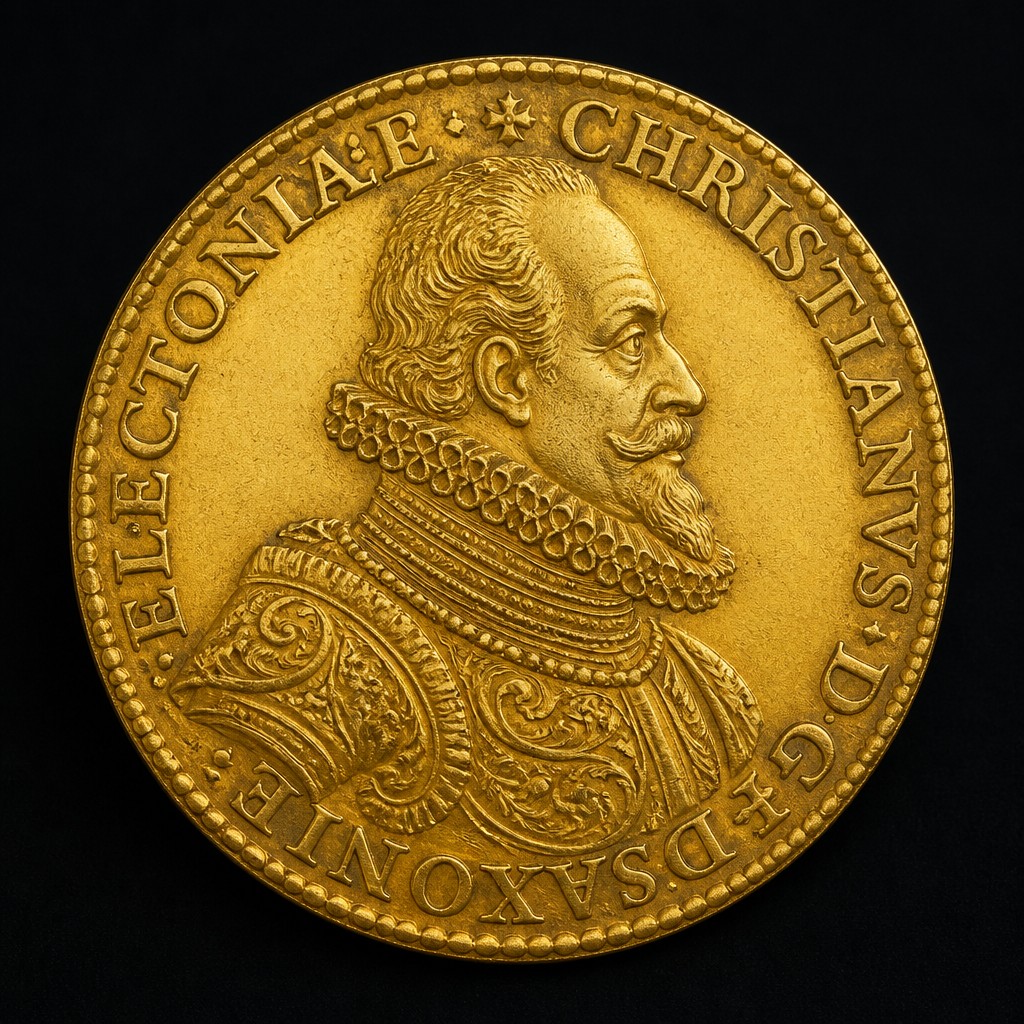
What Is the German Saxony Ducat?
The Saxony Ducat is a small gold coin produced by the rulers of Saxony — first as Electors, later as Kings — across a span of centuries, following the standard European ducat weight and fineness used widely for international trade. Saxon ducats were struck under numerous rulers, including members of the Wettin dynasty such as Johann Georg, Friedrich August, and later kings of the 19th-century Kingdom of Saxony.
Obverse Design
The obverse generally shows a portrait or bust of the reigning Saxon ruler in period dress, surrounded by a Latin legend naming the ruler and his titles, often including "DUX SAXONIAE" (Duke of Saxony) or the equivalent royal title for later issues.
Reverse Design
The reverse commonly displays the Saxon coat of arms — a shield divided into barry (horizontal stripes) with a crossed pair of swords or a "rautenkranz" (crown of rue leaves) overlay, sometimes supported by additional heraldic elements. Some issues instead show a standing or seated figure rather than the arms alone. Ducats traditionally do not display a numeral denomination, since their value was universally understood from their standardized weight and gold content.
Size, Weight & Metal
Like other European ducats, the Saxony Ducat is struck in very high-purity gold, close to .986 fine (23.5 karat), weighs about 3.49 grams, and measures roughly 20 millimeters in diameter — a small, thick, dense coin.
Mint Marks
Saxon ducats were struck at mints such as Dresden and Leipzig, with mint marks or mint master initials appearing in small letters near the rim or beneath the main design. These marks, combined with the ruler's name in the legend, help pinpoint the specific period of issue.
Telling It Apart from Similar Coins
Ducats from many different German states and other European territories share the same general weight standard, which can make attribution tricky. The key is the coat of arms and the ruler's name in the legend — Saxony's barry shield with crossed swords or rue crown is distinct from the arms used by other duchies, kingdoms, and free cities. Always read the full legend rather than relying on the overall coin size alone.
Judging Condition at a Glance
Because ducats are small and struck in soft, high-purity gold, even light circulation can round off fine details quickly. Check the ruler's facial features and the fine lines within the coat of arms for crispness; well-struck, lightly handled examples retain sharp definition, while worn coins show a smoothed, indistinct portrait.
Authenticity Red Flags
Given their long production history and enduring popularity, ducats are a common target for imitation. Verify the weight closely against the 3.49-gram standard, check that the color is a rich, deep gold consistent with high fineness rather than a paler or more coppery tone, and look for crisp, sharp-edged lettering rather than soft or blurred text, which can indicate a cast copy.
Frequently asked questions
What is a ducat?
A ducat is a standardized small gold coin, roughly 3.49 grams and about .986 fine gold, used across many European states for trade.
Why doesn't the Saxony Ducat show a numeral value?
Ducats were valued by their universally recognized weight and gold purity rather than a stamped denomination.
What symbol identifies Saxony on the coin?
The Saxon coat of arms, typically a barry shield with crossed swords or a crown of rue leaves overlaid.
Where were Saxon ducats minted?
Primarily at Dresden and Leipzig, identified by small mint marks or mint master initials.
How do I check if a ducat is genuine?
Weigh it against the 3.49-gram standard, check for a rich deep-gold color, and look closely for crisp, sharp lettering rather than soft or blurred details.