
How to Identify the German Hamburg Ducat
A gold trade coin issued by the Free and Hanseatic City of Hamburg, historically prized for its consistent gold standard and long production history spanning centuries.
Read the full German Hamburg Ducat encyclopedia entry →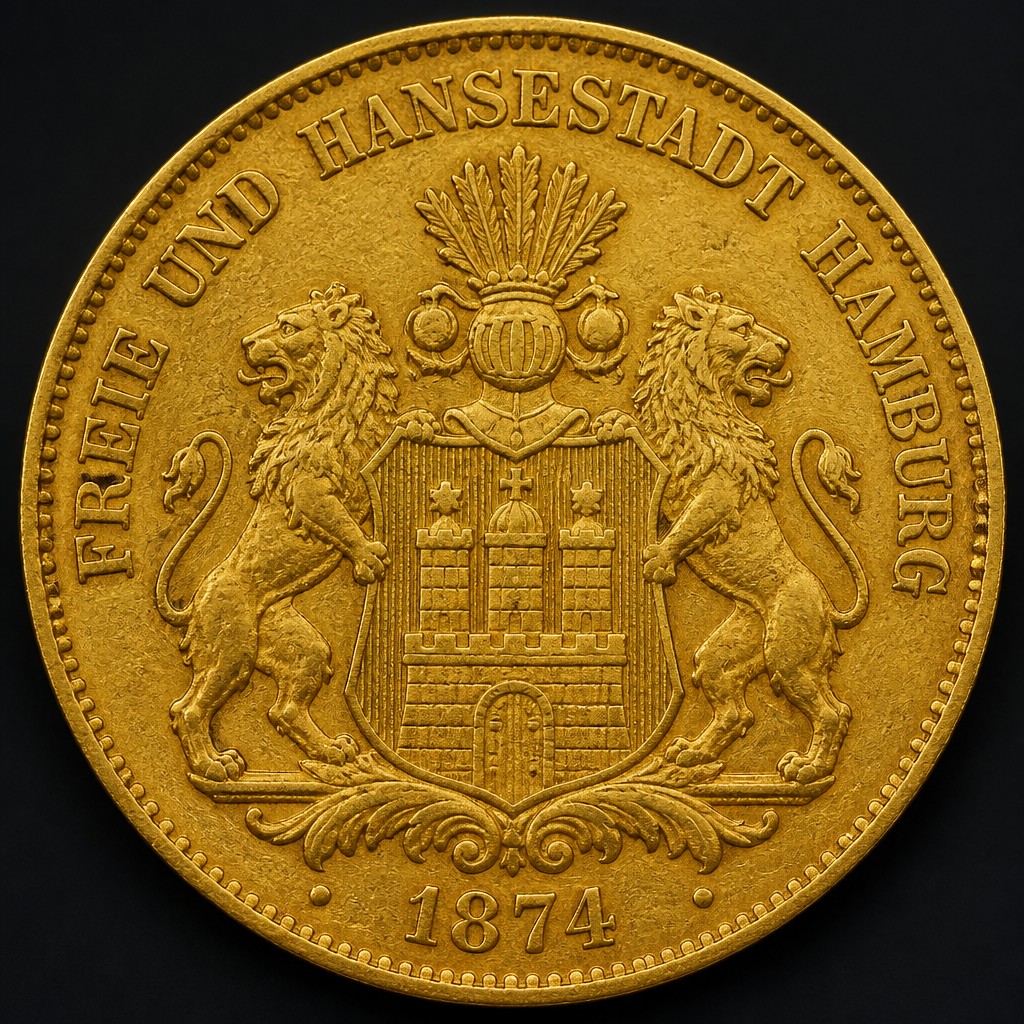
What It Is
The Hamburg ducat was a gold trade coin issued by the Free and Hanseatic City of Hamburg, one of the historic German city-states, for use in international commerce. Hamburg continued striking ducats to a traditional gold standard used across much of Europe well into the 20th century, long after many other German states had switched entirely to the mark system, making it a notable holdover of the old European ducat tradition.
Obverse Design
The classic Hamburg ducat design shows a standing armored figure holding a shield and sword, often identified as a representation of Hamburg's civic pride or a guardian figure, with a Latin legend referencing the city and its motto, though some later restrikes and varieties use a different standing figure or civic arms design.
Reverse Design
The reverse commonly displays a shield bearing Hamburg's distinctive castle emblem (a stylized fortress or gate with towers), surrounded by a Latin legend, and often includes the date and additional heraldic or decorative elements typical of city-state trade coinage.
Size, Weight, and Metal
Like most European ducats, the Hamburg ducat follows the traditional ducat gold standard: approximately 20 mm in diameter and about 3.5 grams in weight, struck in .986 fine gold (a notably high purity compared to many national gold coinages), containing close to 0.1107 troy ounces of pure gold.
Mint Marks and Where to Find Them
Look near the base of the design or along the rim for small initials belonging to the Hamburg mint master of the period, since ducats traditionally identify the responsible official rather than a separate city mint mark, given that Hamburg operated as its own single minting authority.
Telling It Apart from Similar Coins
The Hamburg ducat can be confused with ducats from other German states or historic trading cities, such as Frankfurt or the Netherlands, which also produced high-purity gold ducats using their own standing-figure or arms designs. The Hamburg castle emblem on the reverse is the clearest distinguishing feature, since it is unique to Hamburg's civic arms.
Judging Condition at a Glance
Examine the standing figure's armor and drapery detail, along with the fine lines of the castle emblem, for wear. Because ducats are small, thin coins, even modest circulation can noticeably soften fine details, so look for crisp definition in the smallest design elements as a sign of higher grade.
Authenticity Red Flags
Given the ducat's small size and high gold purity, verify weight and diameter precisely against the known 3.5-gram, .986 fine standard, and check that the coin does not respond to a magnet. Soft, indistinct details, incorrect coloring, or a diameter and weight mismatch are signs of a counterfeit or later base-metal replica sold as a genuine trade ducat.
Frequently asked questions
Why did Hamburg keep minting ducats so long after other German states stopped?
As a major trading city, Hamburg maintained the traditional high-purity ducat standard for international commerce even after most German states adopted the mark system, valuing the ducat's recognized consistency in trade.
What is the gold purity of a Hamburg ducat?
It is struck in .986 fine gold, a notably higher purity than most national gold coinages, weighing about 3.5 grams.
What symbol identifies a Hamburg ducat?
The reverse shield showing Hamburg's stylized castle or fortress emblem with towers is the clearest identifying feature unique to the city.
How is the Hamburg ducat different from ducats of other cities?
While many European trading cities produced similar high-purity gold ducats, each used its own unique civic arms or standing figure design, so comparing the specific emblem identifies the issuing city.