
How to Identify the German Bremen Thaler
The Bremen Thaler is a 19th century silver coin from the Free Hanseatic City of Bremen, easily recognized by the crowned Bremen key emblem on its face and heavy Vereinsthaler weight standard.
Read the full German Bremen Thaler encyclopedia entry →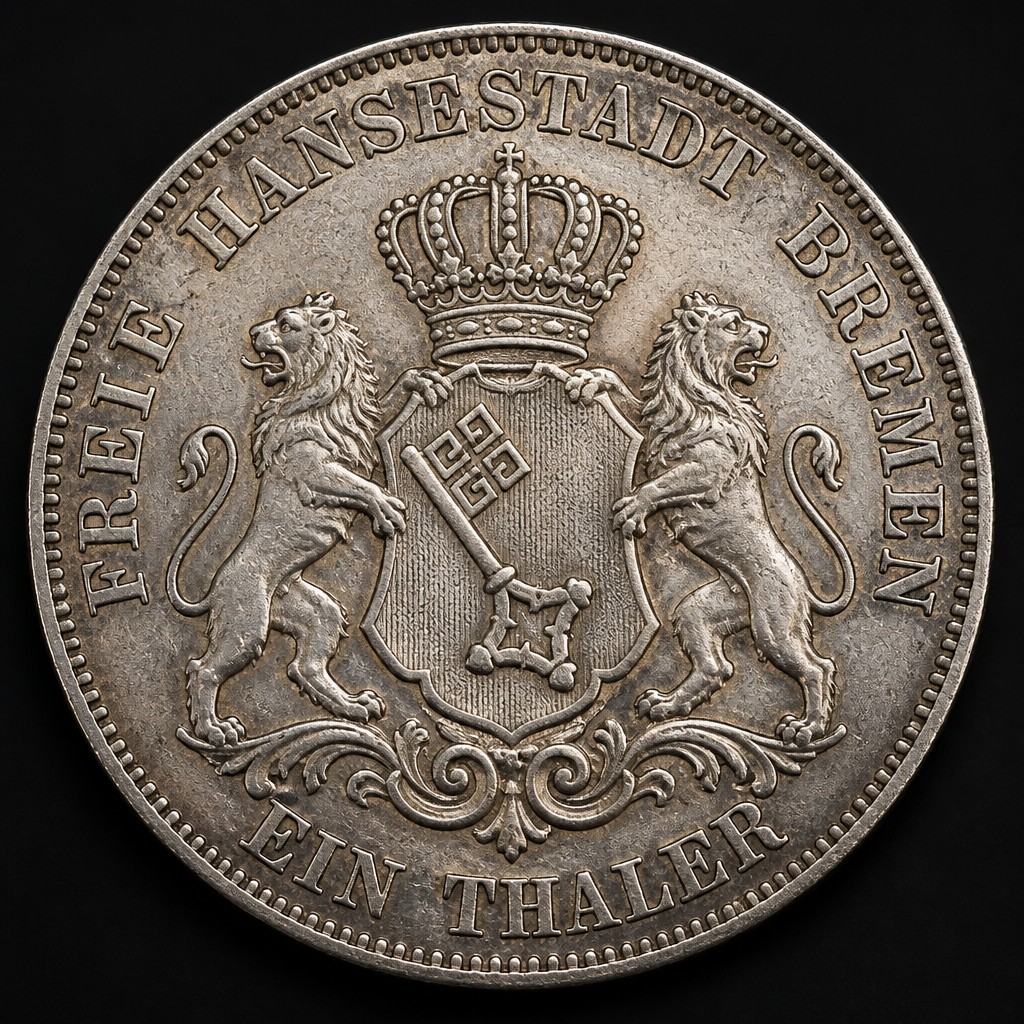
What It Is
Issued by the Free Hanseatic City of Bremen, this silver thaler circulated in the decades before German unification, following the common thaler and later Vereinsthaler weight standards used across the German states during the 19th century. As one of the historic Hanseatic trading cities, Bremen maintained its own coinage rights well into the era of German states coordinating on shared monetary standards, giving its thalers a distinct local flavor even as weight and fineness were standardized.
Obverse Design
The obverse prominently features Bremen's civic emblem: a large ornate key, often shown crowned or flanked by decorative scrollwork, representing the city's traditional coat of arms. The city name "BREMEN" or "STADT BREMEN" typically appears in the legend around the border.
Reverse Design
The reverse usually presents the denomination spelled out, such as "EIN THALER," within a wreath or decorative frame, along with the date. Some issues include the phrase indicating the coin's fineness standard, referencing the number of thalers struck per pound (mark) of fine silver, a common practice in the German Vereinsthaler system.
Size, Weight & Metal
Bremen thalers generally follow the Vereinsthaler standard: about 33mm in diameter and approximately 18.5 grams, struck in .900 fine silver. This places them among the mid-to-large sized silver coins of the German states.
Mint Marks and Where to Find Them
Look for small mint letters near the date or within the reverse legend; Bremen coinage of this period was sometimes struck at its own city mint or in cooperation with other regional mints, so a small identifying letter can appear in the fine print of the design.
Telling It Apart from Similar Coins
The distinctive key emblem is the fastest way to distinguish Bremen coinage from other German city and state thalers, which instead show local arms such as eagles, lions, or other heraldic devices. Compare the emblem carefully, since several German Hanseatic cities (like Hamburg, with its castle gate) used similarly styled but different civic symbols.
Judging Condition at a Glance
Check the fine details of the key's teeth and the crown or decorative elements above it for flatness, as these are the first high points to wear. On the reverse, look at the sharpness of the wreath leaves and the lettering of the denomination for signs of circulation wear.
Authenticity Red Flags
Genuine pieces show crisp, evenly struck lettering and a correctly weighted, substantial feel consistent with the Vereinsthaler standard. Be cautious of coins with blurry or shallow key details, incorrect diameter or weight, or a noticeably rough or grainy surface texture, which can indicate a cast reproduction rather than an authentic struck coin. It also helps to compare the specific style of the crown and scrollwork surrounding the key against known genuine examples from the correct date range, since minor stylistic drift can flag a piece worth closer scrutiny.
Frequently asked questions
What does the key symbol on this coin represent?
It is the traditional civic emblem of the Free Hanseatic City of Bremen, appearing on the coin's obverse as the city's coat of arms.
What silver standard does this thaler follow?
It generally follows the German Vereinsthaler standard of about .900 fine silver, common among German states in the mid-to-late 19th century.
How can I distinguish Bremen coinage from Hamburg coinage?
Compare the civic emblems: Bremen uses a crowned key, while Hamburg typically features a castle or gate design, making the two easy to tell apart once you know the symbols.
Where would a mint mark appear on this coin?
Check near the date or within the reverse legend for a small mint letter identifying the specific striking mint.